
Wimbledon: Underdogs Rewrite Tennis’s Economic Story
Discover how Wimbledon's underdog stories of Arthur Fery & Grigor Dimitrov are reshaping tennis economics, inspiring a new generation, and highlighting true sporting grit.

POLICY WIRE — London, UK — Here’s a peculiar truth about professional tennis: for every megastar raking in millions, thousands of others are just scraping by. Grinding through qualifiers, praying for a lucky draw, or, in the rarest of cases, holding out for a coveted wildcard. But this year’s Wimbledon script? It’s been tossed, rewritten by two improbable contenders whose stories aren’t just about serve — and volley. No, these tales speak volumes about sporting aspiration, second chances, and the brute economics of staying relevant on a global stage.
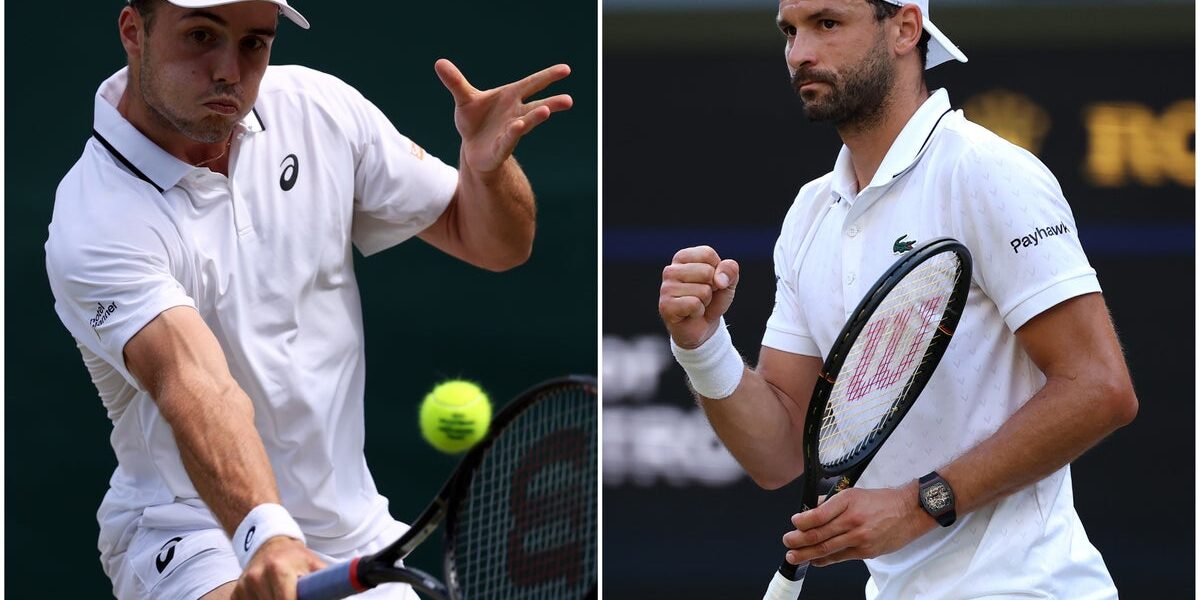
Enter Arthur Fery, 23, from these very suburbs, still carrying the faint scent of local Wimbledon Park clay on his kit bag, probably. He’s made it to the fourth round, a staggering feat for a player who, until very recently, was navigating the brutal circuit’s fringes. He’s Britain’s last hope in the singles, a moniker that usually weighs like an anchor. For Fery, though, it’s rocket fuel. He clawed through an epic five-setter just days ago, his reward? A Centre Court date with destiny — and another wildcard.
His adversary, Grigor Dimitrov, isn’t some fresh-faced newbie. The 35-year-old Bulgarian was once ranked number three in the world, a darling of the tour. He’s seen it all: Grand Slam semis, big endorsements, the whole shebang. But injuries—oh, the brutal reality of a body pushed too far—sent him spiraling down the rankings. Last year, a pectoral tear forced a painful retirement. He was world number 146 coming into this tournament, needing the same kind of invitation Fery got. But he doesn’t sound beaten. And why would he? Dimitrov, post-win, noted, “I just want to keep that line going. Really the outcome for me, it becomes secondary right now. I think just falling in love again with the game.” It’s a sentiment born of struggle, an athlete staring down the end of his career, finding purpose beyond the prize money.
Fery’s trajectory, however, is on the ascent, — and it’s already reshaped his professional life. Reaching the second week of a major has catapulted him, for the first time, into the world’s top 100, according to ATP Live Rankings. For a sport known for its top-heavy pay structures, breaking that psychological—and financial—barrier is transformative. As Fery himself put it, the thrill is deeply personal and economic: “It’s a significant milestone [breaking into top 100]. Doing it here is incredibly special for me. It’s my home tournament. It’s where I grew up. It’s very special.” Because for many tennis pros, getting past that benchmark often means better prize money, automatic entry into bigger tournaments, and a genuine chance at securing sponsor attention, shifting from a perennial financial tightrope walk to something approaching career stability.
It’s not just a feel-good story, either; it’s a stark reminder of the sheer talent churn within the global sports machine. For a country like the UK, a local player’s breakout run like Fery’s provides an undeniable shot of inspiration for grassroots programs. It spotlights the importance of home-grown talent, particularly in sports heavily dominated by global funding and star power. This particular British wildcard is the first to hit the second week in the men’s singles since 1993, a historical blip that only highlights the rarity of his current triumph. It also subtly reinforces the idea that even in mega-sports, opportunity still occasionally knocks for those outside the privileged path, though not without significant backing from national federations or private investment in youth development.
📄 POLICY WIRE WHITEPAPER PUBLISHED: PAKISTAN'S NATIONAL SECURITY POLICY PRIORITIES
👉 READ BY CLICKING HEREBeyond the quaint Centre Court grass, these individual stories echo across continents. Think about the aspiration these wildcard runs ignite in places with fewer resources—like in Pakistan, where dedicated tennis programs struggle for consistent funding despite deep public passion for sports. The infrastructure might not be there to consistently produce Grand Slam contenders, but the narrative of a lesser-known player battling established giants captivates, often providing a different kind of cultural touchstone. It fuels dreams, it motivates parents, and it showcases the universal appeal of raw human effort against daunting odds, irrespective of where the game is played.
What This Means
This match isn’t just about who makes the quarter-finals. It’s a fascinating micro-drama about the state of elite athletics. For Fery, it’s the financial liberation of a breakthrough performance, solidifying a professional career that, until now, was a series of hopeful gambles. For Dimitrov, it’s a powerful validation of grit, an older athlete refusing to fade quietly, reminding everyone that ‘potential’ isn’t just for the young. It offers valuable branding for the tournament itself—Wimbledon loves a good narrative, particularly one with a local hero. The economic implications are clear: increased viewership means more advertising revenue, more merchandise sales, and sustained public interest in a sport battling for attention in an increasingly crowded media landscape. it shines a light on player career longevity and the cyclical nature of sporting fame—how one generation’s struggle can become another’s inspiration, ensuring a continuous supply of hopefuls pouring into the system, ready for their own improbable run.