


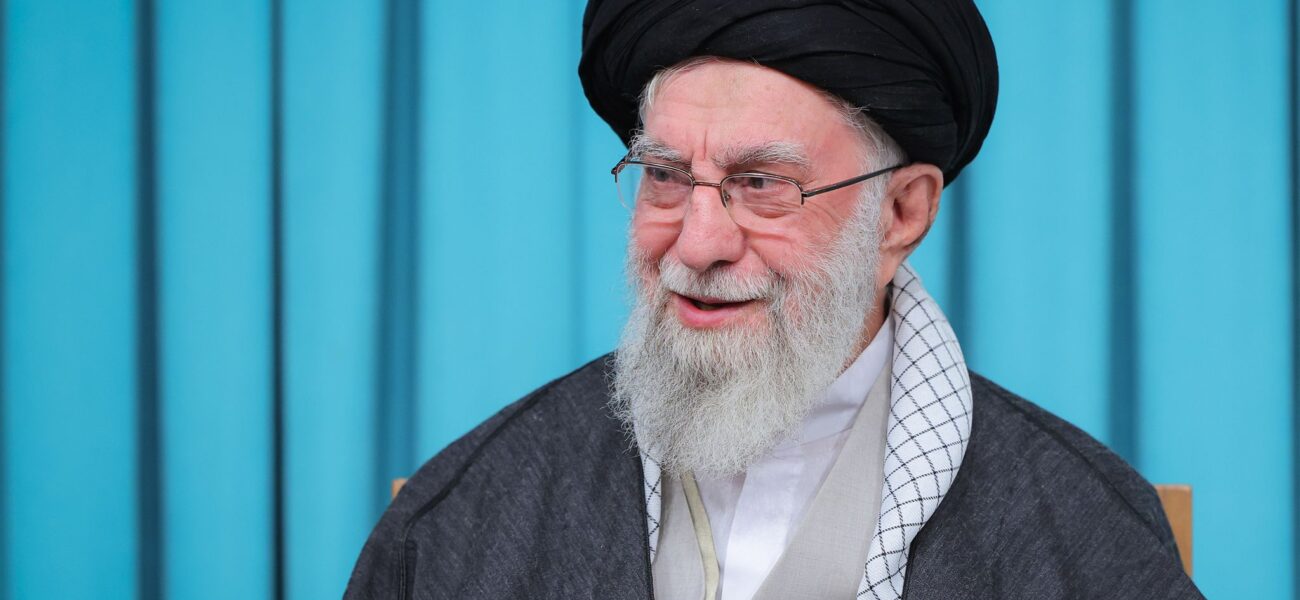
Iran Succession: Power Vacuum & Global Stakes
Ali Khamenei's death leaves a power vacuum in Iran. Discover how the succession battle will impact regional stability, global sanctions, and the Middle East's future.

POLICY WIRE — Tehran, Iran — The chanting echoes died down in Tehran, sure. But the real noise—the hushed, anxious whispers about who comes next—that’s just beginning to ripple through the Islamic Republic. Ali Khamenei’s passing? It didn’t just mark an end; it flung open a whole Pandora’s box for Iran, and for pretty much everyone watching the Middle East. It’s an almost perfectly crafted power vacuum, a situation tailor-made for high-stakes jockeying that’ll play out in shadows and hushed conclaves, far from the cameras that captured yesterday’s state-managed grief.
For weeks, maybe months, the gears of a highly opaque system will grind, deciding a successor whose reign will shape regional stability for decades. Think about it: a nation under a constant, crushing array of sanctions, armed to the teeth, influencing proxies from Beirut to Sana’a, and sitting on a controversial nuclear program. It isn’t just about picking a figurehead. It’s about deciding whether Iran pivots, plunges deeper into isolation, or maybe—just maybe—finds a new path. Nobody’s holding their breath for the last one, though. Not really.
Inside Iran, the Revolutionary Guard, those formidable protectors of the revolution, aren’t just standing by. They’re watching, weighing, their influence probably heavier than the ballot box, whenever that materializes. And then there are the entrenched conservative factions, squabbling like angry crows over a fresh kill. It’s a closed shop, this succession business. An entirely undemocratic, meticulously choreographed affair, despite all the theatrics of public mourning.
But the fallout? Oh, that’s going to spray everywhere. “We’re not merely observing a domestic Iranian political transition; we’re witnessing the opening volley in a potential reordering of regional power dynamics,” explained Michael R. Gordon, former U.S. State Department official now with the Middle East Policy Institute, in a rather candid assessment. “Washington understands that Iran’s next leader, be it hardliner or a surprisingly moderate figure—however unlikely that’s—will redraw critical strategic equations from Syria to the Strait of Hormuz.” It’s always about the Strait, isn’t it?
Even Pakistan, religiously intertwined — and geographically adjacent, is feeling the tremors. Analysts in Islamabad are busy crunching scenarios. Because any shift in Tehran sends ripples, and sometimes tidal waves, across the broader Muslim world, particularly among Shia communities. Consider the proxy groups, the Hizballah and the Houthis, who’ve long operated under Tehran’s ideological and financial umbrella. What happens when that umbrella-holder changes? There’s an understandable nervousness among some, a wary anticipation among others, watching if Tehran’s successor leans more towards ideological purity or pragmatic engagement.
“Our brothers in Iran will navigate this trial with the wisdom of Allah. The resistance axis will endure, stronger than ever, against the plots of the enemies of Islam,” declared Brigadier General Sayyed Yahya Rahim Safavi, a top military advisor to the late Supreme Leader, his voice booming with predictable resolve. He always says things like that. He has to. His words, piped across Iranian state media, paint a picture of unwavering continuity. But beneath that official bravado? Doubt gnaws. It has to. Because change is a tricky beast.
📄 POLICY WIRE WHITEPAPER PUBLISHED: PAKISTAN'S NATIONAL SECURITY POLICY PRIORITIES
👉 READ BY CLICKING HEREBecause ultimately, Khamenei’s 35-year reign brought a certain, albeit tense, stability to Iran’s domestic and foreign policy. Now? That familiar framework is gone. The country, struggling with an economy battered by sanctions—with its 2023 GDP per capita reportedly about a quarter less than it was in 2011, according to the World Bank—needs a leader capable of more than just reciting revolutionary dogma. They need someone to steer a very large, very complex ship through gale-force political winds.
What This Means
The immediate political implication is a short-term increase in internal maneuverings within Iran’s deep state, notably involving the Assembly of Experts and the Guardian Council. Don’t expect any outward signs of disunity—the regime values its perceived strength above all. Economically, prolonged uncertainty could spook what little foreign investment Tehran might hope to attract. Any hints of a leadership more confrontational than Khamenei could trigger even stricter sanctions, or at least solidify the existing ones. But conversely, a potential, however slight, opening to a more moderate posture—something the hardliners would vehemently resist—could present a flicker of opportunity for easing global tensions.
For regional players, the coming months are an intelligence gathering goldmine. Saudi Arabia, Israel, and even Turkey will be scrutinizing every veiled statement, every subtle nod from Tehran’s power brokers. A leadership shift could either temper or inflame regional proxy wars, particularly in Syria, Iraq, — and Yemen. This is less about who says the loudest prayers, and much more about who holds the most levers of actual, undisputed power within Iran’s labyrinthine structure. This succession isn’t just a funeral. It’s a contest for a nation’s very soul. And frankly, the global stakes couldn’t be higher for what could become a whole new headache for everyone.