


Yamal vs. Collective: Football’s Geopolitical Strategy
Is football about individual stars or collective strength? Unpack the strategic debate around Lamine Yamal, Spain, and global power dynamics.

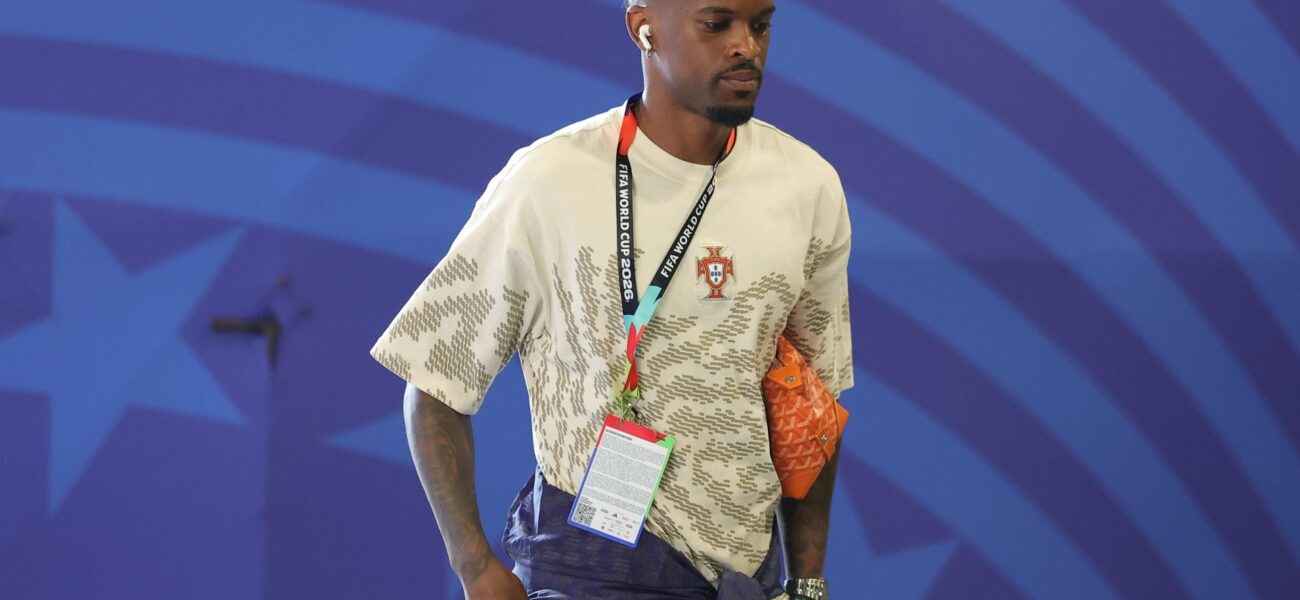
POLICY WIRE — Lisbon, Portugal — In a global spectacle often defined by glittering individuals, the quiet machinations of team strategy offer a compelling, albeit less flashy, narrative. Nelson Semedo, Portugal’s seasoned full-back, isn’t losing sleep solely over Lamine Yamal’s electrifying footwork. No. He’s looking at something far bigger, a philosophical quandary mirroring the complex interdependencies of nation-states, not just football teams. But, to ignore the teenage phenom completely? That’d be political malpractice in a sport obsessed with wunderkinder.
It’s always the narrative, isn’t it? A young star bursts onto the scene, dazzling everyone, and suddenly the entire burden of national expectation, perhaps even geopolitical bragging rights, rests squarely on their slender shoulders. Yamal, only 16, has already garnered the sort of adulation typically reserved for legends. He’s Spain’s new darling. And, the entire world watches these big tournaments, doesn’t it? According to FIFA, the 2022 World Cup attracted an estimated 5 billion viewers, underscoring football’s unparalleled global reach—its soft power extending from Buenos Aires to Lahore, where millions gather, often with scant electricity, to witness these heroes.
Semedo, a veteran now with Fenerbahçe, remembers when similar hopes were pinned on another young Barcelona star, Ansu Fati. That was before Yamal was even a whisper in the Camp Nou academies. “The truth is, I hadn’t heard anything about him,” Semedo confessed to SPORT, speaking about Yamal’s nascent years. “He was too young, — and we already had a young star who’d just joined the squad: Ansu Fati. Lamine was very young.” It’s a dry, almost cynical admission about the ephemeral nature of fame, a poignant reminder that even within the most celebrated football nurseries, fortunes shift quickly.
But make no mistake, Semedo recognizes talent. “Lamine is a gem — and could prove decisive,” he conceded, the tactical gears clearly turning behind his words. However, the defender insists that fixation on one player would be a monumental oversight, a sort of collective blindness akin to focusing on a single, charismatic leader while neglecting the institutional strength of a rival state. “If we focus on Lamine, we’ll run into a lot of problems. Spain has other players who can make the difference.” It’s a team, after all, not a single monarch.
Spain’s national coach, Luis de la Fuente, though generally pragmatic, offered a complementary perspective during a recent press briefing. “While we celebrate individual brilliance, our philosophy centers on the synergy of eleven talents working as one,” De la Fuente articulated, with a politician’s precise choice of words. “Any opponent fixated on a singular threat misses the point of Spanish football entirely.” One can almost see the slight smile, a quiet jab at any adversary caught in the individual hero trap.
The clash, set for the World Cup Round of 16, isn’t just a sporting event. It’s a contest between two nations with interwoven histories — and distinct modern identities. Portugal, a country that once charted global maritime routes, now seeks to carve out its sporting empire. Spain, heirs to a sprawling cultural legacy, aims to reaffirm its contemporary dominance. These tournaments, really, are just another theater for national pride and, yes, a hefty dose of national anxiety. Just ask those passionately following Brazil’s quest for glory.
📄 POLICY WIRE WHITEPAPER PUBLISHED: PAKISTAN'S NATIONAL SECURITY POLICY PRIORITIES
👉 READ BY CLICKING HEREBecause ultimately, for Semedo and his compatriots, the opposition isn’t just a collection of players; it’s an entire system. They’re preparing for Spain, the tactical organism, the collective intelligence, not just one teenager, no matter how prodigiously gifted. “We’ll be keeping an eye on them all. We have to focus on ourselves and have a clear game plan,” he concluded, a terse statement encapsulating the professional’s dispassionate view of a high-stakes encounter.
What This Means
The seemingly straightforward pre-match rhetoric from Nelson Semedo offers a lens into deeper geopolitical and economic realities of modern sport. This isn’t merely about tactics; it’s about resource allocation — and threat assessment, principles echoing statecraft. Focusing singularly on Lamine Yamal, Spain’s breakout star, is akin to a nation dedicating all its intelligence resources to one rogue actor, neglecting the broader capabilities of a rival power. The sophisticated, collective defense articulated by Semedo suggests a more robust, integrated approach—a strategy that builds institutional resilience rather than simply reacting to individual flair. This mirrors calls for comprehensive national strategies, whether in economic development or international diplomacy, where sustainable growth often outperforms flash-in-the-pan successes.
Economically, these football mega-events represent colossal investments for host nations and participating countries, driving tourism, merchandising, and media rights worth billions. The allure of players like Yamal attracts significant sponsorship dollars, but the long-term commercial viability of a league or national team often hinges on its systemic strength and depth. From an emergent economy’s perspective—say, in South Asia, where the consumption of European football is astronomical—the phenomenon highlights the economic disparity in talent pipelines. Youth in Karachi or Dhaka, dreaming of such stardom, find themselves in systems with fewer resources compared to the polished academies producing talents like Yamal, fueling both aspiration and a nuanced critique of global sporting equity. The demand for Spanish or Portuguese jerseys in Islamabad is far greater than for local league merchandise. This disparity isn’t just about football; it’s a reflection of global economic gravitational pull.