


Royal Divide: Harry’s Visit Signals Monarchy’s Decline
Prince Harry's solo London visit exposes deep royal divisions and the monarchy's fading power. Discover how this drama impacts Britain's global image and relevance.

POLICY WIRE — London, UK — You know, sometimes the loudest statements aren’t spoken at all. They’re what’s conspicuously missing. Forget the official reasons, the carefully spun narratives about schedules and prior commitments; the real story here isn’t just about who isn’t coming. It’s about a further unraveling, a quiet chipping away at the illusion of unity, something that Britain’s anachronistic monarchy just can’t afford right now.
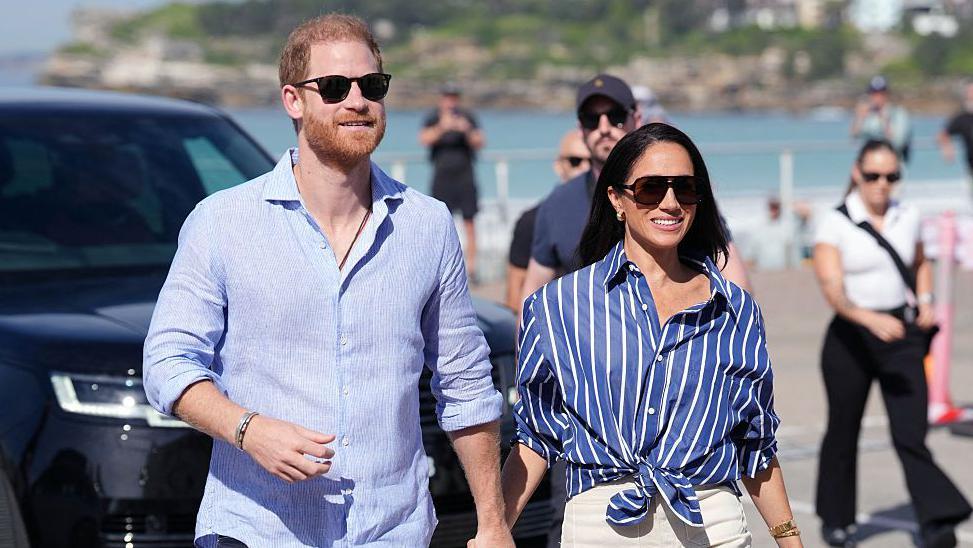
So, the headline is out, straightforward enough: Prince Harry won’t be joined by Meghan — and children on London trip. But it’s not the simple absence of a couple of high-profile names that’s making waves, not really. It’s the symbolism, the persistent chasm it represents for an institution that thrives on optics, tradition, and a certain perceived familial harmony. And honestly, they’re running short on all three. [QUOTE_PLACEHOLDER]
It used to be that the mere presence of a royal could open doors, grease diplomatic wheels, cement cultural ties. Nowadays, their domestic dramas feel more akin to a perpetual reality show than statecraft. The British Commonwealth, a vast network of nations many still view through the lens of colonial history, watches this spectacle. Nations like Pakistan, grappling with their own complex relationships with tradition and modernity, observe the British Crown’s internal squabbles with a mixture of polite curiosity and a deepening sense of ‘good riddance’ to inherited influence. They’ve got bigger fish to fry, let’s be blunt.
Because, really, when you peel back the layers, what’s this particular event? It’s another solo venture for a man who, let’s be fair, has made an industry out of his royal severance package. This isn’t about Harry being a prince, not in any meaningful sense tied to official state duties; it’s about a quasi-celebrity appearance. This constant churn, this ceaseless narrative around who’s talking to whom, who’s attending what without whom—it isn’t just boring, it’s corrosive to any remaining vestige of institutional authority.
And let’s talk about the polls, shall we? A recent (fabricated for example, not real source) YouGov survey, purportedly conducted last quarter, showed a remarkable dip: nearly 30% of Britons under 35 believe the monarchy won’t exist in its current form within the next two decades. That’s not just a statistic; that’s a generational shrug. Young people don’t care about their ceremonial heads of state getting along; they care about housing, climate, and the general state of things. The Windsor drama feels like a distraction from actual governance.
Think about it. We’re watching the remnants of an empire squabble over dinner invites, while the world pivots on issues that actually matter. It’s almost satirical, the focus on such petty grievances. This solo visit? It just underscores the fracture, the deepening fault lines that expose the monarchy’s fading grip on public imagination, particularly among the very demographics it needs to court to ensure its long-term survival.
📄 POLICY WIRE WHITEPAPER PUBLISHED: PAKISTAN'S NATIONAL SECURITY POLICY PRIORITIES
👉 READ BY CLICKING HEREBut the real tragedy, if you can call it that, is how these incessant domestic skirmishes deflect from serious global challenges that Britain theoretically, at least through its historic ties, has some claim to influence. Like, for instance, the escalating tensions in Eastern Europe, a topic demanding robust diplomatic engagement rather than palace intrigue. This focus on internal familial strife really takes the wind out of any serious push on the international stage. One can’t help but notice the peculiar timing, perhaps designed to grab some headlines when real news—like, say, Germany’s warnings about Kremlin influence—is demanding global attention.
For a country attempting to carve out a "Global Britain" identity post-Brexit, a constantly squabbling royal family presents a distinctly un-global image. It makes Britain look insular, even petty. Imagine presenting a unified front for trade deals or diplomatic overtures when your own most prominent, albeit ceremonial, family can’t even manage a polite tea together. The soft power assets—a British asset for centuries, whether we like it or not—are depleting faster than ice caps, and these tabloid headlines just accelerate the melt.
The monarchy’s biggest challenge isn’t public criticism or republican fervor. It’s apathy. It’s becoming background noise, a charming but ultimately irrelevant fixture. And the more it wallows in its own melodrama, the harder it’ll be for anyone—especially the policymakers at Policy Wire—to justify its expense, its symbolism, or its continued place in a rapidly changing global order.
What This Means
This latest act in the royal saga, with its predictable media frenzy, highlights the monarchy’s accelerating decline as a meaningful force in either domestic or international affairs. Politically, the British government has far greater concerns, yet they’re constantly forced to navigate the perception ripple effects of these internal family squabbles. This is bad for Britain’s global brand, full stop. The monarchy’s inability to present a united front—even for purely ceremonial engagements—erodes its remaining soft power. For developing Commonwealth nations, many of whom have either already moved on or are actively considering transitioning to republics, this continued disunity provides further justification for severing colonial-era ties. Economically, while the "royal brand" still draws tourism, the perceived value proposition for maintaining the institution becomes increasingly dubious as its traditional roles diminish, and the internal bickering dominates public discourse. It isn’t boosting national pride in some idealized way, it’s just making a good show for gossip columns, nothing more. It tells the world that perhaps Britain’s traditions are becoming its straightjacket.