


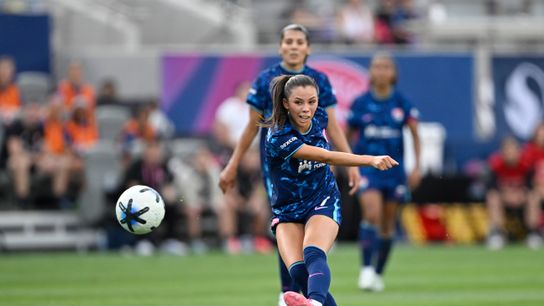
Wave FC: Youth & Grit Fuel NWSL Leadership
Despite injuries, San Diego Wave FC dominates the NWSL. See how youth, grit, and strategic talent development drive their success, a model for resilience.

POLICY WIRE — San Diego, USA — Forget the firecrackers; San Diego’s Independence Day spectacle was less about grand old narratives and more about a calculated gamble—a 19-year-old Colombian goalkeeper, Luisa Agudelo, making her professional debut against the reigning NWSL Challenge Cup champions. She earned a clean sheet, solidifying San Diego Wave FC’s precarious perch atop the league. It wasn’t the story the holiday crowd might’ve expected, not with injuries sidelining star power, but it’s the one they got, plain as day.
This past Saturday’s 2-0 win over Gotham FC wasn’t just a notch in the win column; it was a gritty, somewhat chaotic validation of San Diego’s philosophy: when stars fade, other luminaries emerge. And frankly, this club’s had its share of flickering lights recently. Its attack, once formidable, looked quite vulnerable only weeks prior.
Before kickoff, coach Jonas Eidevall faced a stark reality: Dudinha, an attacking linchpin, was out for the season, struck down by an ACL and meniscus injury on June 9 playing for the Brazil National Team. That’s a serious blow, ripping away someone [QUOTE_PLACEHOLDER] playing at an MVP level with nine goal contributions (five goals and four assists). Losing that sort of production, it’s not just a physical void; it’s a strategic black hole.
Then there’s Catarina Macario, whose record-breaking contract back in March still hasn’t translated to a single minute on the field. She’s listed with a heel injury, her return an ongoing, hazy mystery. You sign a superstar, but you can’t use her. And yes, they were already without Jaedyn Shaw, now leading Gotham’s charge with four goals—a subtle irony in itself.
But the narrative turned on Melanie Barcenas, the 18-year-old forward. Her left-footed rocket, sailing into the top right corner just before the break, truly ignited Snapdragon Stadium. Her third goal of the season, it broke the deadlock, giving the Wave a crucial lead and an excuse for a celebratory tea-sipping homage to Alex Morgan, who watched from the stands. Eidevall observed that Barcenas [QUOTE_PLACEHOLDER] continues to grow in the league and is becoming the type of player the team believes she could become.
And then there’s Agudelo. Nineteen. Facing a champion side in her NWSL debut start. That’s not a job for the faint of heart. Eidevall credited her calm — and composed demeanor for his decision. She did good—finished the night with four saves and that clean sheet. San Diego held 54% of possession, launching nine shots, mirroring Gotham’s efforts. It was a tactical dance, a war of attrition.
The second goal, that insurance policy, came late. Gotham’s goalkeeper, in a desperate push for an equalizer, ventured forward. Her pass upfield was a gamble that didn’t pay off; Tatum Wynalda deflected the ball. A long pass from Lia Godfrey found Trinity Byars, who calmly tapped it in, putting the game decisively to bed. Godfrey, an early candidate for Rookie of the Year, racked up her fourth assist; Byars netted her fourth goal.
📄 POLICY WIRE WHITEPAPER PUBLISHED: PAKISTAN'S NATIONAL SECURITY POLICY PRIORITIES
👉 READ BY CLICKING HEREThis team is proving it can adapt, it can win ugly, — and it can win missing its marquee names. Much like any organization navigating systemic challenges, be it a struggling political party or a nascent economy, the ability to find new leaders and talent when established ones falter proves itself a cornerstone of sustained success. They’ve gone from being simply good to something much tougher. They remain the top team in the league with nine wins, one draw, — and 28 points.
What This Means
From a broader policy lens, San Diego Wave FC’s unlikely dominance provides a compelling case study in crisis management and talent cultivation. The rapid promotion of young players—Agudelo, Barcenas, Lia Godfrey, Kimmi Ascanio—isn’t merely good coaching; it reflects a successful organizational resilience model. When top-tier talent like Dudinha, an MVP-level contributor, suffers a debilitating injury, and a high-profile signing remains sidelined, a lesser outfit would spiral. Instead, San Diego pivoted hard into its developmental pipeline. This dynamic mirrors challenges faced by many developing economies, particularly those in the Global South. Consider Pakistan, for instance, a nation that has historically grappled with retaining its brightest minds. Whether it’s medical professionals migrating to the West or highly skilled tech workers seeking opportunities abroad, the consistent drain of top talent necessitates robust internal systems to nurture and elevate successive generations.
The Wave’s situation also highlights the evolving economics of professional sports. The enormous investment in Macario, an injured star yet to play, poses a latent risk—one that even established sports economies like Indian cricket must balance against public sentiment and performance expectations. This team is showing how to insulate itself from such high-stakes individual bets by investing across the board. The club isn’t just buying; it’s building. That kind of pragmatic foresight, born of necessity and executed through strategic trust in youth, is often the very backbone of long-term stability—whether it’s on a football pitch or in a nation’s socio-economic planning.