


England’s World Cup: Altitude, Empire, & Global Power
England's World Cup challenge in Mexico City isn't just football. High altitude and a resurgent Mexico expose deeper narratives of national pride and global power shifts.

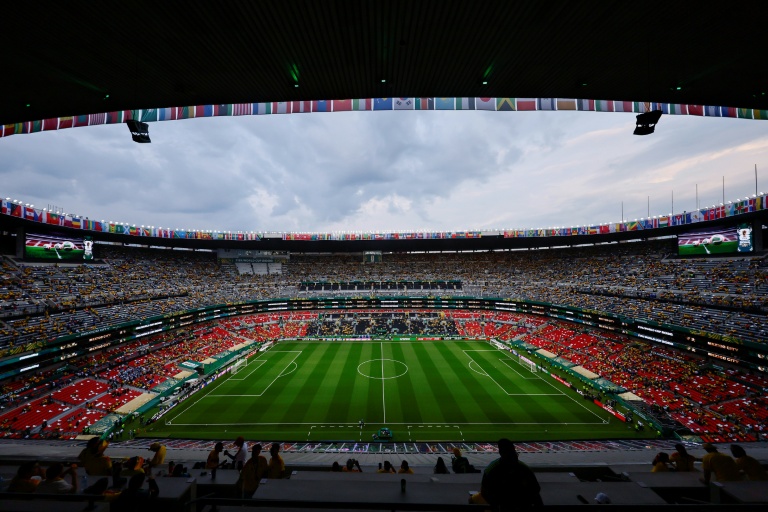
POLICY WIRE — Mexico City, Mexico — A half-century of yearning hangs in the thin air, a palpable pressure not just for the English squad but for any nation presuming global dominion—even if it’s just on a football pitch. It isn’t about just putting a ball in a net here; it’s about conquering environments, silencing skeptics, and perhaps most importantly, reasserting a narrative. This weekend, football provided a raw, stark illustration of these timeless struggles, with England’s World Cup ambitions literally gasping for breath high above Mexico City.
It’s an almost perfect metaphor, isn’t it? A nation long accustomed to its status, now finding itself battling the very ground beneath its feet. Because that’s what England’s doing, fighting Mexico at the Estadio Azteca—an iconic World Cup venue that stands some 2,240 metres (or roughly 7,350 feet) above sea level, a figure verified by various meteorological and geographical surveys. This isn’t just a game; it’s a physical challenge that cuts to the bone. [QUOTE_PLACEHOLDER]
Thomas Tuchel, England’s boss, didn’t mince words. He observed the team couldn’t physically adapt to it in four days. He said it’s just impossible, a stark admission of physical limits before a ball was even kicked. He had earlier felt straight away that this will be a proper World Cup match for tomorrow, after his Saturday visit. But he’s also grappling with a defense that has looked, frankly, porous. The problematic right flank, especially. It’s given opponents an avenue—a veritable freeway, actually—right into England’s soft underbelly.
But the Mexicans? They’re flying, thank you very much. El Tri have chalked up four straight wins on home soil, without conceding a single goal. That’s a testament to discipline, yes, but also to a fierce home advantage and perhaps, just maybe, an understanding that some battles are won before the whistle. Their 2-0 victory over Ecuador was their first knockout win at the World Cup for 40 years. Forty years! That’s an entire generation that hadn’t seen such a thing. History beckons for them, definitely. Imagine if England can be eliminated in front of an expectant home crowd—the reverberations would echo far beyond the confines of the stadium.
Meanwhile, as the main event brews, another equally compelling narrative unfolded across continents. Erling Haaland, that blond Norse titan, — and his Norway squad were busy trying to ambush Brazil. Carlo Ancelotti, Brazil’s coach, remained rather sanguine, saying everyone knows how he works and that he had nothing to explain to my defenders how to play against him. But you can bet your last dollar the weight of an entire nation rests on those defenders’ shoulders.
And speaking of collective weight, the subcontinent of Asia often mirrors these grand sporting sagas. Think of cricket between Pakistan — and India, for instance. It’s not merely a game; it’s a proxy for historical grievances, geopolitical positioning, and the aspirations of over a billion people. The emotional investment in such contests in Lahore or Mumbai, in a sense, dwarfs even the spectacle at the Azteca. For Pakistan, for instance, sports are one of the few arenas where they can routinely challenge former colonial powers or assert a distinct national identity on the global stage. It’s about more than victory or defeat, it’s about respect and a sense of belonging in the international firmament, just as Mexico craves to be seen as more than an underdog.
Norway’s coach, Stale Solbakken, told his team not to play according to the occasion, but that we simply play the match. He’s right, obviously. But how do you compartmentalize that kind of pressure? Brazil is the favourite, he acknowledged, but then added I don’t think they’re big favourites, which they maybe had been some years ago. A subtle dig? A genuine assessment? Hard to tell, but it captures the psychological chess match at play here.
📄 POLICY WIRE WHITEPAPER PUBLISHED: PAKISTAN'S NATIONAL SECURITY POLICY PRIORITIES
👉 READ BY CLICKING HEREThese aren’t just games, you see. They’re grand spectacles, moments where individual talent meets collective strategy, where environmental factors become as decisive as a star player’s skill. England, carrying the weight of a 60-year wait for a major title, have struggled through the group phase before squeezing past DR Congo. You don’t get to escape history so easily. Tuchel — and his boys have a fight on their hands that’s bigger than 11 players facing off against another 11.
What This Means
The dramas unfolding on these global football stages often act as barometers for deeper political and economic undercurrents. For England, the inability to consistently dominate, despite immense resources and a star-studded league, hints at a broader narrative of an established power struggling to adapt to a more dynamic, multipolar world. The altitude in Mexico City isn’t just a physical barrier; it symbolizes the uncomfortable terrain where traditional giants must now compete.
On the other hand, Mexico’s ascendancy, built on home-turf advantage and a gritty collective spirit, represents the growing confidence of emerging economies and nations keen to shed historical shadows. It mirrors countries in the Muslim world or South Asia that, while not always enjoying the same economic scale, are increasingly asserting their cultural and social prowess on global platforms. Take the increasing profile of nations hosting major tournaments or challenging long-held hegemonies in sports like cricket, as seen in the Indian subcontinent. It’s a quiet but forceful declaration: ‘We belong at the top table, — and we’ll challenge you there.’
For Policy Wire, these narratives are about more than sport; they’re about the ebb and flow of national prestige, economic investment, and soft power. A significant upset, like England’s potential defeat in Mexico, can send ripple effects through national psyches, influencing everything from investor confidence to government approvals for infrastructure projects. These aren’t merely games, they’re expressions of national will. It’s the kind of subtle struggle often found beyond the headlines of traditional foreign policy briefs, where everyday events — a football match, a cultural exchange, even an election in Indian cricket — carry profound weight. And when the big nations stumble, the implications for the global pecking order are never far behind.