


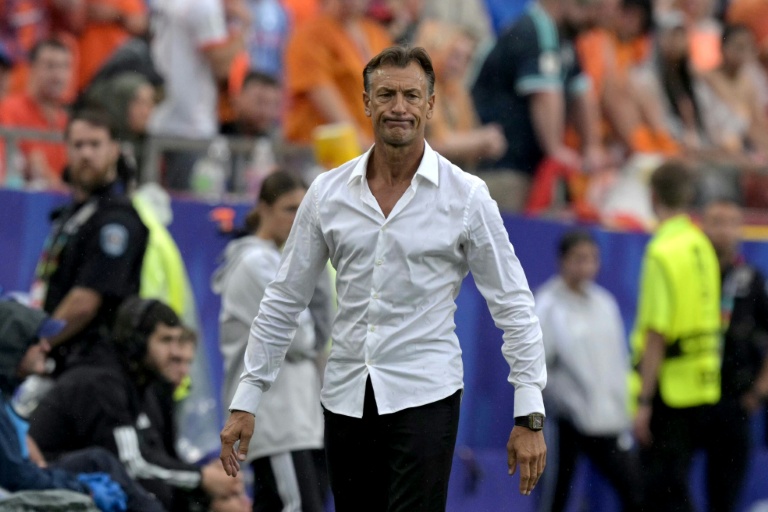
Tunisia’s World Cup Collapse: Coach Renard’s Swift Exit
Tunisia's World Cup hopes shattered as coach Hervé Renard departs after just two games. Discover the profound national, political, and economic fallout of this swift exit.

POLICY WIRE — Tunis, Tunisia — For many nations, a World Cup appearance isn’t merely a sporting event; it’s a potent geopolitical statement, a moment of fleeting national unity — or, as Tunisia just discovered, a very public exercise in high-stakes humiliation. This isn’t just about a ball and a net. It’s about national pride, government stability, — and even economic currents. The ink barely dried on Hervé Renard’s contract, it seems, before the whole thing went pear-shaped. His tenure with the Tunisian national side was less a journey, more a two-stop bus ride to an early exit.
Renard, a Frenchman with a reputation for coaxing magic out of African teams—he’d even bagged Africa Cup of Nations titles with Zambia and Ivory Coast, no small feat—was brought in mid-tournament. The expectation was nothing less than a miracle. Instead, he oversaw two more defeats for the Eagles of Carthage, culminating in his predictable departure. He replaced Sabri Lamouchi, who’d been sacked after a drubbing by Sweden. Renard, inheriting the wreckage, could do no better, managing a 4-0 loss to Japan — and a 3-1 defeat to the Netherlands. A quick, clinical decapitation, if you ask me.
His Instagram post was succinct, almost terse. “My adventure (with Tunisia) has come to an end,” the 57-year-old declared, echoing the crisp finality of a referee’s whistle at full-time. He offered perfunctory thanks to the Tunisian Football Federation, calling it “an honour.” But you could read between the lines, couldn’t you? The polite goodbye of a man who knows when a project is dead on arrival. Because sometimes, even the most decorated coaches can’t polish a… well, you know.
And let’s be frank: international football, particularly at the World Cup level, isn’t for the faint of heart. The scrutiny is intense, immediate. For coaches like Renard, it’s a career built on razor-thin margins. Just months prior, he was slated to guide Saudi Arabia through the same tournament, only to be shown the door there, too. His shelf life these days seems to be shorter than a fruit fly’s.
For Tunisia, a nation of nearly 12 million navigating complex political and economic landscapes, football performance can feel disproportionately significant. It’s a barometer of national spirit, often reflecting — or at least influencing — public sentiment. So, when a coach like Renard bails after just two disastrous outings, it sends a ripple far beyond the sports pages.
“We expected more, yes. But the national spirit remains resilient. It’s a moment of reflection, not despair,” remarked Tariq bin Nasser, a long-serving sports administrator and honorary vice-president of the Tunisian Olympic Committee, in a rather diplomatic post-mortem. His tone conveyed the delicate balancing act officials must perform between managing public disappointment and projecting a sense of future optimism. It’s not just a game; it’s part of the national identity, something governments tacitly understand and often try to leverage.
Across the wider Muslim world, the fate of Arab and African teams at the World Cup often takes on amplified significance. The electrifying performance of Morocco in the previous tournament, defying expectations and reaching the semi-finals, wasn’t just celebrated in Rabat; it sparked collective euphoria from Cairo to Jakarta. That kind of unexpected success, it unites. And conversely, these swift exits, they sting more broadly. Many looked to Tunisia to represent—if not physically advance—a certain regional pride. Moroccan Mastery Silences Canadian Claims, Football’s New Order Emerges provides a stark contrast to Tunisia’s experience, demonstrating how quickly narratives can shift.
📄 POLICY WIRE WHITEPAPER PUBLISHED: PAKISTAN'S NATIONAL SECURITY POLICY PRIORITIES
👉 READ BY CLICKING HEREThe numbers don’t lie about the stakes. According to analysts monitoring global sports economics, early elimination from the World Cup group stage can cost a national economy up to an estimated $50 million in lost tourism, merchandising sales, and dampened consumer confidence. That’s a chunk of change for any developing nation, much less one still finding its footing. Football’s impact, you see, isn’t confined to the pitch.
What This Means
Renard’s quick departure isn’t just a footnote in a sports almanac; it’s a stark reminder of the immense pressures that come with leading a national team. For Tunisia, this particular World Cup campaign was a misstep, but it also reflects a deeper need for stability and strategic planning within the national football federation. Politically, a successful run in a major international tournament can be a balm, distracting from domestic woes and fostering a fleeting, but potent, sense of national cohesion. A failure, especially such a quick one, does the opposite. It raises questions, not just about sports management, but about competence more broadly.
Economically, the ripple effect of an early exit extends to businesses hoping to capitalize on increased viewership and national celebration. Sports tourism, especially for fans traveling to follow their team, brings in valuable foreign currency. And the buzz generated by a competitive team boosts everything from local sponsorships to television rights. Without that, the economic opportunity dries up faster than an unwatered date palm. So, for a country like Tunisia, this World Cup exit isn’t just a disappointment; it’s a missed economic opportunity. The larger stresses around World Cups, including climate and logistics, often get the headlines, but the simple, brutal economics of performance hit harder at home.
What this situation really exposes is the inherent fragility of aspirations tethered to 22 men — and a ball. For governments in developing nations, sporting success often serves as a low-cost, high-impact foreign policy tool, and its absence leaves a vacuum that’s not easily filled. They’ll regroup, of course. They always do. But the taste of this defeat, of Renard’s two-game stint, it’s going to linger, isn’t it?