


Morocco’s 3-0 Win: Canada’s Coach Denies Reality
Morocco's dominant 3-0 World Cup win over Canada sparks controversy as Canada's coach denies reality. Explore Morocco's rise and global football impact.

POLICY WIRE — Boston, USA — Three goals can be rather unambiguous, can’t they? Yet, sometimes, in the theatre of global sport, they can still leave room for… interpretive dance. Consider the aftermath of Saturday’s World Cup clash: Morocco, swift and clinical, had just dispatched co-host Canada with a definitive 3-0 drubbing in the Round of 16. A clear scoreline, a clear victor. Or so you’d think. But in the hallowed press conference halls, Canadian coach Jesse Marsch offered a rather different narrative, a defiant counterpoint to the numbers on the scoreboard.
It was a jarring moment, really. While Morocco’s manager, Mohamed Ouahbi, radiated a quiet confidence, Canada’s boss was still busy championing his side, suggesting they were, in fact, the better team. “The way we pushed, the way we were in the match, the quality we showed, the overall impact in the match, we were better,” Marsch insisted, almost through gritted teeth, just moments after his team had packed their bags. “We were better than the No. 7 team in the world today.” And here’s the rub—Morocco is currently ranked 6th globally by FIFA, not 7th, a detail that seems to underline a certain detachment from reality.
Ouahbi’s response, when informed of Marsch’s spirited post-mortem, was delivered with a kind of understated, almost weary, amusement. “In terms of intensity they were good,” he conceded. “They were good for 98 minutes. Were they better? It’s hard to say. It takes some nerve to say that when you lose 3-nil.” That’s the cold logic of competitive football, distilled perfectly. You just don’t say that when you’re on the wrong end of a three-goal deficit.
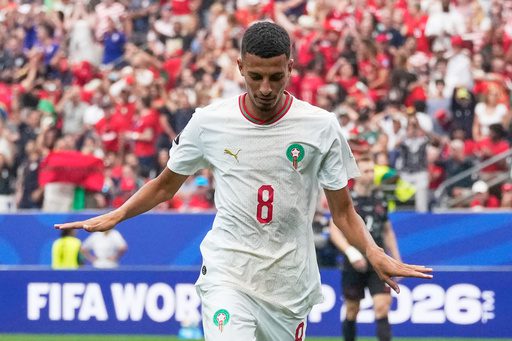
Morocco’s victory wasn’t just a win; it was a statement. Azzedine Ounahi, nimble and precise, netted twice, breaking through a Canadian defense that, despite Marsch’s assertions, certainly looked vulnerable. His first came in the 50th minute, a right-footed shot cutting through traffic from a free kick by Achraf Hakimi. Then, in the 82nd, he sealed his brace from a pass by Brahim Díaz. Soufiane Rahimi added the insult of a third in stoppage time. It was decisive. It was surgical.
For Morocco, this isn’t uncharted territory. It’s their second consecutive quarter-final appearance, having broken barriers by reaching the semifinals in 2022. “We’re no longer a surprise,” Ouahbi declared, the interpreter translating his satisfaction. “Now when people talk about Morocco we’re a major contender and it’s a great source of pride.” He views it as merely “the beginning.” And frankly, he’s got a point. They’ve earned their seat at the top table, not through luck, but through sheer performance.
But for Canada, it marks the end of what was, until Saturday, a rather enchanting ride. They’d notched their first-ever knockout round win, a 1-0 triumph over South Africa, pulling a nation usually more concerned with ice hockey into the drama of the pitch. Goalkeeper Yassine Bounou, Canadian-born to Moroccan parents, incidentally, made three saves to help send his birth country home. A rather neat narrative twist, don’t you think? It’s a good story for Canadian football’s growth, certainly. Just not a winning one.
📄 POLICY WIRE WHITEPAPER PUBLISHED: PAKISTAN'S NATIONAL SECURITY POLICY PRIORITIES
👉 READ BY CLICKING HEREThis match, a fiery replay of their 2-1 group stage clash in the previous World Cup, was characterized by an intensity that bordered on friction. Eight yellow cards were handed out – four for each side – testament to the sheer physicality of the contest. Hakimi shoved Richie Laryea, Laryea returned the favor; a minor scuffle ensued. It was visceral, genuine football. And Morocco emerged unequivocally on top.
What This Means
Morocco’s sustained success at the World Cup extends beyond the confines of the football stadium; it has tangible geopolitical resonance. As a leading voice from North Africa and a nation with deep ties to the broader Arab and Muslim world, its repeated advancement signifies a shift in global sporting hierarchies. It’s a powerful narrative of ambition and achievement, a potent symbol of what developing nations, often dismissed by European-centric narratives, can achieve on the biggest stage. This isn’t just about football; it’s about national brand, about soft power, about a renewed sense of confidence echoing across a region that values collective triumphs dearly. The economic benefits, while harder to quantify immediately, accrue through increased tourism, investment, and a strengthened national identity—all incredibly valuable in a complex international arena. Nations observe these victories, drawing inspiration, and—perhaps—a template for their own sporting investments. Also, one can’t ignore the ongoing conversations about the allocation of FIFA’s resources and recognition across continents, where Morocco’s performance provides a strong case for African football’s rise.
But the aftermath also highlights an interesting aspect of sports psychology: the tension between effort — and outcome. Canada’s performance, commendable in its ‘push’ as Marsch described, simply couldn’t convert into goals against a more technically proficient, and let’s be honest, battle-hardened Moroccan side. Sometimes, being ‘better’ in moments doesn’t mean being better over 90-plus minutes. Marsch challenged his team, “Can we hold that standard for 90 minutes?” They couldn’t, apparently. The Lions of Atlas did. And that’s what makes them quarter-finalists, — and Canada, well, history.