


Mizzou’s Porter Legacy: A Troubled End
Jevon Porter's Mizzou exit marks another chapter in the Porter family's troubled legacy with the basketball program. Explore the pattern of setbacks and its impact.

POLICY WIRE — Columbia, MO — For those who’ve watched the theatrical spectacle that’s modern collegiate athletics, some sagas feel less like sporting narratives and more like Greek tragedies. In Columbia, Missouri, a particular surname—Porter—has become synonymous not with triumph, but with the haunting specter of unfulfilled potential. Call it a curse, call it bad luck, but for Mizzou basketball, the latest chapter involving a Porter—Jevon—has closed, not with a roar, but with a barely perceptible sigh.
It’s not every day a highly touted 6’10” forward with NBA lineage commits (or re-commits, as was the case) to your program. And frankly, the excitement around Jevon Porter’s arrival felt like a desperate gamble against history itself. Fans, some still twitchy with a kind of post-traumatic stress from previous Porter entanglements, couldn’t help but hold their breath. Because let’s be real, Mizzou’s experience with the Porter men hasn’t been a highlight reel. It’s been…complicated.
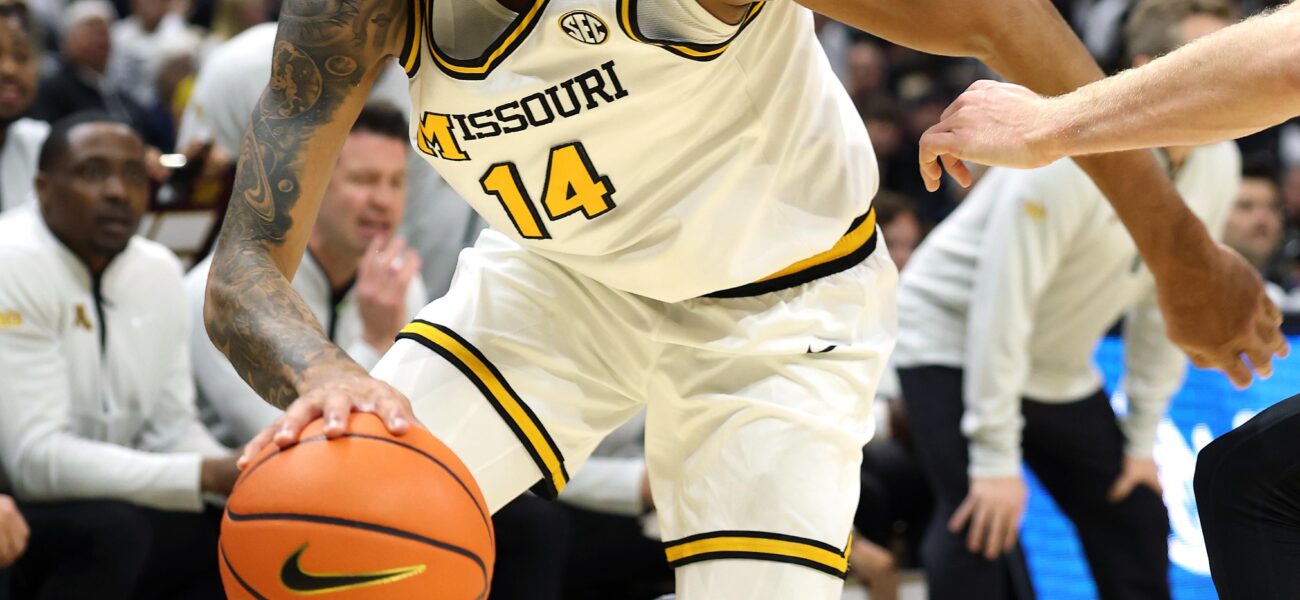
Jevon, bless his heart, started out promising. The big lineup, the strategic vision from Coach Dennis Gates, everything looked primed. He started the first ten games. Gates envisioned a mobile, skilled big man who’d defend, rebound, — and knock down open shots. A sensible plan, yes. But consistency, that elusive beast, remained out of reach. Jevon Porter managed just 7 three-pointers across his truncated season, converting a paltry 25% of his attempts from beyond the arc. Per Basketball-Reference.com data, that puts him considerably below average for players in his position nationally. He just couldn’t find his rhythm, not consistently.
Then came the K.U. loss. Gates tried to tweak things, bringing Porter off the bench. A minute against Alabama State, a swift removal. Sixteen minutes, six points, efficient enough against Bethune-Cookman. And then? Silence. He never played another game. A mysterious lower leg injury, the exact nature of which was never really laid bare, kept him sidelined. Some whispered medical redshirt, others just shrugged. But everyone knew how it usually ends for a Porter at Mizzou.
Eventually, the transfer portal beckoned. It’s a familiar script in the hyper-transactional world of modern collegiate sports, where player allegiances can shift with the market’s whims—much like ephemeral alliances among tribal elders along the Af-Pak border, where loyalty is as fluid as sand. And then, a recent announcement: Jevon Porter, bound for the Memphis Grizzlies summer league. College career over. Just like that.
“We’re building a culture here, and sometimes, for the collective good, hard decisions have to be made for all involved, player and program,” Coach Dennis Gates told Policy Wire in a previous interview, his words, in hindsight, perhaps foreshadowing. It’s a professional pivot for Jevon, a logical step. But for Mizzou, it marks another disappointing footnote in the annals of the Porter surname.
📄 POLICY WIRE WHITEPAPER PUBLISHED: PAKISTAN'S NATIONAL SECURITY POLICY PRIORITIES
👉 READ BY CLICKING HEREMichael Porter Jr.’s catastrophic injury derailed what promised to be a legendary collegiate season, igniting an ordeal. His brother Jontay suffered a season-ending injury, then faced a highly public gambling scandal—a situation that truly scalded the program’s reputation. Even their other brother, Coban, with no direct Mizzou ties beyond family, cast a shadow with a fatal DUI. It’s an undeniable pattern, a cloud. Desiree Reed-Francois, the former Mizzou athletic director who oversaw parts of this turbulent era, once noted, “The stakes for young athletes, especially those navigating significant family legacies, are immense. Their journey isn’t just about performance; it’s about immense public pressure.” Her comments, given Mizzou’s ongoing struggles to recapture past glories, carry an acute sting.
For all the athletic prowess the Porter family possesses—and make no mistake, they’ve it in spades—the men’s basketball program has only found a cycle of anticipation and letdown. It’s a recurring drama that feels almost preordained, an athletic equivalent of a house always winning against a particular surname at the roulette table. The women’s side of the Porter family, incidentally, with players like Cierra and Bri, built solid, respectable careers despite injury challenges, offering a counter-narrative the men’s program hasn’t been able to replicate.
What This Means
The swift exit of Jevon Porter from the Mizzou men’s basketball program, following a familiar pattern of dashed expectations and injury setbacks for the Porter family, carries implications beyond the court. Economically, this string of high-profile, low-return investments can erode fan confidence and, subsequently, booster donations and ticket sales. For a mid-major like Mizzou, navigating the increasingly cutthroat financial landscape of college athletics, public perception matters immensely. Politically, within the closed ecosystem of the NCAA, programs develop reputations. A program consistently linked to off-court issues or a lack of player development—regardless of fault—can find recruiting harder, talent retention more challenging, and media narratives less favorable. It also spotlights the human element in college sports’ transactional reality; players are assets, yes, but they also carry personal histories, family burdens, and the immense pressure of public life, often at very young ages. And that’s something the statistical models often miss.
Jevon’s move to the Grizzlies is his fresh start, free from the collegiate weight. But the question remains: When will Mizzou find a way to break the cycle, or perhaps, simply put the Porter saga, men’s edition, definitively to bed?