


Klopp to Germany: A Nation’s Hope for Revival
As Germany faces deep national challenges, all eyes are on Jürgen Klopp. Learn how his potential DFB role could be more than just football: a national psychological operation.

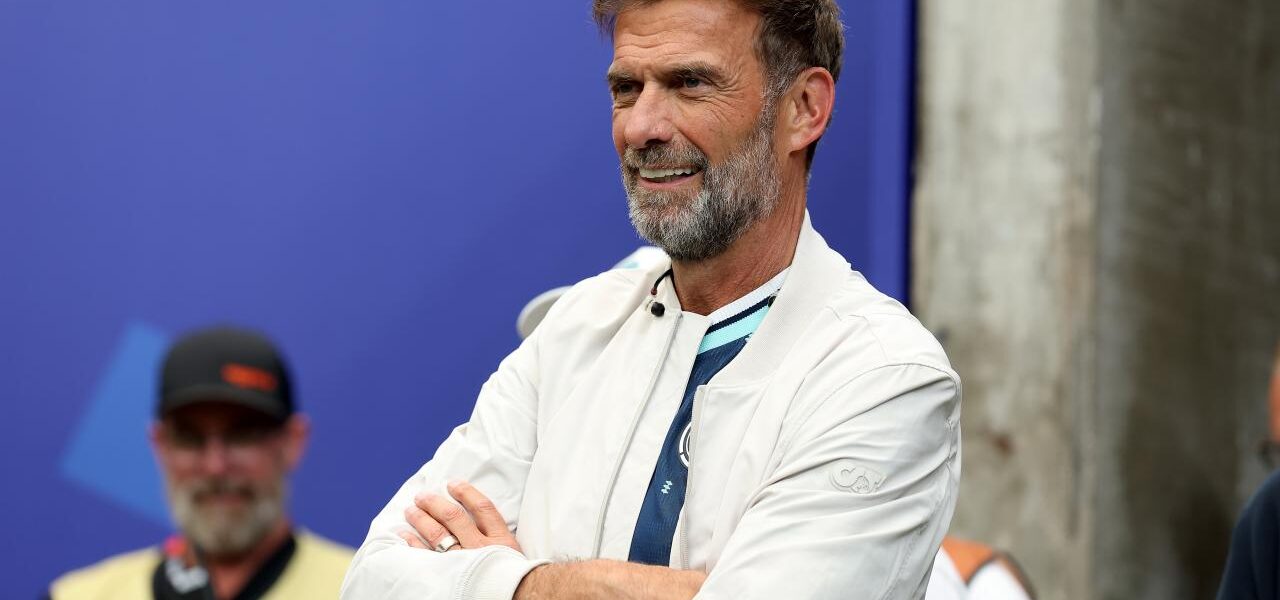
POLICY WIRE — Berlin, Germany — Forget the goals, the yellow cards, the frantic dance on the touchline. Germany, a nation famed for its clinical efficiency and robust economic engine, lately feels like a vast, beautifully engineered machine sputtering on empty. Its football team’s ignominious exit from the recent global tournament wasn’t just a sporting failure; it was another raw nerve exposed in a country already grappling with economic unease, rising political extremism, and an existential murmur about its place in a shifting global order. Into this rather joyless arena steps Jürgen Klopp, the celebrated tactician, confirming talks with the German Football Association (DFB) — a mere managerial negotiation, yet freighted with the hopes of millions seeking any sign of national revival.
It’s an awkward courtship, isn’t it? Julian Nagelsmann, the former coach, now just another casualty in the DFB’s merry-go-round. Klopp, speaking on MagentaTV, didn’t exactly gush. He acknowledged the overture, plain as day. “Yes, I can confirm the talks,” he said, matter-of-factly. Nagelsmann, by all accounts a decent fellow — and a sharp coach, got tossed, and the DFB’s been scrambling since. And who wouldn’t reach for Klopp, a man who transformed mere clubs into emotional behemoths? He’s charisma personified, a jolt of caffeine Germany desperately needs.
But the timing, always the timing. Klopp, currently tied to Red Bull as its Head of Global Soccer until 2029 (a peculiar title, that), hinted that his previous sabbatical had served its purpose. “When I stopped at Liverpool, I lacked the energy for even one more year with the club,” he recounted, adding, somewhat triumphantly, “and I’m more than recharged now.” A verbal agreement, rumour has it, lets him off the hook should his homeland call. It’s almost too tidy a narrative for the usually chaotic world of elite football. Because, let’s be honest, few careers go this smoothly, especially when national pride’s on the line.
The DFB, frankly, needed a big name. The national team, once a symbol of Teutonic might, has been wobbling. World Cup disasters, early exits, a growing sense of a fading dynasty. German industrial production, for example, dropped by 0.4% in November 2023 year-on-year, according to Destatis — a stark data point for a nation that prizes its output. Maybe this isn’t just about football, but about regaining a collective swagger. As former DFB President Fritz Keller once dryly observed, even after his own controversial exit, “The mood in the country is always reflected on the football pitch. We’re not separate from that; we’re a thermometer.”
Klopp was surprisingly forthright about the actual mess he’d inherit, or perhaps, re-inherit. “The problems Germany were experiencing were not due to Julian Nagelsmann,” he mused, a polite nod to the departing coach’s capabilities. “Julian Nagelsmann is an extraordinary coach, and he will have the opportunity to prove that many times in his coaching career.” That’s a tacit acknowledgement that this runs deeper than just who’s calling the shots from the dugout. It’s about national identity, player development—a sense of direction.
The murmurs reach beyond Europe’s borders. Even in Lahore, Karachi, or Dhaka, where a fervent diaspora keeps tabs on the beautiful game and their ancestral homelands, Germany’s struggle resonates. Many from Pakistan — and Bangladesh, for instance, have sought new lives in Germany, contributing to its diverse fabric. And yet, questions of belonging, of integration, bubble under the surface – issues that a unifying force like a successful national team can, for a brief spell, obscure. But when the team falters, those anxieties, political — and cultural, become starker. There’s a particular keenness in the global south on how established Western powers manage their internal and external identities. Germany’s anxious reckoning isn’t just local news; it’s a global read.
📄 POLICY WIRE WHITEPAPER PUBLISHED: PAKISTAN'S NATIONAL SECURITY POLICY PRIORITIES
👉 READ BY CLICKING HEREWhat This Means
Klopp’s potential ascension isn’t just a tactical adjustment; it’s a national psychological operation. Politically, a rejuvenated national football team offers a rare moment of unity in an increasingly fractious German society, grappling with its shifting demographics and the rise of nationalist sentiment. It provides a popular narrative of recovery, a counterpoint to economic slowdowns — and political fragmentation. Any triumph, however fleeting, acts as a temporary salve. Economically, a successful national side bolsters tourism, merchandizing, and even subtle investor confidence – it’s part of the national brand. Imagine the commercial boost should Klopp lead them to glory, reinvigorating interest, perhaps even pulling eyes away from other global sporting dramas. For the DFB, it’s a Hail Mary pass: a move to staunch the bleeding of interest, finances, and public trust, pinning immense hope on one man’s infectious energy and tactical brilliance to paper over cracks far larger than any football pitch.
He’s negotiating with Red Bull, as he stated, to respect his obligations. But it doesn’t sound like a hard ‘no.’ It sounds like a ‘when’ and ‘how.’ For a country yearning for clear leadership, not just on the field, Klopp’s candidacy signals a desire for a decisive reset. Whether he can deliver that isn’t just about formations or player selection; it’s about touching the German spirit.