


Pochettino’s Pitch: Sport, Soft Power, & Global Brands
Mauricio Pochettino's ceremonial pitch revealed the high-stakes world where global sport meets diplomacy. Explore how national branding and soft power shape every interaction in international...

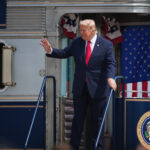
POLICY WIRE — Seattle, United States — It’s an arena where billion-dollar endorsements clash with national pride, where global fandoms are forged and shattered, and where one misstep on the field can undo years of meticulous preparation. But on a recent Friday night, just hours before leading his U.S. Men’s National Team into a World Cup knockout clash, coach Mauricio Pochettino faced a challenge far removed from tactical formations or player fitness. He was to throw a baseball. A baseball, for heaven’s sake—a peculiar American ritual for an Argentine maestro whose entire existence revolves around the beautiful game. The stakes, while seemingly trivial for the coach, were a sharp reminder of the sprawling, sometimes absurd, ecosystem of modern international sport.
It wasn’t a game-winning penalty, not a last-ditch defensive scramble. It was merely a ceremonial toss at a Seattle Mariners game, yet the public discourse surrounding it rivaled the pre-match analysis for the actual football. Forget the weight of a nation’s hopes, or the looming specter of Belgium—the internet held its breath for a potential 50 Cent-esque flop. Because that’s where we’re at, aren’t we? Optics sometimes trump outcome. For the 54-year-old manager, a man who lives and breathes tactics, this was pure theater, a cultural tightrope walk on the diamond. And he knew it.
“Look, you come to America, you learn the customs, no? It’s good for the team, for the spirit,” Pochettino reportedly commented with a slight, weary smile when pressed by a local reporter. “But my focus, it stays with Belgium. Always.” It’s a line that belies the significant planning that went into this little sideshow, involving not just Pochettino, but goalkeeper Matt Turner, offering an earnest crash course in baseball mechanics—a quick, almost comical tutorial that surely had more experienced pitchers wincing. Yet, it worked. The ball didn’t bounce, didn’t fly into the stands, didn’t sail five feet wide. It was, by all accounts, perfectly acceptable. A looping, high lob that landed safely in the glove of Mariners manager Dan Wilson. A non-event, which, in these situations, is always the goal.
And so, a potential mini-crisis was averted, but the incident offers a fascinating lens into the increasing confluence of sport, commerce, and national brand-building. For U.S. Soccer, this wasn’t just about making friends with local sports franchises; it’s about casting a wider net, broadening appeal beyond the traditional football crowd, and showcasing the game’s burgeoning American footprint to a skeptical public. It’s a calculated effort in soft power.
“We see these engagements not as distractions, but as moments for cultural exchange,” explained Sarah Jenkins, a U.S. State Department spokesperson. “It’s about building connections, showcasing America’s sporting breadth to a global audience. The soft power dividends, they’re considerable. Particularly when trying to project an image of open engagement in regions where our diplomatic efforts might traditionally focus on different priorities. Think about the hundreds of millions watching the World Cup in Pakistan or across the Middle East—it matters how American teams and their representatives present themselves.”
Indeed, while baseball remains America’s so-called pastime, the truth is, global sport, dominated by football, has rapidly become the world’s most potent cultural unifier—and often, a vehicle for economic influence. For instance, FIFA reported that over 5 billion people globally engaged with the 2022 World Cup, with significant growth in digital audiences across South Asia and the Middle East, markets where baseball remains a niche curiosity. That’s a staggering reach, making every public appearance, every off-field interaction, a carefully scrutinized piece of a much larger puzzle. Pochettino’s innocuous pitch, therefore, became a footnote in a bigger play for visibility.
📄 POLICY WIRE WHITEPAPER PUBLISHED: PAKISTAN'S NATIONAL SECURITY POLICY PRIORITIES
👉 READ BY CLICKING HEREUSMNT midfielder Tyler Adams put it bluntly, almost foreshadowing the trivial spectacle: “I don’t want to say too much but I don’t think baseball is a popular sport in Argentina, so we’re going to see.” And he wasn’t wrong. Yet, this globalized age demands versatility, not just on the pitch, but in the public square. Pochettino’s quiet compliance speaks volumes about the new expectations placed upon high-profile coaches. They aren’t just strategists; they’re brand ambassadors, diplomats, and, occasionally, unlikely baseball novices. They’re part of the World Cup’s new power brokers, even in their most mundane tasks.
What This Means
This little side-quest into America’s peculiar sporting traditions wasn’t just a laugh. Not at all. It points to a hardening reality: professional sports, especially on the international stage, are inseparable from broader policy goals and economic imperatives. For the U.S., leveraging the World Cup — being played on home soil — means maximizing every single interaction for cultural projection and brand synergy. They’re selling America as much as they’re selling football, and a clean, ‘successful’ first pitch from a foreign coach leading their team symbolizes an approachable, well-managed effort. It’s a low-risk, high-reward gambit in the game of public relations.
But the pressure itself — for a man who surely had greater worries — is also a window into the unrelenting, almost cruel, nature of elite sports today. Every moment is a photo op, every movement a potential headline. This extends even to the economics of an individual sport; just look at the unforgiving business of American pastime and how even minor failures can escalate. Pochettino, tasked with matching the country’s best performance since 1930 and reportedly offered a contract extension through 2030, carries a burden far heavier than a mere baseball. His perfectly acceptable pitch is less a measure of athletic prowess and more a quiet demonstration of cultural fluency, a necessity for those navigating the high-stakes, commercialized intersection of global sport and national identity.