


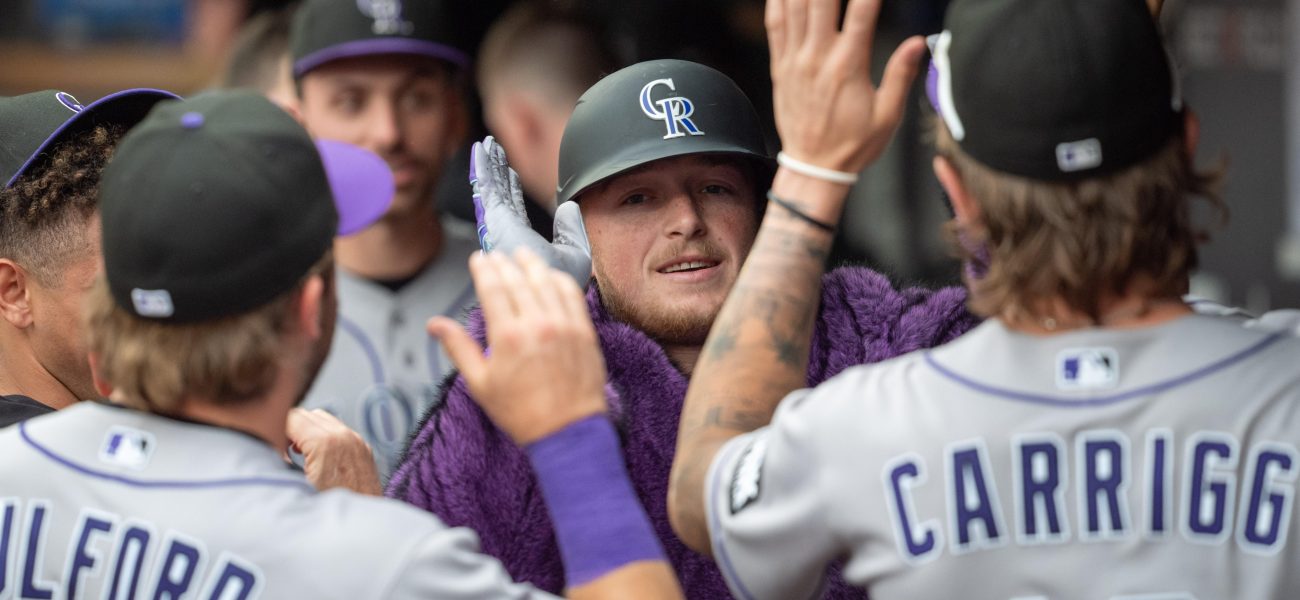
Hunter Goodman’s Enigmatic Home Run Surge Raises Questions Beyond the Scorecard
POLICY WIRE — Minneapolis, USA — A baseball game, an everyday spectacle for most, often hides deeper, less obvious truths—much like the carefully sculpted pronouncements from various policy desks...

POLICY WIRE — Minneapolis, USA — A baseball game, an everyday spectacle for most, often hides deeper, less obvious truths—much like the carefully sculpted pronouncements from various policy desks around the globe. While casual observers might have fixated on a dominant individual display last Friday in Minneapolis, the true intrigue lay in the narrative fissures it exposed, the stark reality of how a dazzling personal triumph can merely decorate a less palatable collective predicament.
It wasn’t just a regular ball game; it was a testament to the perplexing unpredictability inherent in sports—and, perhaps, in markets and geopolitical maneuvers. And for the home team, the Minnesota Twins, it brought a stark realization: even monumental individual feats, when untethered from systemic strength, don’t guarantee desired outcomes. The Colorado Rockies clinched an 8-5 win, courtesy of a singular player whose brilliance seemed to defy the usual statistical conventions. [QUOTE_PLACEHOLDER]
Hunter Goodman, the designated hitter for the Rockies, found himself in an almost absurd state of flow. He notched three home runs—a rare enough feat—and amassed five RBI, almost single-handedly driving his club to victory. He popped two of those long balls off Twins starter Mike Paredes, who, ironically, went what was described as a career-best 5.1 innings despite the pummeling. Goodman then launched another blast off reliever Kody Funderburk. This kind of eruption from one batter can distort perceptions, making the performance seem more coherent than the underlying mechanics often allow.
But the numbers on Goodman himself tell an even stranger story. The very same player who calls Coors Field—a hitter’s paradise—his home ballpark has a curious disjunction in his statistics. He performs measurably worse there. His home splits reveal a modest .193/.276/.393 slash line. On the road, however, the designated hitter transforms into an altogether different beast, sporting a robust .281/.335/.614, representing a 156 wRC+ (weighted Runs Created Plus), compared to just 56 wRC+ at home. That’s a whopping 100-point difference in weighted performance, a statistic widely accepted in sabermetrics as a measure of a player’s total offensive value relative to the league average, adjusted for park effects. This remarkable statistical chasm begs questions: Is it about perception, pressure, or simply the perverse humor of sports economics, where your biggest assets sometimes thrive when furthest from their supposed comfort zone?
Meanwhile, for the Twins, individual grit fought against a tide of collective frustration. Trevor Larnach had three hits, including his 14th double of the year—a critical, bases-clearing shot in the bottom of the ninth that offered a fleeting glimmer of hope. Kody Clemens also chipped in with an early RBI. These aren’t the stats of a team completely falling apart. But the losses mount, especially on a homestand that, a week after a successful road trip, is quickly becoming a mega-dud. It’s a classic case of individual endeavor being swallowed by larger strategic misfires or simple, immutable bad luck. You’ve got to wonder what team strategists are thinking—or not thinking—when this pattern keeps repeating.
One might draw parallels to resource allocation in, say, South Asia. Consider Pakistan, a nation where sporting passion, particularly for cricket, runs deep, but infrastructural investment often struggles to match the potential of its athletes. Imagine a cricket star, performing brilliantly on foreign pitches, yet finding local grounds and domestic league structures lacking the capacity to fully cultivate or financially leverage that talent. The economics are profoundly different, of course, but the core dynamic—an individual’s potential not quite aligning with the established system’s ability to maximize it locally—resonates.
📄 POLICY WIRE WHITEPAPER PUBLISHED: PAKISTAN'S NATIONAL SECURITY POLICY PRIORITIES
👉 READ BY CLICKING HEREBut back in Minneapolis, the immediate concern isn’t global sports economics. It’s Sunday’s game. The Twins will need to take Sunday’s game to avoid a mega-dud of a homestand. Because this whole setup? It’s not just about wins — and losses on the field. It’s about revenue, fan morale, future investments, — and the overall psychological landscape of a sports franchise. It’s also a miniature case study of how localized policy—the coaching decisions, the player acquisitions, the tactical adjustments—can impact perceived success.
What This Means
This single game offers a pointed, if often ignored, lesson for policymakers — and economic strategists. It’s not enough to have a few star performers; true stability and sustained success demand robust, consistent foundational support. Goodman’s split performance underscores how environments dictate output far more than raw, portable talent. Investment, whether in public works, education, or even sport, must consider the local ecosystem. What performs spectacularly under specific, perhaps optimized, conditions abroad may flounder under different, unaddressed domestic pressures. It means carefully assessing where resources yield their best returns and acknowledging that flashy, headline-grabbing individual achievements don’t always reflect a healthy systemic operation. The Twins’ situation serves as a grim reminder: sometimes, even when a component shines brightest, the overall machine can still sputter, pointing to a larger issue of strategic coherence rather than mere talent deficiency. Global sports economics, in its own way, offers myriad examples of this exact conundrum.
It’s a complicated mess. As the original piece noted with an almost dismissive shrug, As is the case with almost anything in life, we’re just gonna have to see what happens.