


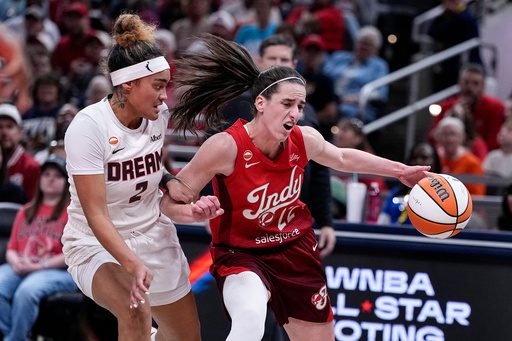
WNBA’s Online War: Stars Battle Digital Hate & Threats
The WNBA's soaring popularity brings a dark side: players face relentless online hate, threats, and toxicity. Discover how the league and stars are fighting back.

POLICY WIRE — New York, USA — A silent, digital plague has infected modern discourse, often bubbling up in the most unexpected corners of our lives. It festers, growing bold behind the veil of anonymity, — and now, it’s laid siege to women’s professional basketball. Forget the courtside drama; the real skirmish for players and coaches in the Women’s National Basketball Association isn’t with opposing teams, it’s against a relentless torrent of online hatred. The ball may drop, but the digital venom keeps on flowing.
It’s not just the sudden flash of a death threat, but the drip-drip-drip of character assassination, the relentless tide of vitriol that wears down even the most resilient spirits. This isn’t exactly news, mind you. But the WNBA’s explosive surge in popularity, a bonanza bringing record-breaking attention and a multi-billion dollar media rights deal to the league, has only amplified a nasty undercurrent that’s been stewing for what The Associated Press points out is more than a decade. Good fortune, it seems, has its rather ugly flip side. [QUOTE_PLACEHOLDER]
Take the case of Phoenix Mercury forward Alyssa Thomas, for instance. After an on-court dust-up, she reported receiving death threats. She had also been called racial slurs, the sort of ugly epithets that remind you just how thin the veneer of civility really is. You’d think a sports rivalry would be contained to the hardwood, but no, it’s not; it spills over, contaminating the public square with an ease that’s unsettling. Because in the online wilderness, everything gets magnified.
Even Caitlin Clark, arguably the biggest sensation the league has ever seen, isn’t immune. She’s watched as her own team — and rivals get dragged through the digital mud. “I’ve said up here and said before, the harassment, the hate, none of that’s OK,” Clark said at practice Friday. “That goes for the opposing team we play, that goes for my teammates, that goes for my coaches. There should never be question of character. None of that’s OK, — and I don’t want anybody to ever experience that.” And she doesn’t mince words. Her frustration is palpable; the kind that stems from an unwelcome spotlight not on her jump shot, but on her humanity.
The league itself, sensing this growing menace, isn’t just whistling past the graveyard. WNBA Commissioner Cathy Engelbert did issue a statement on Tuesday condemning “any and all forms of hate.” But talk’s cheap, isn’t it? So, they’ve beefed up security, charter flights for teams are now standard – a good look, really – and they’re even dabbling in AI software. Yes, artificial intelligence, brought in to flag the most egregious digital muck, which is something you probably wouldn’t have predicted as a major expense for a basketball league a decade ago. It’s a technological arms race against anonymous keyboard warriors.
📄 POLICY WIRE WHITEPAPER PUBLISHED: PAKISTAN'S NATIONAL SECURITY POLICY PRIORITIES
👉 READ BY CLICKING HEREFever coach Stephanie White sums it up pretty bluntly. During an opening statement Wednesday, she described it as “so much more toxicity, racism, homophobia — straight-up hateful nonsense, and it’s absolutely unacceptable.” She believes, and maybe she’s being charitable, that “most of it’s not coming from WNBA fans or Indiana Fever fans.” So, who are these faceless purveyors of spite? Trolls? Bots? Just regular people who’ve lost their filters? White coached Thomas two years ago, saw similar online garbage then, too. She says, “AT is exactly right: We get to play a basketball game. Yes, that’s going to come with criticism and yes, that’s going to come with fans and the love-hate relationship they’ve with players and teams. But it’s not hard to not be a jerk. And if you’re one of the people who’s online doing this, don’t call yourself a WNBA fan.”
But it’s deeper than just being a jerk. It affects the players, genuinely. Clark herself admits the online noise is “difficult.” “A lot of people sometimes think I’m a robot. I’m not a robot. I have emotions, I have feelings.” She’s just 24, figuring out life, and having her humanity questioned on a global stage can wear a person down. The league’s expanded mental health resources are, for once, not just window dressing; they’re an absolute necessity. Because fame in the digital age—especially for women athletes—can often feel like a gilded cage built of abuse.
What This Means
The WNBA’s battle isn’t just about protecting its stars; it’s a microcosm of a larger societal erosion. The explosion of online vitriol points to an uncomfortable truth about the contemporary global commons: unmoderated platforms become havens for unchecked aggression. Economically, this toxicity directly threatens the league’s growth and, by extension, the economic empowerment of its athletes. A league looking to capitalize on a multi-billion dollar media deal can’t have its biggest assets—its players—constantly exposed to psychological warfare. This isn’t a problem unique to American sports, either. In South Asian and Muslim-majority countries, where celebrity and public figures also navigate fervent fandom, similar issues arise. Public shaming campaigns, often fueled by moralistic or nationalist fervor, can spiral into real-world threats with alarming speed. For instance, athletes in Pakistan face immense pressure and scrutiny online, sometimes bordering on defamation for on-field performances or even personal choices, mirroring the WNBA’s predicament where passionate fandom morphs into malicious abuse. It showcases a universal dilemma: how do you foster engagement and freedom of expression online without inviting unchecked harassment? That’s the question that vexes regulators, tech giants, and — increasingly — even professional sports leagues. When the primary economic driver is eyeballs, managing the darker elements that attention inevitably attracts becomes an inescapable, messy, and rather costly policy challenge. It means spending real money on security protocols, on psychological support, — and even on sophisticated AI. It’s a cost of doing business in the digital wild west, — and it’s likely only going to increase.