


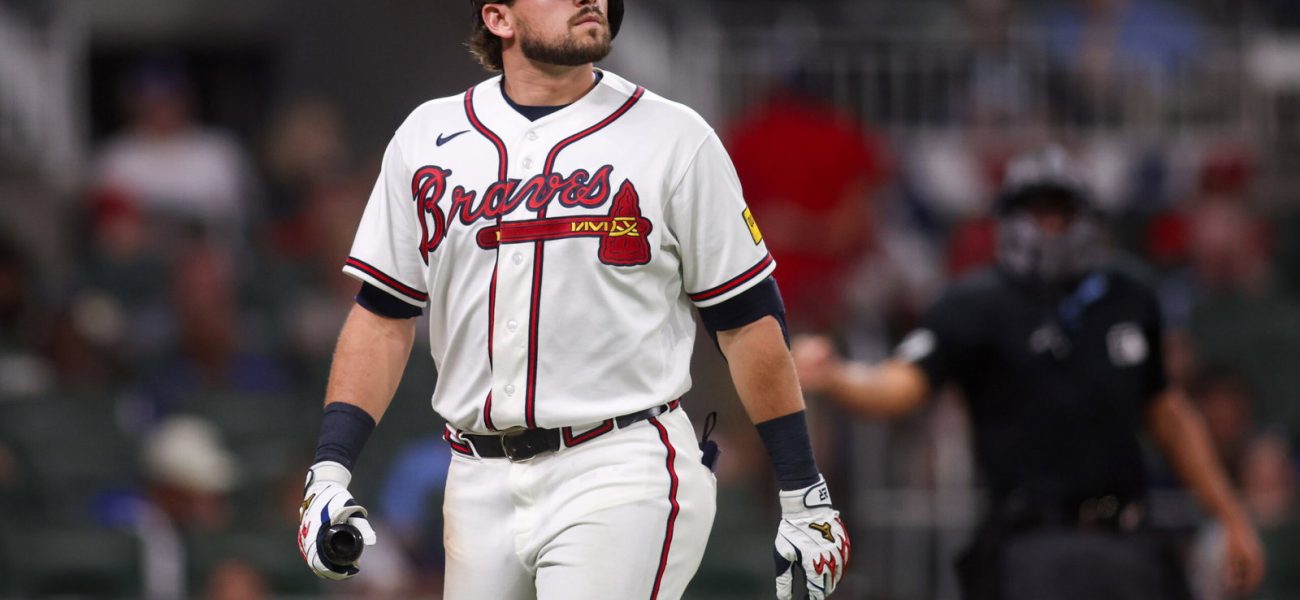
Atlanta Braves’ Summer Swoon: A Cautionary Tale of Globalized Volatility
POLICY WIRE — Atlanta, USA — When you’ve clinched the pennant in March and toasted a seemingly unassailable lead in April, June’s brutal reality often hits harder than a...

POLICY WIRE — Atlanta, USA — When you’ve clinched the pennant in March and toasted a seemingly unassailable lead in April, June’s brutal reality often hits harder than a ninety-eight-mile-per-hour fastball. For the Atlanta Braves, America’s darling of early-season baseball dominance, last month wasn’t just a slump; it was an organizational identity crisis, a collapse so profound it makes you wonder if stability is truly an illusion, even in the realm of nine innings and grand slams.
On the first of June, the Braves sat atop the baseball world, a seemingly unbreakable 40-20 record and a cavernous 9.5-game cushion in their division. Then came the deluge. They didn’t just lose; they evaporated, managing a paltry 9-14 win-loss sheet. That commanding lead? It’s shriveled to a precarious 2.5 games. It’s the kind of sudden, stomach-churning reversal of fortune that wouldn’t be out of place in a developing market, say, Karachi or Lahore, where promising economic forecasts can unravel overnight, pulling investment and confidence right down with them. The team, once an unyielding economic engine of sporting entertainment, now looks like an asset whose speculative value just cratered.
The numbers don’t lie, but they certainly tell a chilling story. The Braves’ offense, so explosive early on, vanished into thin air, posting a dismal 65 wRC+ in June – the absolute worst in Major League Baseball, according to league metrics. They couldn’t hit home runs (last with 19), they couldn’t score runs (dead last at 77), and RBI opportunities became ghost stories. It’s an investment gone south, isn’t it? Millions poured into player contracts, stadium deals, analytics departments, all seemingly dissolving like mist.
“Look, we don’t run from the fact that June was ugly,” Braves Manager Walt Weiss said in a press conference last week, his voice tinged with a weariness usually reserved for protracted trade negotiations. “But it’s a long season. You don’t make snap judgments. You re-evaluate, you adjust. And we’ve got a core here that knows how to win.” But winning, it appears, isn’t always an automatic function of talent or historical performance. It’s often as capricious as oil prices in an election year.
Take Drake Baldwin, for instance. Back from an oblique injury, he smashed the season’s longest home run his first game back—a 473-foot moonshot—only to then slump to a .047 batting average in his subsequent 43 at-bats. Just two hits. Twenty strikeouts. That’s a top-tier asset performing at a fraction of its presumed worth, a common predicament in fragile global supply chains or volatile stock exchanges. The same phenomenon, a high-value talent struggling under immense pressure, might remind you of the perilous politics of pitching when contract expectations outweigh on-field reality.
Pitching, too, didn’t escape the June gloom. Starters racked up a 5.69 ERA, fifth-highest in the league. Chris Sale, Atlanta’s ace, though personally brilliant with a 2.35 ERA and 29 strikeouts in 23 innings, found himself utterly abandoned by his offense, receiving a paltry five runs of support across four starts. He finished the month 0-3. He performed, but the system around him failed. It’s like a meticulously managed state enterprise in a struggling economy; its internal efficiency doesn’t mean squat if the market infrastructure outside of it collapses.
And what about those lingering injuries? Ronald Acuña Jr. remains sidelined, a “long shot” for an All-Star break return. Losing your most dynamic asset? That’s a crisis, plain and simple. Because you don’t just lose a player; you lose momentum, revenue potential, — and a psychological edge. It’s a systemic weakness, amplified by external pressures.
“We’ve seen organizations hit these kind of bumps before,” remarked one high-ranking league official, requesting anonymity due to the ongoing season’s competitive dynamics. “Often, it’s less about the specific losses — and more about the ripple effect, the erosion of confidence. What do you tell the fans? What do you tell your stakeholders? That’s the real management test, the true cost of an underperforming season on the balance sheets, especially in our hyper-commercialized world.” He isn’t wrong. It’s never just about the game anymore.
What This Means
This Atlanta freefall isn’t merely a baseball story; it’s a microcosm of volatility in an interconnected, expectation-driven world. Financially, teams operate less like sports franchises and more like global conglomerates, where talent acquisition is a high-stakes commodities market and fan loyalty is a fungible asset. The Braves’ struggles illuminate how quickly perceived stability can dissolve, demonstrating the fragility of even the most well-financed operations. It speaks to the broader geopolitical lesson: that initial triumphs are easily undone by systemic weaknesses, market shifts, or unforeseen events—be it an injured superstar or a sudden global economic tremor that shifts capital from seemingly safe havens to uncertain ventures. What works beautifully in March might simply be unsustainable by July, regardless of how much capital or talent you’ve thrown at it. Just as the stability of regional powers, even those well-resourced, can hinge on myriad, unpredictable internal and external factors, so too can the fortunes of a top-tier baseball club. It’s a sobering reminder that success, much like geopolitical influence, is often transient, demanding constant, agile adaptation in the face of relentless, unexpected pressures.