


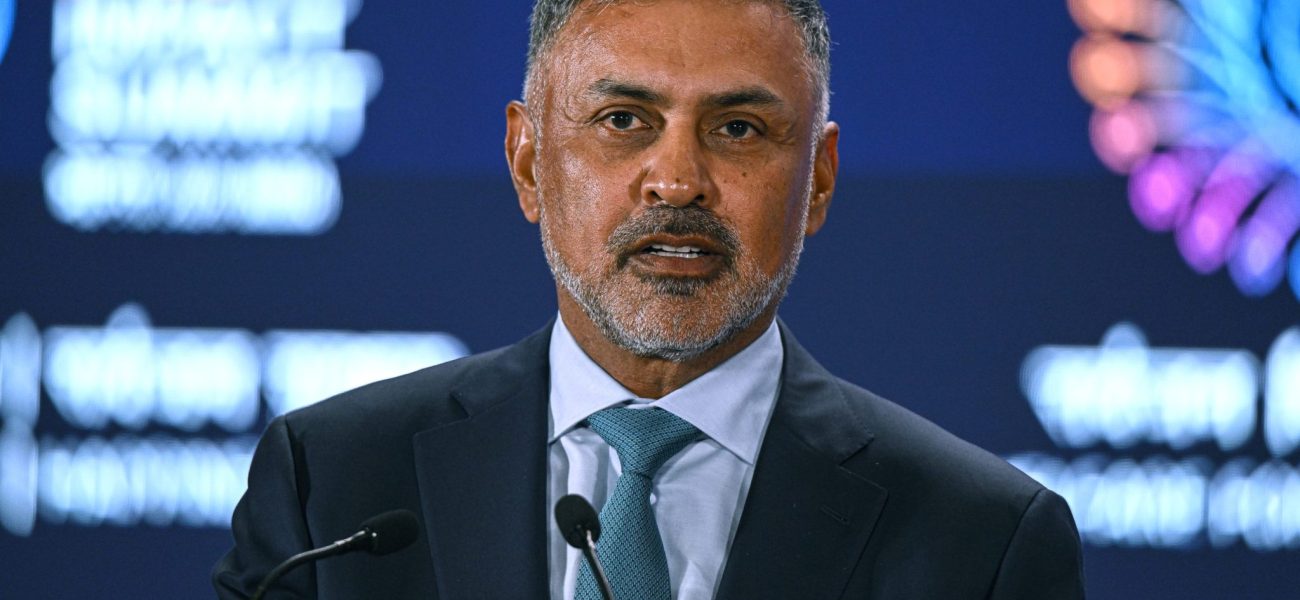
AI Threatens Jobs: ‘Evolve or Get Cut’ Warns CEO
A prominent tech CEO warns AI will force workers into a 'Darwinian moment': 'Evolve or get cut.' Explore the global job market upheaval and what it means for you.

POLICY WIRE — San Jose, California — The digital specter isn’t just about breaches anymore; it’s got a layoff slip in its digital hand. That’s the chilling subtext emerging from the highest echelons of the tech world, a world where the future of human labor often feels less like progress and more like an impending reckoning. Nobody expected the next industrial revolution to begin quite so—abruptly—with a veiled threat of professional obsolescence.
It was a quiet utterance, buried perhaps, but its reverberations promise to shake foundations far beyond Silicon Valley. A prominent CEO, leading a formidable $248 billion cybersecurity company, recently declared that workers are about to face what he termed a ‘Darwinian moment’ because of AI. A moment where, he starkly warned, it's a case of 'Evolve or get cut'. Pretty blunt, right? It isn’t just a corporate talking point; it's a pronouncement of intent, a forecast for countless cubicles. [QUOTE_PLACEHOLDER]
And when a boss overseeing an empire that large speaks, you’d better listen. He isn’t selling a new gadget, he's describing a tectonic shift, one that has far-reaching implications for everything from public policy to personal bank accounts. We're talking about a world where efficiency, powered by algorithms, isn't a bonus—it's the bare minimum. Many folks just aren't ready for that kind of pressure, particularly those who thought their skills were impervious.
But the ramifications stretch globally. Consider economies like Pakistan’s, where a significant portion of the workforce still relies on service-oriented or highly repetitive tasks. The digital literacy gap, for one, is real. The World Bank reported in 2023 that only about 20% of Pakistan’s population has internet access, and even fewer possess advanced digital skills necessary to operate alongside sophisticated AI. This isn’t a small problem, it's an existential hurdle.
What happens when even entry-level programming tasks or customer service roles become automated? Where do these workers go? They don't just disappear. The promise of re-skilling, while well-intentioned, often falls flat in practice, especially in regions with limited infrastructure and educational resources. It's not a seamless transition; it's an upheaval, a societal crunch.
The cybersecurity firm's CEO isn't the first to paint this grim picture. For months now, futurists — and economists alike have been flagging the potential for widespread job displacement. What makes this declaration different, though, is its source. This isn't some academic; it's a practitioner at the sharp end, whose business both facilitates and protects against the very forces he describes. He's living in the future he's prophesying.
Because frankly, in the grand scheme of things, a company of that size, worth those kinds of billions, holds sway. They’re not just observers, they’re architects of the new digital order. When someone like that announces an era where humans must either ‘Evolve or get cut’, it’s not an opinion; it’s a forecast backed by massive computational power and an incentive structure that rewards ruthlessness.
And it won’t stop at desk jobs. Everything from factory floors to legal research is fair game for the intelligent algorithms now under construction. So the question becomes, what do we *do*? How do societies—especially those in the developing world with nascent tech infrastructures—adapt to a landscape where human productivity is suddenly benchmarked against machine-speed efficiency? You’d hope there’s a better plan than simply telling everyone to figure it out.
Or are we witnessing the birth of a new kind of social contract, where governments will have to grapple with entirely new forms of wealth distribution and social safety nets just to prevent widespread unrest? It’s not just a technical problem; it’s a deeply human one.
What This Means
This pronouncement isn't just tech-speak; it's a loud klaxon for economic policymakers worldwide. The implications are staggering, pointing toward an accelerated transformation of labor markets previously unseen. For countries in South Asia, including Pakistan, this ‘Darwinian moment’ poses a particularly sharp dilemma. Their younger, growing populations need employment, but the pathways to traditional jobs are evaporating fast, much faster than education systems can adapt or re-skill the masses. Without concerted investment in digital infrastructure and comprehensive, accessible tech education, these nations risk being left further behind, creating potential hotbeds of unemployment and social instability. The cybersecurity industry, for instance, offers robust, high-paying jobs, but the barrier to entry is substantial, demanding specialized skills. These automated sentinels need human minds to guide them, but fewer of them than you might think.
Politically, the challenge will be how to manage expectations versus reality. Leaders will need to navigate promises of job creation against the cold hard fact of automation. Public discourse might quickly shift from traditional economic growth models to debates about universal basic income, mandated re-skilling programs, or even limits on AI adoption in certain sectors. Corporate giants, in turn, face increasing pressure to balance their pursuit of efficiency with broader social responsibilities. If not, we could see a fracture, a growing chasm between the technologically adept few and the increasingly marginalized many, fueling populist movements and potentially disrupting global supply chains.