


DC Rule Change: The ‘Amazon of Guns’ Emerges
A federal rule change is poised to boost an 'Amazon of guns' venture, sparking controversy due to its ties to Donald Trump Jr. Learn about its market impact.

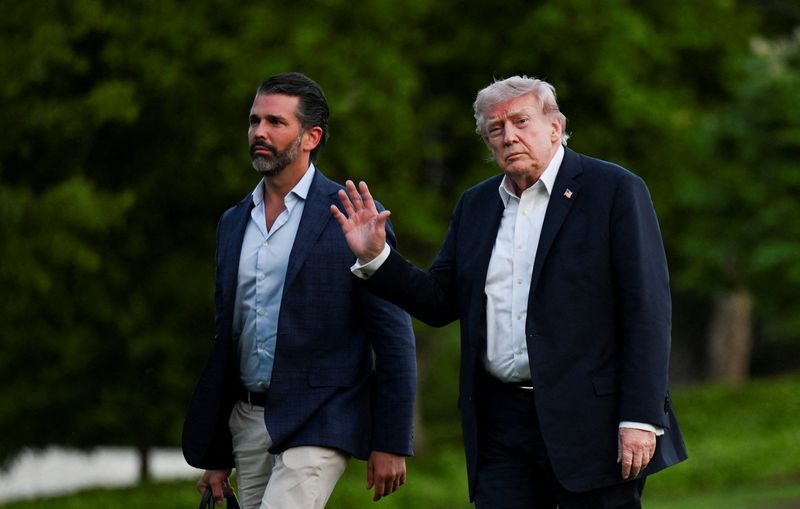
POLICY WIRE — Washington D.C., USA — In the relentless churn of D.C. policymaking, where monumental legislation often captures headlines, the true currents of power frequently shift with quiet, bureaucratic adjustments. This time, it’s a proposed modification to federal firearm regulations that could — perhaps, quite neatly — funnel significant new capital into an expansive online enterprise aiming to be an ‘Amazon of guns’, closely associated with Donald Trump Jr. It’s business, yes, but it’s business with a distinctly political undertow.
It’s no secret that the digital frontier for commerce has its keenest explorers. But when those frontiers involve firearms, — and when a presidential scion lends his name, well, it gets complicated. The whole idea: creating a vast, user-friendly digital bazaar for firearm sales, something that’s always been hampered by a patchwork of state and federal laws. A truly audacious concept, some would say.
The particular rule tweak, often presented as a mere streamlining of existing frameworks, actually lowers several hurdles for online firearm transactions. It simplifies what constitutes a federally licensed dealer (FFL) involvement and redefines elements of interstate commerce for parts and kits. These aren’t just technicalities; they’re greased rails for a venture looking to consolidate a fragmented market. Supporters of the rule, including various gun rights advocates, assert [QUOTE_PLACEHOLDER], suggesting it’s about protecting Second Amendment rights and modernizing antiquated laws. And honestly, for them, it’s probably true.
But critics are raising eyebrows, noting the timing — and potential beneficiaries. A spokesperson for a major gun safety organization observed, [QUOTE_PLACEHOLDER], adding that the changes seem almost tailor-made for a large-scale, digitally-driven retail model. They’re pointing fingers, subtly at first, then less so, towards the Trump family’s commercial interests, where such an ‘Amazon of guns’ platform would surely thrive under reduced regulatory burden.
The existing market for online firearm accessories — and components already boasts a substantial valuation. A recent report by Transparency Market Research indicated the global firearms accessories market is projected to reach approximately $6.2 billion by 2031, growing at a CAGR of 3.8% from 2023. These numbers, you see, only highlight the vast economic incentive at play, especially if transaction hurdles were significantly eased for comprehensive digital marketplaces.
One federal agency official, speaking off the record, offered a sharp take: [QUOTE_PLACEHOLDER]. That sort of blunt assessment? It tells you what some folks truly think is happening behind the velvet ropes of official proclamations.
It’s a peculiar confluence: the desire for enhanced gun access, the relentless drive of online capitalism, and a political family’s brand. That’s a powerful cocktail, isn’t it?
📄 POLICY WIRE WHITEPAPER PUBLISHED: PAKISTAN'S NATIONAL SECURITY POLICY PRIORITIES
👉 READ BY CLICKING HEREWhat This Means
This isn’t merely about firearms; it’s about the ever-thinning veil between governance — and personal enrichment. Economically, this proposed rule could spawn an entirely new scale of retail, transforming the often-local gun shop experience into something akin to any other online purchase – albeit one requiring a background check at an FFL pickup point, for now. Think about the consolidation: smaller dealers, unable to compete with the pricing and logistical might of a national online platform, could wither. This concentrates market power, inherently affecting pricing — and consumer choice. Politically, it redefines the role of a former first family. Their continuing ventures aren’t just entrepreneurial; they’re seen as extensions of their political influence, benefiting directly from policy shifts that could easily be viewed as conflicts of interest. This isn’t a new phenomenon—history’s littered with examples of the powerful converting influence into wealth—but the transparency and boldness are certainly worth noting.
And overseas, especially in nations like Pakistan, where stringent arms control regulations often contend with illicit arms markets and regional instability, this U.S. development won’t go unnoticed. American policy choices, particularly those perceived to loosen gun control, feed into broader narratives about Western legal frameworks and societal values. It can either be viewed as an unfortunate precedent or, paradoxically, a glimpse into free-market mechanisms many still strive for, regardless of the sector. A Karachi columnist, for instance, might wryly observe the seemingly relaxed approach in the U.S. compared to the daily struggles with weapons proliferation in their own backyard, finding a strange resonance in the fragility of regulatory systems everywhere. These narratives, after all, aren’t confined by borders.
So, we’ve got a regulation, ostensibly about modernization. We’ve got a marketplace, grand in its ambition. And we’ve got a political family, whose very name moves markets — and policy. The dots aren’t exactly hard to connect here, are they? It’s just how the game gets played, whether you like it or not.