


Feds Guide UFO Tour: BLM Embraces New Mexico Alien Lore
Uncover how the US Bureau of Land Management is guiding tours to an alleged UFO crash site in New Mexico, signaling a shift in federal engagement with alien lore.

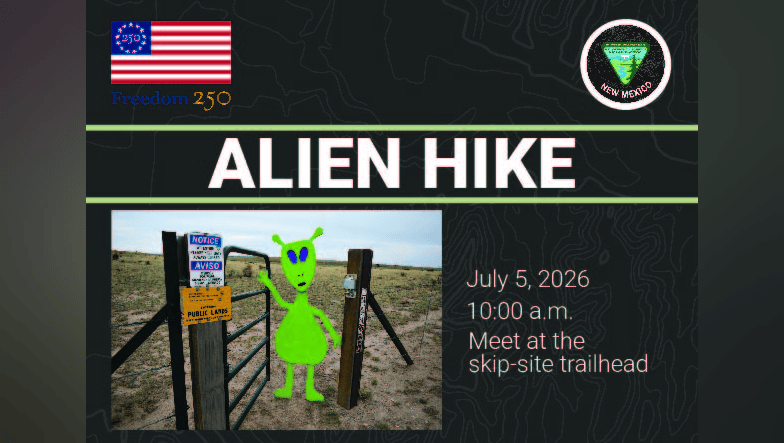
POLICY WIRE — Washington D.C. — Somewhere in the arid expanses of New Mexico, a peculiar truth emerges: the American bureaucracy, for all its supposed gravitas and commitment to verifiable facts, isn’t above leaning into a good, ol’ fashioned alien myth. For the 79th anniversary of what locals now affectionately term ‘The Crash,’ it’s not some rogue UFO enthusiast club offering a trek into the high desert to scour for space debris. No, it’s the Bureau of Land Management, a federal agency charged with overseeing a significant chunk of Uncle Sam’s real estate, that’s strapping on its boots to guide the curious to the ‘Alleged UFO Skip Site’ near Corona. And honestly, it makes you wonder what kind of policy brief green-lit this.
Because, let’s be blunt, a guided federal hike to a purported extraterrestrial crash zone isn’t exactly in the agency’s conventional playbook. You’d typically expect to see interpretive tours on geological formations or maybe routes through historical homesteads. Instead, we’ve got rangers leading pilgrimages to the birthplace of modern ufology, capitalizing on a legend that’s been part of the New Mexico brand—and a persistent thorn in the side of anyone seeking government transparency—for decades. This isn’t just a simple Saturday stroll; it’s a quiet, albeit unofficial, federal acknowledgment of a powerful American narrative, one steeped in whispered government cover-ups and the boundless potential of the cosmos.
It’s all part of the ‘Freedom 250’ events, a somewhat grand title for a leisurely two-hour trek that promises more legend than verified archeological finds. The site itself, geographically distinct from Roswell’s city limits, remains intertwined with the town’s enduring, often lucrative, alien reputation. The tale itself is a staple: a mysterious object falls from the sky in July 1947, initially reported as a ‘flying disc’ by a local Army Air Field unit, only for the military to swiftly — some would say suspiciously — recant, labeling it a mere weather balloon. But the seeds of doubt, once planted, really took root, didn’t they?
And now, nearly eight decades on, the BLM isn’t just tolerating the story; they’re actively facilitating access to its spiritual ground zero. “Our mandate, frankly, extends beyond mere land management; it includes responsible public engagement with the narratives that shape our collective understanding of these lands,” stated Eleanor Vance, a spokesperson for the Bureau of Land Management’s New Mexico field office, when asked about the unconventional offering. “Whether you’re chasing ‘little green men’ or unique geological formations, the desert’s stark beauty demands respect. We’re ensuring safe access, educating on the landscape, and letting visitors make their own conclusions about its history.” Her tone was measured, carefully straddling the line between official duty and implied amusement.
But how does an official federal arm find itself in the business of maintaining the lore around alleged extraterrestrial visitations? It’s a subtle shift, perhaps, from outright denial to a sort of benign curatorial role. Consider the economic angle: Roswell, New Mexico, population roughly 47,000, draws hundreds of thousands of tourists annually specifically for its UFO connection, with local businesses openly celebrating the phenomenon. That’s a powerful incentive. New Mexico, a state with its own challenges, certainly isn’t shying away from any opportunity to attract visitors.
Because governments worldwide—from the Pentagon’s recent public briefings on Unidentified Aerial Phenomena to discussions in nascent spacefaring nations like Pakistan—are wrestling with the intersection of the known, the unknown, and public perception. While the immediate concerns in Islamabad or Karachi often revolve around economic stability or regional security, the universal human quest for understanding phenomena beyond our current grasp is, oddly enough, a unifying theme. It’s a reminder that even the most grounded bureaucratic entities eventually contend with the intangible pull of the inexplicable, and sometimes, the smartest policy isn’t to deny it outright, but to manage its allure. In 2023, for instance, a Gallup poll revealed that 41% of Americans believe some UFOs have been alien spacecraft, a statistic that underscores the persistent cultural relevance of such narratives, even decades after their inception.
“This isn’t about aliens, really. It’s about how government institutions, consciously or not, perpetuate American myths, for good or ill,” opined Dr. Alistair Finch, a political analyst specializing in public perception — and governmental communication. “From the romanticized Wild West to unidentified aerial phenomena, the narrative—and its often significant economic tailwind—becomes an undeniable part of the policy landscape. You can’t just wish away the folklore; you have to learn to manage its reverberations in a public-facing capacity. And sometimes, that means guiding a group of true believers through the desert.” He makes a good point.
What This Means
The BLM’s organized hike, framed as an innocuous public service, carries far deeper implications than a mere sightseeing trip. It represents a subtle but profound policy shift—an evolution in how governmental bodies engage with pervasive, culturally ingrained, and frankly, profitable myths. It’s a pragmatic recognition of an alternative economic engine for a region, even if that engine is fueled by alleged alien crash debris. And it hints at a larger willingness, perhaps a necessity, for institutions to engage with public fascinations that lie well outside their traditional purviews. Bureaucracy, it seems, isn’t always about strict adherence to the prosaic; sometimes, it’s about a measured nod to the fantastical. Because if the people want to walk where the ‘little green men’ supposedly landed, and they’ll bring tourism dollars with them, well, who’s to say a federal agency shouldn’t lead the way? It’s public engagement, after all—just not quite as textbook as they teach it in policy school. You’d think there’d be more important battles, wouldn’t you? Especially in places like New Mexico.