


Hamilton’s NM Arrival: Culture, Policy & Public Funding
New Mexico hosts a "Hamilton Experience," raising questions about cultural narratives, public arts funding, and equitable access. Unpack the politics of American culture.

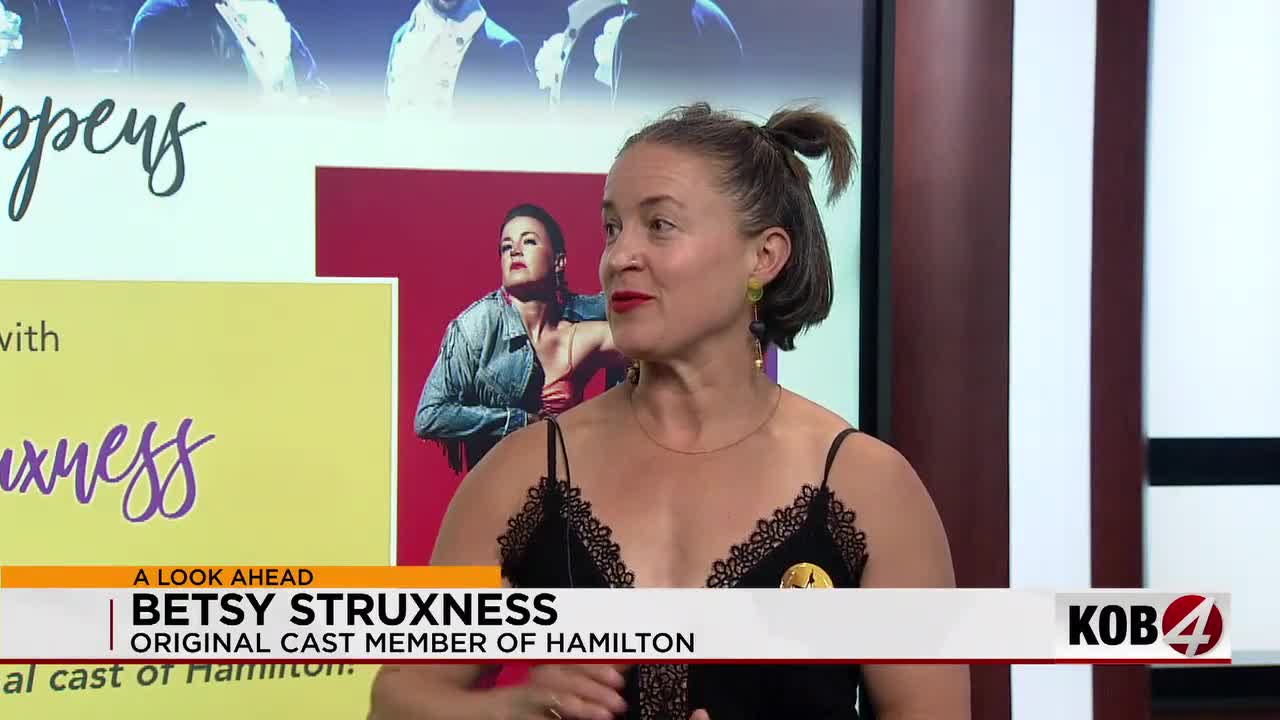
POLICY WIRE — ALBUQUERQUE, N.M. — In the sprawling, sun-baked landscape of New Mexico, far removed from the theatrical grandeur of Broadway, an unexpected phenomenon is unfurling. No, it’s not a breakthrough in fusion energy or a new state legislature wrangling over water rights—it’s ‘Hamilton.’ Or, more accurately, a localized, slightly re-packaged version dubbed the ‘Hamilton Experience,’ a curious cultural import landing at Albuquerque’s Hiland Theater.
One might wonder what a masterclass from an original cast member and a free screening of Lin-Manuel Miranda’s historical juggernaut actually signifies beyond a holiday weekend diversion. But, dig a little, and you find threads of America’s complex relationship with its own narrative, the economics of aspiration, and the sometimes-uneven spread of cultural capital. This isn’t just about toe-tapping to clever rhymes; it’s about how an accessible slice of Americana gets served up, and what it leaves in its wake.
Because let’s be honest, getting to New York City to see the real deal, tickets scalped to astronomical sums, that’s simply not in the cards for most folks. Not here, not anywhere. This Albuquerque iteration, courtesy of NDI New Mexico and Musical Theatre Southwest, offers a glimmer of that inaccessible world. And it arrives, fittingly enough, during a national holiday, reinforcing a particular vision of the American founding that’s wildly popular but, perhaps, selectively edited. It’s a compelling cultural balm—or maybe, a carefully constructed illusion—that allows communities to partake in a cultural moment often reserved for those with deep pockets and connections.
Maria Sanchez, Director of the New Mexico Cultural Affairs Office, articulated the perceived gains. “This isn’t just entertainment; it’s an investment in our collective imagination,” Sanchez told Policy Wire, her voice brimming with a familiar optimism. “When we bring these experiences to our communities, we’re building bridges to history and, yes, economic opportunity. It opens doors for kids who might never imagine a career on stage or in the arts.” It’s a line often heard from administrators trying to justify arts budgets in an era where tangible returns are king. The cultural output, the inspiration, the intangible uplift—they’re all weighed against the stark realities of public funding.
But not everyone’s buying the full bill of goods. Councilman Ben Carter, a persistent voice for community resources in Albuquerque’s less affluent districts, expressed a more nuanced take. “It’s wonderful, sure, — and I wouldn’t diminish the value of cultural engagement,” he mused during a brief phone call. “But what about the underfunded libraries in disadvantaged zip codes, the crumbling infrastructure, the dearth of vocational training? Are we chasing ephemeral celebrity while our foundational institutions struggle? That’s a conversation we really ought to have more often, isn’t it?” He’s not wrong; it’s an age-old tug-of-war, art versus stark necessity, often played out with taxpayer dollars. Consider that nationwide, arts and culture organizations still rely heavily on public funding, with government agencies contributing approximately 12.9% of their total income, according to a 2021 study by Americans for the Arts, a statistic that hasn’t seen dramatic increases despite the supposed cultural renaissance in some sectors.
What This Means
The ‘Hamilton Experience’ in Albuquerque, on its face, seems innocuous enough—a feel-good community event. But scratch the surface, — and it’s a revealing microcosm of larger political and economic currents. On one hand, it represents the continued democratisation of high culture, albeit through simulacrum. Events like this offer accessible entry points into otherwise exclusive realms, theoretically broadening participation in national narratives and artistic development. This can have real, tangible benefits, inspiring local talent — and drawing modest cultural tourism.
However, it also highlights the commercialization of national identity and the careful curation of historical narratives. Policy makers often lean on these ‘cultural splashes’ as proof of civic engagement, diverting attention from thornier issues of long-term investment in less glamorous, but perhaps more impactful, educational and social programs. This event is a private-public partnership, which raises questions about equitable access: is a free screening truly free if a segment of the population can’t even get there? Or, if the underlying local arts scene remains underfed while national brands get top billing? And let’s be clear, while this particular event is aimed at engagement, it’s also part of a global trend where popular culture is leveraged for soft power.
While American audiences debate the cost of an immersive ‘Hamilton’ session, nations across the globe grapple with their own founding myths and the challenge of fostering cultural literacy among diverse populations. In places like Pakistan, for instance, debates frequently flare around curriculum, media representation, and state-sponsored cultural events, all aimed at weaving a cohesive national identity from disparate threads—often with far fewer resources. The export of American cultural narratives, whether through diplomacy or direct events like this, has subtle implications. It influences how other nations, especially those navigating their own post-colonial or post-conflict identities, perceive America’s cultural confidence—or lack thereof—in its own origins. These localized adaptations, therefore, become unofficial ambassadors, subtly shaping international perspectives on American storytelling and its broader policy implications in the modern world. You really can’t separate art from politics, can you?