

Minnesota’s Wrongful Conviction Unit Closes: Funding Crisis
Minnesota's crucial Wrongful Conviction Unit closes due to federal funding cuts. AG Ellison criticizes the move, leaving innocent individuals in limbo. Understand the impact.

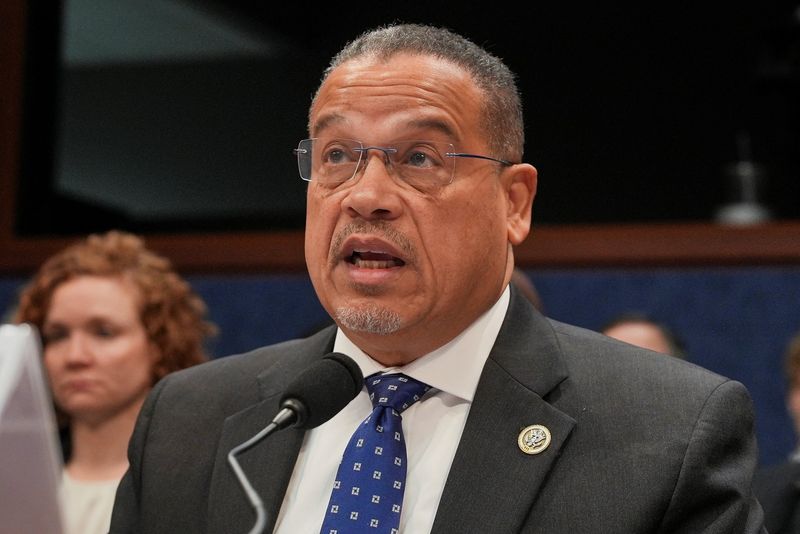
POLICY WIRE — St. Paul, Minnesota — It’s a gut-punch for those clinging to hope. That small, unglamorous corner of Minnesota’s legal system dedicated to fixing its gravest mistakes—the wrongful conviction unit—is now dead in the water. Attorney General Keith Ellison didn’t pull this trigger lightly; he’s laying blame squarely at the feet of Washington, D.C., pointing to what he describes as politically motivated federal funding cuts that left him with no other choice. Because, as it turns out, even justice has a price tag, — and Uncle Sam just decided not to pay it this time.
This isn’t just about a unit. It’s about a silent struggle, often behind prison walls, to prove innocence years after a gavel fell. And frankly, it’s about the ever-expanding shadow of federal policy on state-level affairs. Ellison’s office had been running its Conviction Review Unit, a lifeline for potentially innocent people, largely on a $600,000 grant from the U.S. Department of Justice (DOJ). That money, originating under a prior administration and championed by advocates, evaporated when the Trump administration opted against renewing specific grants targeted at such units. A new directive focused funding elsewhere—a classic Washington maneuver that leaves states scrambling.
“We can’t afford to maintain a vital operation on good intentions alone,” Ellison told Policy Wire, his voice tight with frustration. “It’s a cruel irony that efforts to correct injustice are being defunded by an administration that purports to stand for law and order. But here we’re. It’s devastating for people who don’t have other options—people counting on us to help clear their names.” It’s a raw deal, really. Many folks don’t understand the sheer amount of resources, the hundreds of attorney hours, that go into re-examining old cases, DNA evidence, and witness testimonies that sometimes surface years down the line.
The unit, since its inception, has taken a measured approach, sifting through hundreds of petitions. It reviewed a significant number of cases—though Minnesota hasn’t seen the high-profile exonerations of some other states, its work offered a critical check. But without the DOJ funds, keeping staff dedicated solely to these complex, time-intensive investigations became unsustainable. And why the federal pivot? Well, depends on who you ask. Official statements from the Justice Department cited a need to streamline resources and prioritize other aspects of law enforcement — such as tackling violent crime and prosecuting border offenses — mirroring some of the tougher-on-crime rhetoric coming out of the executive branch. Some critics, however, whispered about a less charitable interpretation: a systemic disinterest in questioning past convictions.
Consider the broader context, too. While this feels like a Minnesota problem, it echoes a concerning trend where federal financial levers become instruments for ideological redirection. Justice programs, especially those that touch on nuanced aspects of liberty and potential governmental overreach, often find themselves on the chopping block during politically charged budgetary shifts. Across the Atlantic, for instance, nations like Pakistan are also grappling with reforming their conviction review processes, often under resourced and perpetually questioned. They watch similar patterns of donor-driven aid dictating justice priorities in some developing regions. It’s a global language, this financial leverage. According to a 2023 report from the National Registry of Exonerations, over 3,500 people have been exonerated in the United States since 1989, collectively losing more than 31,000 years to wrongful incarceration.
Senator Ted Cruz, a staunch conservative who’s often spoken about the need for federal fiscal discipline, was reportedly dismissive when asked about the Minnesota situation. “Look, states have budgets,” he’s often said, implying that local funding should cover these costs. A source close to the Senator, speaking on background, paraphrased his view: “While everyone supports justice, federal taxpayers aren’t endlessly responsible for every state-run program that runs out of grant money. Prioritizing national security and federal crime enforcement is the mandate.” That’s the argument, plain and simple: local problem, local solution. But it neatly sidesteps the question of whether a national interest in the integrity of the justice system exists, or what happens when a state, particularly one without the deepest pockets, just can’t foot the bill.
What This Means
The immediate consequence of this unit’s closure is stark: fewer eyes on potentially flawed convictions. For the innocent sitting in cells, their avenues for relief just got narrower, potentially by years. Politically, this signals an evolving federal-state relationship where grants, once seemingly apolitical instruments of cooperation, are now wielded with sharper intent. States reliant on specific federal monies will increasingly find themselves at the mercy of Washington’s whims—and the electoral cycles that dictate them. Economically, while $600,000 might seem a drop in the federal bucket, for Minnesota, it was the engine of this particular piece of machinery. Losing it forces difficult reallocation decisions within a fixed state budget. It’s a lose-lose. it speaks to a deeper philosophical fracture: Do we, as a nation, truly prioritize rectifying errors within our justice system, or is the appearance of ‘tough on crime’ policies a more compelling political narrative?