


India Manufacturing Slows: Economic Reality Check
India's manufacturing output dips, challenging its growth narrative. Discover why demand is softening and the implications for India's economic future.

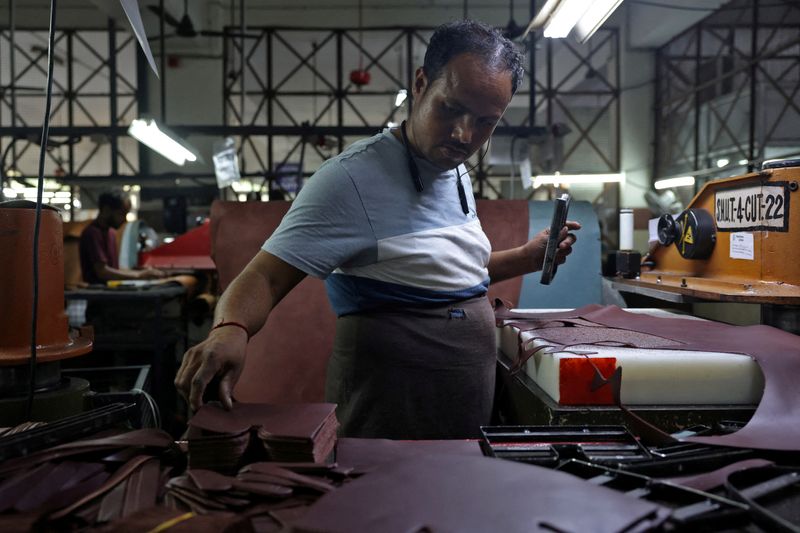
POLICY WIRE — New Delhi, India — For months, the global narrative around India has been one of an unstoppable economic locomotive, chugging relentlessly towards superpower status. But every engine, it turns out, needs a check-up, and June’s factory output figures are serving up a hefty dose of reality. The supposed ‘golden era’ of manufacturing isn’t quite as gleaming as some might have you believe, not with demand taking a bit of a tumble.
It’s not a full-blown crisis, mind you—far from it. But the recent data offers a distinct wobble in the carefully curated narrative of booming industrial expansion. And for a government so keenly invested in projecting economic might, these slight shifts in the currents can feel like heavy weather. We’re talking about an economy that’s been basking in a certain glow, — and now, well, the glow’s dimmed a touch. Because, ultimately, you can’t defy gravity forever.
S&P Global’s Manufacturing Purchasing Managers’ Index (PMI)—that trusty barometer of factory health—dipped to 57.8 in June. Now, if you’re keeping score, that’s down from 58.7 in May. While anything above 50 signals expansion, this was the second-weakest performance since mid-2022. It isn’t a collapse, but it’s certainly a slowdown. What’s bothering manufacturers, you ask? Softening demand, they say. Domestic appetite, apparently, isn’t as ravenous as it once was, — and that’s causing production to ease up a little.
“We’re vigilant, of course, about every economic indicator,” Finance Minister Nirmala Sitharaman stated recently, echoing a tone of cautious optimism during a policy briefing. “India’s underlying growth story remains incredibly robust, powered by internal reforms — and an enterprising spirit. This is but a momentary recalibration—an ebb, not a halt—as global dynamics continue to adjust.” But the subtleties in her phrasing suggested even the cheerleaders on Dalal Street might be getting a tad reflective.
The numbers from the subcontinent are often seen through a particular lens by regional partners. And if India, the undisputed economic behemoth of South Asia, catches a cold, its neighbors often sneeze. Countries like Pakistan, for instance, despite their complex relationship with Delhi, monitor these shifts closely, knowing full well that a robust Indian economy can often mean a stable, albeit sometimes domineering, regional presence. Think trade routes, import demands, and even labor movements—they’re all interconnected. An Indian slowdown won’t necessarily plunge Islamabad into an immediate recession, but it sure doesn’t help anyone’s regional aspirations for steady growth.
For some, this slowdown validates a lingering skepticism about the sheer velocity of India’s economic ascent. Dr. Anwar Shah, a veteran economist based in Karachi, put it rather pointedly: “India’s government, like many, has been masterful at painting a picture of relentless progress. But the fundamentals of consumer demand, investment, — and external headwinds are always going to catch up. A PMI dip isn’t surprising; it’s just the market finally factoring in the realities of global purchasing power. You can only sustain stratospheric growth for so long on internal hype.” Hard to argue with the laws of economics, isn’t it?
Order book growth, while still decent, isn’t accelerating at the pace seen in prior months. And this isn’t just an academic debate for number crunchers; it has real-world consequences for folks on factory floors and in bustling market stalls. Smaller firms, in particular, tend to feel the pinch quicker than the behemoths when demand slackens. They’re the canaries in the coal mine, sensing the shifts before the big players fully acknowledge them.
Exports, while showing some resilience, also point to an external landscape that’s far from smooth sailing. Geopolitical jitters — and slower global growth are catching up to even the most dynamic exporting nations. It’s a tricky dance for policy architects who’ve hitched their wagon to a robust export performance and ambitious manufacturing targets. But perhaps, just perhaps, they’ll need to double down on domestic stimulus to keep the wheels turning.
What This Means
This slowdown, however modest, places immense pressure on the current government to recalibrate its messaging and, perhaps, its fiscal strategies. Politically, a perceived softening of economic dynamism could erode public confidence, especially among urban middle-class voters who keenly follow economic news. Expect renewed emphasis on infrastructure spending and welfare programs to prop up domestic demand. Economically, this might signal a phase of consolidation rather than unchecked acceleration. Foreign direct investment, which often chases aggressive growth forecasts, could become more discerning, leading to closer scrutiny of India’s long-term consumer stability. For the broader South Asian region, India’s economic health serves as an unofficial benchmark. Any deceleration here casts a shadow over regional growth projections, forcing smaller economies to look inwards or towards other partnerships more assertively. It’s a moment of reflection, not panic, but reflections often lead to strategic adjustments. The ‘India Story’ isn’t over, but this chapter has a slightly more pensive tone.