

Taipei Defies China: High-Stakes Sea Standoff
Taiwan's defiant order for ships to ignore Chinese coast guard inspections escalates tensions in the vital Taiwan Strait, risking global trade and potential conflict.

POLICY WIRE — Taipei, Taiwan — Another round of verbal sparring — though in the high-stakes game of sovereignty, words always carry the weight of war — is unfolding in the Taiwan Strait. It seems we’re accustomed to it, no?
But this isn’t just about stern warnings. We’re talking about a directive straight from Taipei’s navigation playbook: simply ignore Chinese coast guard attempts to board its ships. You hear that right. Ignore them. It’s a calculated gamble, a high-seas game of chicken playing out under increasingly watchful international eyes. This isn’t just a memo; it’s a defiant roar across contested waves. [QUOTE_PLACEHOLDER]
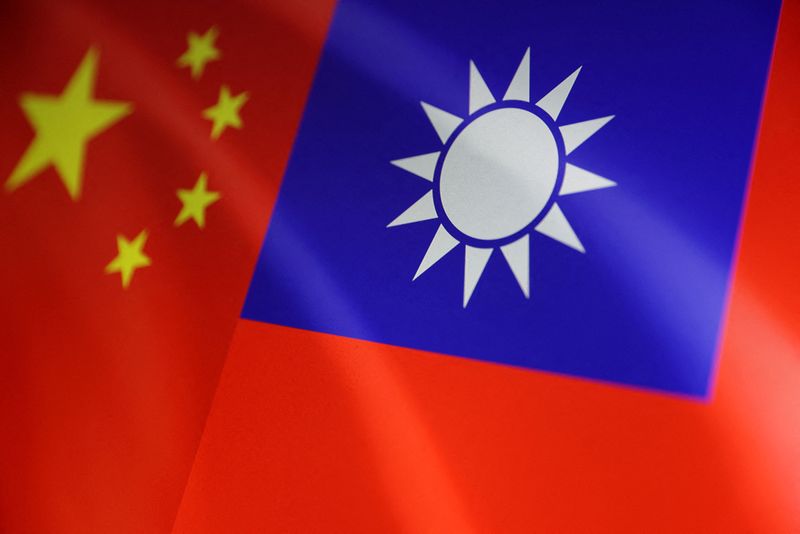
The instructions, a pretty clear cut escalation, weren’t delivered with fireworks and fanfare, though perhaps they should have been. The Taiwan Strait Navigation Bureau (TSNB) basically told local shipping associations—and thus, its captains—to refuse inspection and boarding calls. But then what? Report any incidents immediately to Taiwan’s coast guard, of course. It’s a carefully crafted defiance, not an open invitation to a brawl. The reasoning behind this seemingly nonchalant stance? Beijing’s authority in the strait simply isn’t recognized.
This escalating dance in maritime boundaries didn’t just appear from thin air, you know. Tensions in the region—they’ve been on a slow boil. Beijing recently claimed sovereign jurisdiction over Taiwan’s waters, even within a specific 60-mile stretch from Taiwan’s coast. China’s new regulations empower its coast guard to detain suspected trespassers, effectively for up to 60 days, without trial. It’s the kind of move that tightens a noose, or at least feels like one, for many Taiwanese sailors.
And it’s not just a Taiwan problem, if we’re being honest. These waters? They’re an economic artery for the world. You’ve got to figure that about half the global container ship traffic — estimated at 50% by the International Maritime Organization (IMO) — transits through the South China Sea each year. Any serious disruption here, well, it’s a global headache, not just a regional sniffle. We’re talking ripple effects, you bet, straight to your supermarket shelves — and gas pumps.
The situation isn’t lost on nations further west, either. Pakistan, for instance, a nation grappling with its own internal instabilities and economic woes, watches this distant drama with particular interest. As a major trading nation and one deeply reliant on maritime routes through the Indian Ocean and South China Sea for its energy imports and exports, the stability of these passages is absolutely critical for Pakistan’s fragile economic recovery. A blockade, a miscalculation, a naval confrontation – it wouldn’t just be Taiwan’s problem, or even China’s. It’d be everyone’s, from Karachi to California, — and that’s not overstating it.
There’s a subtle irony in Beijing’s heavy-handedness. Each assertively enforced new maritime claim, each declaration of territorial expanse, tends to further galvanize a distinct Taiwanese identity. It pushes many towards an even firmer belief in their own sovereignty, something China wants to, you know, extinguish. It seems for every action Beijing takes, there’s an equal — and opposite, albeit perhaps subtler, reaction from Taipei.
📄 POLICY WIRE WHITEPAPER PUBLISHED: PAKISTAN'S NATIONAL SECURITY POLICY PRIORITIES
👉 READ BY CLICKING HERETaipei isn’t just whistling in the dark, either. This official directive is rooted in a fundamental refusal to acknowledge Beijing’s claims over Taiwanese waters, treating them as little more than hot air. They’re telling their ships, quite plainly, that these Chinese pronouncements are just words, not law. But words become dangerous quickly when enforced by armed vessels.
What This Means
The political implications here are as intricate as they’re immediate. For starters, it amplifies the risk of direct confrontation. China’s coast guard, now emboldened by what they perceive as new jurisdictional powers, might just try to board a vessel that’s been told explicitly to refuse. That’s a situation where a lot can go sideways very, very fast. Think about the messaging: Taipei’s telling its folks to essentially ignore state power, a move that requires a pretty serious backup plan.
Economically, if this escalates, global shipping insurance rates in the Strait are going to go through the roof. Shipping companies already face rising premiums in other contested regions. This adds another layer of financial burden to an already complex global supply chain, pushing up consumer prices and making goods costlier worldwide. It could also force longer, costlier detours around the entire island, further choking trade arteries.
For China, this reaction from Taipei puts Beijing in a bind. Do they double down, risking international condemnation and potential military escalation for an act of non-compliance, or do they allow their newly asserted powers to be publicly flouted? Either way, it’s not a good look. This whole thing is less about fishing rights or coastal patrols now, and far more about a clash of wills, about two very different visions for one critical, crowded waterway. And we’re all watching to see who blinks first. Or, more precisely, who clashes first.