


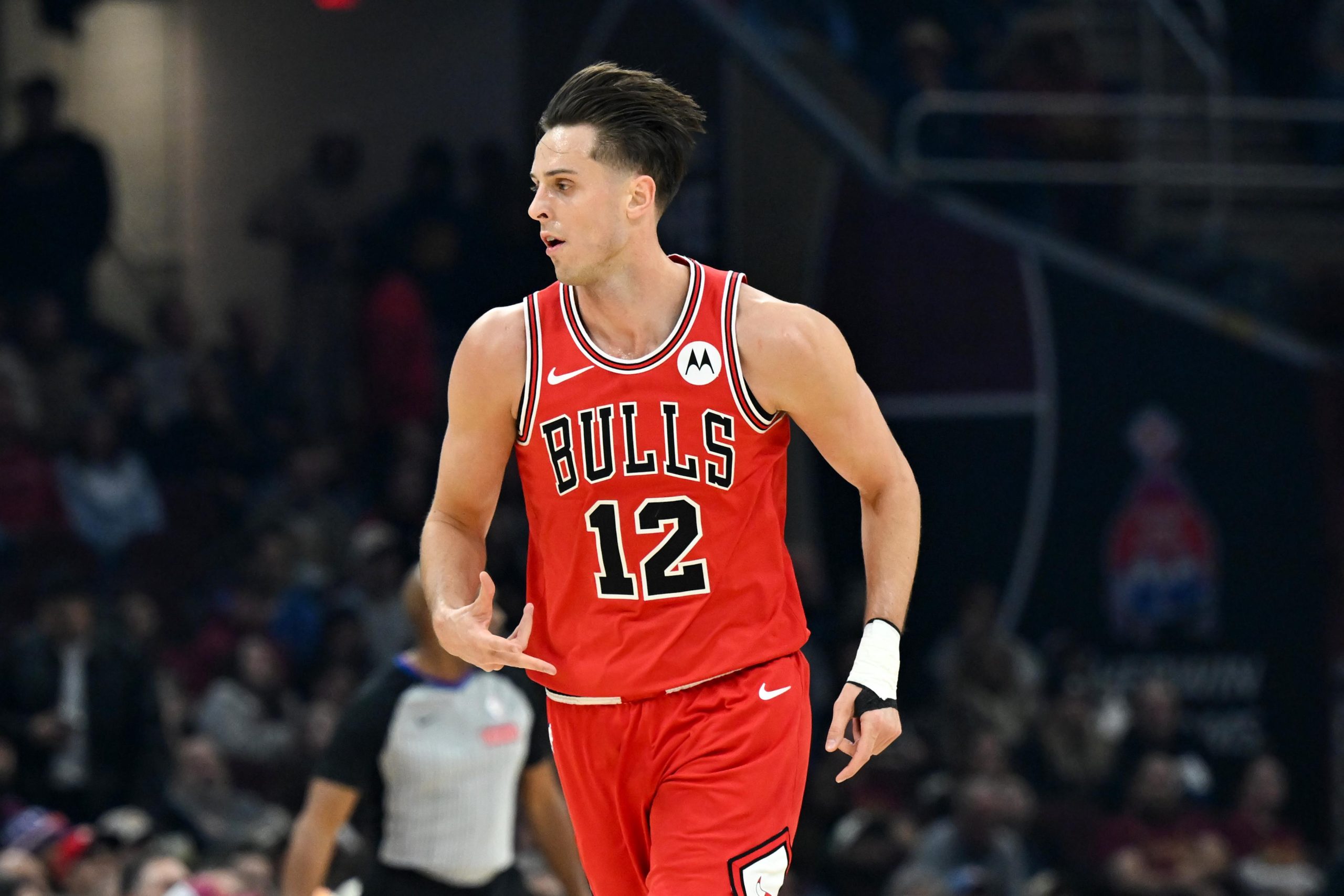
Bulls’ Risky Bet: Zach Collins $17M Extension
Chicago Bulls extend injury-plagued Zach Collins for $17M. Unpack the high-stakes gamble: potential vs. history. Is this a shrewd move or a major risk?

POLICY WIRE — Chicago, USA — It ain’t always about flash or statistical dominance, not in the gritty world of professional sports where potential and past ailments often weigh as heavily as points scored. Sometimes, it’s about a team’s unflinching belief—or perhaps a calculated risk—in a player whose career has, to put it mildly, seen its share of surgical interventions and long, lonely recovery rooms.
Zach Collins, a power forward/center with the Chicago Bulls, has just snagged a two-year, $17 million contract extension. It keeps him in the Windy City, as it were, through the 2027-28 season. You’d think this kind of money usually goes to folks who’ve been mainstays, consistently logging heavy minutes. But for Collins? His path has been a bit more winding than that, riddled with the kind of physical misfortunes that can break a lesser athlete’s spirit. It really does make you wonder about the precise alchemy behind these multi-million dollar decisions. [QUOTE_PLACEHOLDER]
Consider the cold, hard numbers. Collins, the 10th overall pick in the 2017 NBA Draft, appeared in just 10 games with the Windy City organization in 2025-26. And that meager total wasn’t even because he was struggling on the court, or had a locker room kerfuffle. Nope. It was because he endured a season-ending toe surgery just after the NBA All-Star break in February of 2026. It’s a familiar story, an unfortunate recurring motif in his career biography.
His agent, Mark Bartelstein of Priority Sports, evidently worked continuously over the last two days to keep his client off the free agency market and beat the July 1 deadline at midnight. Smart play, no doubt. But that rush often signals an underlying current of apprehension, doesn’t it? The Bulls, it seems, opted for known quantity, however limited, over the great unknown of the open market. This gamble underscores an interesting economic theory in sports—you’re buying into an individual’s potential rather than just their proven output. It’s an investment, pure — and simple, but with flesh and bone involved, the volatility is magnified exponentially.
But the real kicker here is the pattern. The original report starkly states that countless different injuries and surgeries have derailed the trajectory of his career over and over again. Think about that for a second. Over nine campaigns split between the Portland Trail Blazers, San Antonio Spurs, and Bulls, Collins has suited up for only 388 of the 738 possible regular-season games. That’s a mere 52.6% availability rate. A business can’t usually afford that kind of personnel absenteeism; neither can a basketball team. And yet, here we’re, with a hefty contract extended.
His averages for those 10 games — 9.7 points per game, with a 57.8 field goal percentage/42.9 three-point percentage/77/5 free throw percentage, plus 5.6 rebounds per game, and 1.5 assists per game — look respectable enough in a vacuum. You could make a case that if he could stay on the floor, he offers a valuable, efficient contribution. The ‘if’ though, it’s doing a lot of heavy lifting in that sentence. This is the ultimate hope-and-pray strategy in athlete retention. The front office is betting millions on him dodging the next physical catastrophe, hoping those glimpses of efficiency become the norm.
This situation echoes, in some ways, the larger strategic risks developing nations take. Imagine a country like Pakistan, trying to stabilize its economy amidst regional tensions and fluctuating commodity prices. It’s got talent, certainly—vast human capital, rich resources—but it often finds itself investing in ventures where the ‘return on health’ (or in Pakistan’s case, ‘return on stability’) is uncertain, constantly battling unforeseen political or environmental setbacks that ‘derail the trajectory’ of economic growth over and over again. It’s all about risk management — and belief in long-term potential, isn’t it?
And yes, the information comes via ESPN’s Shams Charania, so it’s straight from the wire, though the ink on the contract could barely be dry. This isn’t the story of a superstar cementing his legacy; it’s more about a team hedging its bets, or maybe just offering a lifeline, hoping a history of injuries doesn’t become his lasting epitaph on the court. After all, sometimes, the biggest plays happen not in game-winning shots, but in the calculated risks taken in the quiet rooms of front offices. Or it’s just the Bulls, being the Bulls, for better or worse. This isn’t a narrative unique to basketball, of course. Think of any faded star—a quarterback attempting an unlikely comeback, perhaps, or a veteran pitcher eyeing one last season. The stakes, while different, maintain a peculiar, persistent relevance.
What This Means
This two-year extension for Zach Collins isn’t merely a roster move; it’s a high-stakes gamble wrapped in financial terms. For the Chicago Bulls, it represents a commitment to potential, an investment that implicitly values a player’s perceived ceiling over his undeniable history of physical fragility. It signifies that even with significant statistical hurdles—remember, a player in his position has been available for just over half of his career games—the appeal of efficiency when present, coupled with draft pedigree, still carries considerable weight in contract negotiations.
Economically, it illustrates the inelastic demand for even injury-prone talent when a market isn’t teeming with readily available alternatives, or when a team identifies specific traits (like Collins’ 57.8 field goal percentage/42.9 three-point percentage) as uniquely valuable, even if fleeting. This decision, then, could be seen as either shrewd resource allocation—getting a capable player below top-tier market rates due to risk—or a testament to poor risk assessment. The contract structure, likely laden with incentives, is critical here, although details aren’t public. For the player, it offers security and a chance to finally fulfill that elusive 10th overall pick promise, albeit under the persistent shadow of the trainer’s room. For fans and the wider league, it prompts a reflection on how team’s manage assets whose value is inherently tied to such an unpredictable variable as human health. It sets a precedent, one could argue, for patience and belief in circumstances that might deter a more fiscally conservative franchise. But it’s sports, right? You win some, you lose some. Or in Collins’ case, you play some, you heal some.