


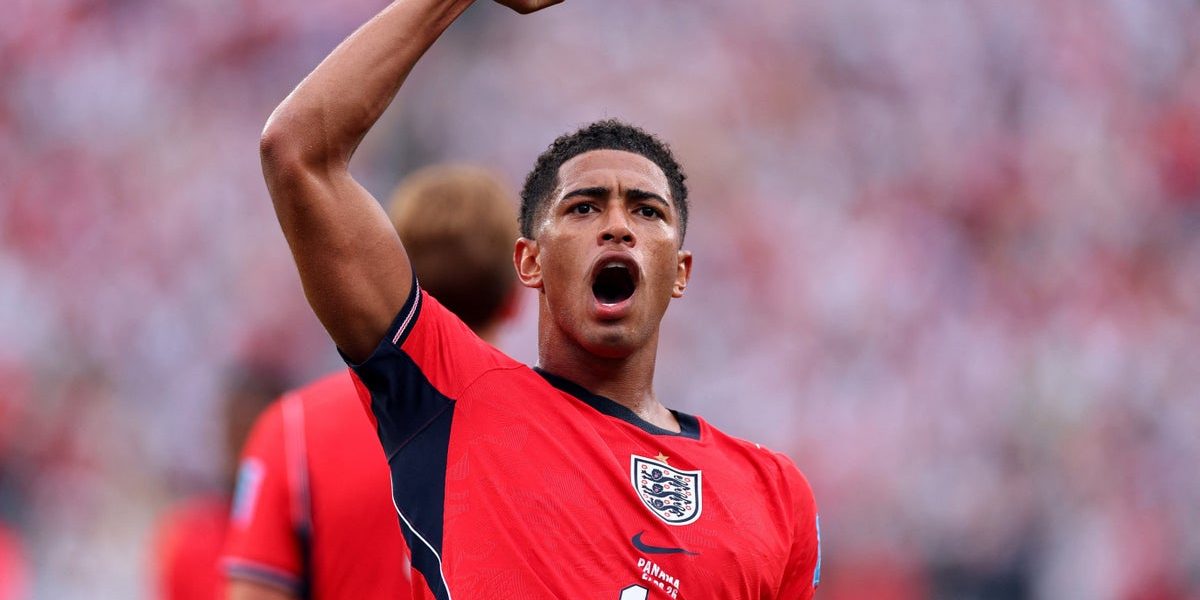
The Un-English Attitude: Bellingham’s American Brand Exposes Britain’s Fault Lines
POLICY WIRE — London, UK — Forget the goals, the assists, the searing runs through midfield. Bellingham, as in Jude, isn’t just bending the game to his will on the pitch; he’s twisting something...

POLICY WIRE — London, UK — Forget the goals, the assists, the searing runs through midfield. Bellingham, as in Jude, isn’t just bending the game to his will on the pitch; he’s twisting something deeper off it. He’s barely in his twenties, yet the whispers, the overt analyses—the sheer *fuss*—around him are less about athletic prowess and more about what he represents. And frankly, for some, that’s a real problem. Not his talent. His swagger.
You see, this isn’t your typical homegrown hero narrative. We’re talking about a phenomenon, someone whose very existence forces an uncomfortable look in the mirror for England. This ain’t about whether he can lead the Three Lions to glory. It’s about why his very confidence, his very refusal to fit neatly into predefined boxes, triggers such visceral reactions.
Long before Bellingham ever pulled on an England senior shirt, the groundwork was laid. He’d gone to Germany, then Madrid, bypassing the usual English football academy rites of passage. And now, at 23, he embodies a thoroughly American archetype: the self-assured, marketable Black superstar. LeBron. Jordan. He’s absorbed their blueprint. His sponsorship deals, his media savvy—they’ve got U.S. influence written all over ’em. He even apparently studied the Michael Jordan docuseries, The Last Dance, for crying out loud. That tells you a bit.
Because here’s the kicker: British society, particularly its footballing establishment, just isn’t quite built for that. “Someone like Jude frightens these people because of his capability and the inspiration he can give,” offered Ian Wright, the venerable former England striker, who’s watched this play out countless times. “If you are outspoken, Black, and playing to that level and not caring, that frightens certain people.” Wright doesn’t mince words. He rarely does. And you’d be hard-pressed to argue against his lived experience.
This isn’t some niche academic concern, either. This is the Premier League, where Black players make up around 43 percent of the workforce, according to recent estimates based on league data. Yet, try finding similar representation in boardrooms, coaching staff, or even among the traveling fan base. It’s a gaping chasm.
Dr. David L. Andrews, a University of Maryland professor who has spent his career dissecting sport’s cultural impact, sees stark parallels. “I partly think about Bellingham what I do with Meghan Markle,” Dr. Andrews remarked, pulling no punches. “If she wasn’t Black, would she be getting what she gets? I think it’s instructive how people respond, and it says more about them than what they’re talking about.” It’s a comparison that cuts deep, illuminating the racial currents flowing beneath the surface of supposedly post-racial Britain.
📄 POLICY WIRE WHITEPAPER PUBLISHED: PAKISTAN'S NATIONAL SECURITY POLICY PRIORITIES
👉 READ BY CLICKING HEREAnd it’s this transatlantic tension that defines Bellingham’s profile. In America, the evolution of the Black superstar—from athlete as entertainment to athlete as global brand, unapologetically individual—has had decades to mature. It’s often been born out of overt racial struggles, forging a different kind of public persona. But England? Not so much. The debates around Black players here have long been characterized by subtle, insidious racial politics. Think about it. Ashley Cole, a generational talent, became more known for his personal life. Raheem Sterling’s success was often met with relentless scrutiny, an almost institutionalized ‘tut’. Bellingham, in contrast, doesn’t wait for permission. He takes it.
This unapologetic approach resonates globally, too. Even in nations like Pakistan, where discussions around individual expression often brush against collective tradition and religious piety, the iconography of such an athlete breaks through. Younger generations, glued to social media, see Bellingham not just as an English player but a global figure—a representative of a particular kind of modern, globally connected success. His brand transcends national borders, even while his local reception is complicated. It’s a tricky balance.
But the irony here isn’t lost: the very characteristics some find jarring—the visible ambition, the ‘say it like it’s’ attitude—are precisely what some of his teammates, and certainly many fans, believe England needs. This team has consistently fallen short of expectations, choked at key moments. Maybe it’s time for an athlete who refuses to internalize national anxieties. An athlete who says, clear as day, “I write my own scripts.” That’s a bold statement.
What This Means
Jude Bellingham’s meteoric rise and his distinct, American-inflected brand aren’t just a sporting story; they’re a barometer for contemporary Britain. His ‘attitude’, often praised in America as ‘clutch’ and indicative of an unstoppable drive, lands differently in England. This divergence spotlights deeper societal frictions concerning race, national identity, and the assimilation—or rejection—of global cultural norms. Economically, his individualistic branding strategy, replete with equity deals, represents a departure from traditional European football endorsement models. It signals a shift towards athletes as self-contained enterprises, commanding market value beyond traditional club or national affiliations, influencing commercial trends and player empowerment discussions. Politically, the often-subtle critiques of his persona—masquerading as comments on ‘character’ or ‘Englishness’—expose an uncomfortable truth about Britain’s ongoing struggle with racial prejudice and its conservative instincts towards outspoken Black excellence. This isn’t just about a football player; it’s about a nation confronting the image of itself projected onto its brightest stars, and sometimes, recoiling from it. Because what frightens some isn’t a goal missed, it’s a standard challenged.