


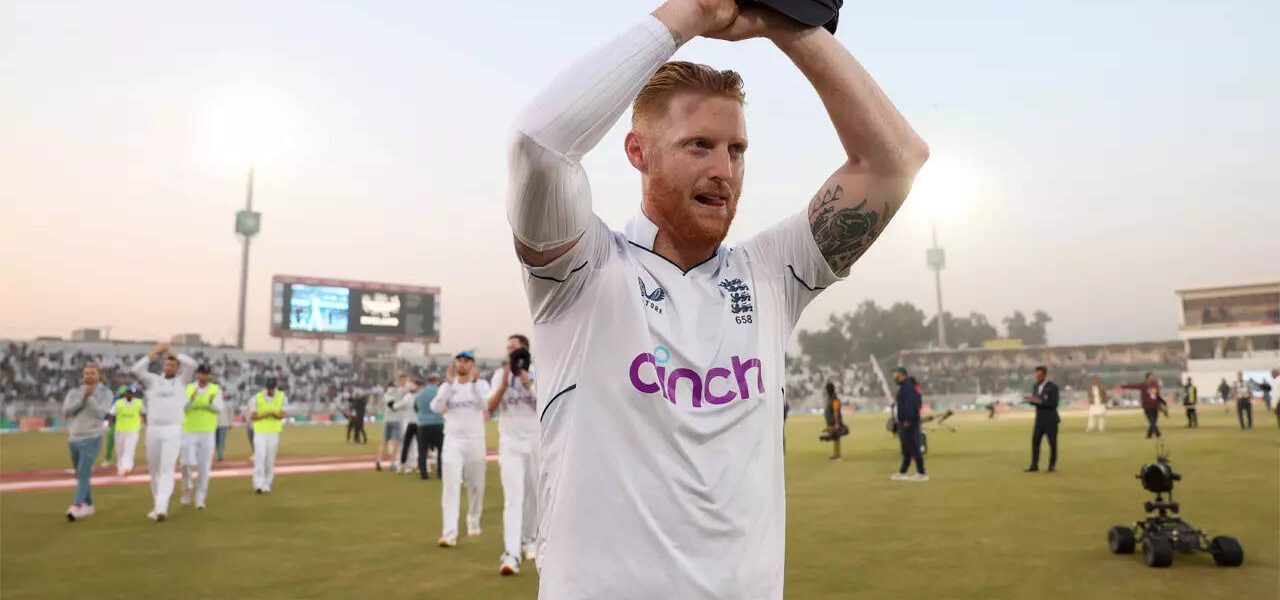
England’s Green and Pleasant Land Bleeds Cricket, as Stokes Bows Out Amidst Rare Home Rout
POLICY WIRE — Nottingham, United Kingdom — They say empires rise and fall, but even the mighty English cricket empire has its shaky days. So, while pundits and fans were busy waxing lyrical about a...

POLICY WIRE — Nottingham, United Kingdom — They say empires rise and fall, but even the mighty English cricket empire has its shaky days. So, while pundits and fans were busy waxing lyrical about a cricketing career quietly coming to an end, the very foundation it stood on—England’s supposed home dominance—took an unexpected pummeling. Ben Stokes, a man who seemed destined to play until his knees completely gave out, decided to call time on his Test duties, a move that oddly coincided with his squad getting handed a particularly sharp reminder of sporting mortality.
It wasn’t supposed to end this way, not for England at Trent Bridge. Not against New Zealand. And certainly not with their captain-cum-star-all-rounder slipping off the international stage. But it did. The Kiwis, bless their quietly formidable hearts, secured a 160-run victory, snatching the three-match series 2-1. This wasn’t just another loss; it was England’s first home Test series defeat of three or more matches in a staggering 14 years. Think about that for a second. Fourteen years. A lifetime for some, a career for others.
And into this mix, like a hand grenade pulled from a tuxedo, came Stokes’s announcement. He’s always been one for drama, hasn’t he? From miracle Ashes innings to World Cup heroics, the man knows how to leave an impression. Yet, his final bow wasn’t one of glory, but of grim determination in a losing cause, a quick-fire 30 runs before the inevitable. It’s almost too poetic a curtain call for the grittiest player of his generation: fighting to the end, even if that end was a walloping defeat.
The tributes poured in, as they always do for sporting titans. Tom Latham, the New Zealand captain, didn’t hold back, despite just having flattened England. “On behalf of the New Zealand cricket team, I just want to congratulate you on an amazing career. You’re truly a once-in-a-generation player,” Latham reportedly remarked. “We’ve shared some fierce battles over the years, and it’s been a privilege to play against you.” He seemed genuinely appreciative, too. Can’t blame him, a true legend’s departure leaves a mark on everyone, even your adversaries.
Because these sporting stories, they transcend borders, don’t they? A player of Stokes’s caliber isn’t just an English phenomenon. His feats reverberate. You can bet money that cricket-mad towns across Pakistan, from Karachi to Lahore, were buzzing with the news. They love a fiery competitor there, — and Stokes fit the bill perfectly. His style, that aggressive, no-holds-barred approach, resonated with fans worldwide, fostering a connection that goes beyond simple allegiance. It’s a kind of soft power, really, seeing how these gladiatorial battles play out — and capture imaginations globally. But the question is: how does such a departure impact a sport striving to remain relevant in a fragmented entertainment landscape, especially in nations grappling with far heavier economic and humanitarian challenges?
His long-time England teammate, Joe Root, painted a more intimate, almost poignant picture. “I’ve played cricket with and against Ben since we were 12 years old,” Root said, the words carrying the weight of decades. “He taught me my first swear word the first time I played against him while sledging me. We’ve always got on really well ever since. It’s going to feel strange walking into the dressing room — and not seeing him around. He’s been an incredible teammate — and friend throughout the journey.” That’s the real gut punch, isn’t it? Not just losing a player, but the constant, familiar presence in the crucible of elite sport.
The details of England’s defeat almost seem like footnotes now. New Zealand, after electing to bat, put up a massive 438, courtesy of centuries from Devon Conway — and Latham. England clawed back a bit with Ben Duckett’s ton, but the damage was done. Another Kiwi century from Daryl Mitchell, battling through whatever ailments, set England an improbable 373. And they folded, for 212. Nathan Smith, Mitchell Santner, Zak Foulkes — the Kiwi bowlers shared the spoils, dismantling an English side that looked suddenly, alarmingly, toothless.
What This Means
Stokes’s retirement, especially given his age and sustained high-level performance, isn’t just a sports anecdote; it’s a window into the unrelenting demands of modern professional athleticism and the often-unseen toll it takes. Politically, the narrative of England’s cricketing identity, steeped in tradition and perceived superiority, takes a hit when an icon leaves and the team simultaneously flounders. This narrative is important; national sporting performance can subtly — but powerfully — shape public mood and even diplomatic discourse, reflecting on a nation’s overall confidence. Economically, a player of Stokes’s drawing power is a significant asset: ticket sales, merchandise, broadcast rights. Losing that marquee individual, particularly one who could ‘sell’ a game through his sheer presence, impacts revenue streams, potentially forcing national sports bodies to rethink their long-term player development and retention strategies.
the premature end to a stellar career like Stokes’s often sparks conversations about athlete welfare, scheduling congestion, and the need for more robust support systems to manage the intense physical and psychological pressures. This isn’t just about cricket; it’s about the sustainability of a global sports economy that demands ever more from its stars. For a player who lived on the edge, pushing his body to breaking point, this wasn’t a choice made lightly, but a calculated exit from a game that gives little quarter. His absence isn’t just a hole in England’s middle order; it’s a policy question waiting to be answered about the longevity of excellence in hyper-demanding professions.