


America’s Recurring World Cup Deja Vu: The Cost of Chasing a Global Football Dream
POLICY WIRE — Washington D.C., USA — The world watches. And the world, it seems, has become quite accustomed to a certain narrative surrounding American football. No, not the gridiron behemoth, but...

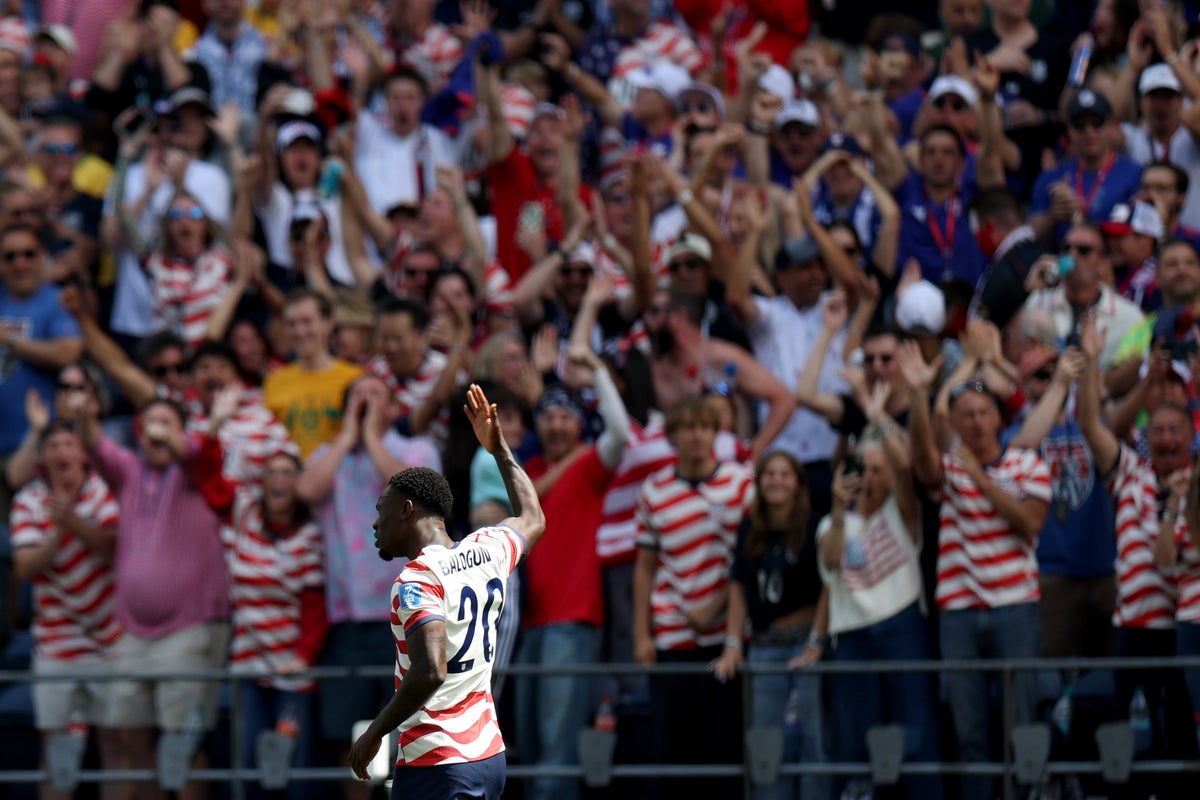
POLICY WIRE — Washington D.C., USA — The world watches. And the world, it seems, has become quite accustomed to a certain narrative surrounding American football. No, not the gridiron behemoth, but the ‘other’ kind, the one where the United States Men’s National Team (USMNT) plays on a pitch—the one with the spherical ball. There’s a particular kind of groundhog day for this squad, a perpetual cycle of high hopes, group-stage progression, and then, almost without fail, a deflating, early exit.
It’s a peculiar national drama, played out on the grandest stages every four years. A wealthy, sports-obsessed nation pours millions into developing what it frequently insists is its sport-of-the-future, only to repeatedly stub its toe on the cold, hard realities of international competition. This Wednesday, when they line up against Bosnia-Herzegovina in Santa Clara, California, for what marks their eighth knockout appearance in twelve World Cup cycles, you’ve got to wonder if the script has finally been changed. Or if we’re just watching another rerun.
Because frankly, winning a knockout match? That’s rarer than an honest politician in an election year. The Americans managed it just once, back in the glory days of 2002. Now, with FIFA’s expanded, 48-team tournament structure looming, adding an extra layer of elimination play — a brutal round of 32 teams before even reaching the conventional last 16 — the road ahead looks less like a highway and more like a mountainous obstacle course. One that historically, this team just doesn’t finish.
“We’ve invested unprecedented resources into youth development, bringing our players into top European leagues earlier than ever before,” stated Cindy Parlow Cone, President of the U.S. Soccer Federation, in a recent policy briefing. “But this sport? It demands more than just talent; it demands a collective will forged over generations. That’s what we’re still building, player by player.” It’s a standard line, earnest even, but it consistently bumps up against a history that seems stubbornly unwilling to bend.
Look, back in ’30, during the very first World Cup with only 13 nations bothering to show up, the U.S. got to the semifinals. Which sounds impressive, until you remember the 6-1 drubbing by Argentina that sent them packing. Four years later, a brutal 7-1 thrashing from Italy ended their campaign immediately. It’s a pattern, see? One that really kicked in for the modern era.
In ’94, playing host on home soil, a shock victory over Colombia — and a draw got them to the knockouts. Then came Brazil. And despite Brazilian Leonardo seeing red for elbowing Tab Ramos into next week, the U.S. still lost, 1-0. Painful. Because those are the moments you gotta grab.
The anomaly: 2002. Beating Portugal, drawing South Korea, then a definitive 2-0 win against Mexico. That felt different. But then Germany happened, a single goal ending it, amidst cries of a blatant handball ignored. They never really got that far again, even with guys like Landon Donovan tearing it up. Ghana ended them in extra time in 2010. Belgium, in a heartbreaking 2014 match that saw American keeper Tim Howard make a ridiculous 15 saves, put them out then. And most recently, in Qatar ’22, the Netherlands—clinical as ever—made short work of them, 3-1. Each time, hope flares, then dies. It’s a cyclical gut punch for fans who really just want to believe.
“They’re still looking for that singular, defining moment, aren’t they? That ‘Aha!’ punch-through moment,” observed former USMNT midfielder Alexi Lalas, speaking on a popular sports broadcast recently. “For all the glitz and glamour surrounding the game in the States, when the chips are down, the narrative often feels painfully familiar. It’s not about lacking individual quality anymore; it’s about the deep, embedded winning mentality that other top nations just… possess.”
What This Means
This persistent American pattern isn’t just about football; it’s a telling barometer of a nation’s complex relationship with global influence. For a country that expects to lead in almost every other domain—from technology to defense—its middling performance in the world’s most popular sport grates. It highlights the stark difference between investing money — and cultivating a deeply entrenched sporting culture. Economically, while FIFA boasts global viewership topping 5 billion across all platforms for the 2022 World Cup, American performance directly impacts domestic enthusiasm, sponsorship dollars, and the crucial broadcast rights future for an audience still debating its full commitment to the beautiful game. Politically, national teams often serve as extensions of soft power, and for the U.S., a prolonged inability to become a dominant force contrasts sharply with the soaring national pride experienced by nations across Europe, Latin America, and increasingly, parts of Asia and Africa. Even as billions in Riyadh, Jakarta, and Lahore fixate on every European league fixture, the unique American struggle offers its own kind of universal drama. For countries in South Asia and the broader Muslim world, many grappling with their own nascent football programs, the American saga presents a paradoxical lesson: deep pockets don’t necessarily buy you immediate dynasty, but relentless participation eventually etches your place—even if it’s usually in the quarterfinals exit log. There’s an underlying humility here, a testament to football’s truly global meritocracy, that even American exceptionalism hasn’t quite cracked. And that, in itself, is a kind of power, a shared narrative of frustration that transcends borders and languages, linking a global audience to a distinctly American quest for legitimacy on the world stage.