


Germany’s Job Market Flexes, Baffling Economists While Europe Reels
POLICY WIRE — Berlin, Germany — While much of Europe remains bogged down in an economic mire, battling stubborn inflation and the lingering hangover of energy market shocks, Germany has quietly...

POLICY WIRE — Berlin, Germany — While much of Europe remains bogged down in an economic mire, battling stubborn inflation and the lingering hangover of energy market shocks, Germany has quietly thrown a curveball. Nobody quite expected this. Its notoriously stoic economy, often described as the Eurozone’s engine, seems to be displaying a peculiar resilience, or perhaps just a delayed reaction to what everyone else is feeling. It’s almost as if the numbers are trying to tell us something entirely different from the prevailing narrative.
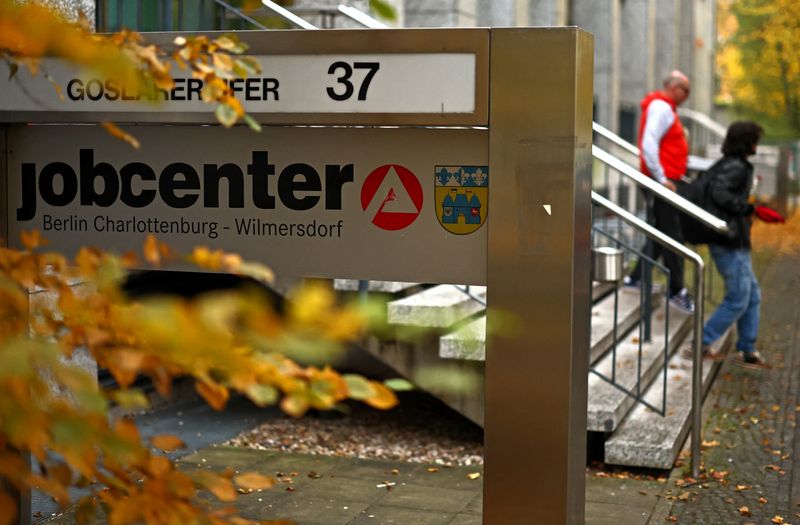
That quiet defiance manifested starkly in June. The Federal Employment Agency reported an unexpected dip in unemployment, with 2.762 million people out of work. That’s a drop of 18,000 from the previous month. The adjusted jobless rate held firm at a respectable 5.9 percent. Now, don’t misunderstand: it’s not a roaring boom, no one’s popping champagne corks in Düsseldorf just yet. But it certainly isn’t the steep decline many analysts, both within — and outside Germany, had been predicting. In a landscape painted mostly gray, this tiny patch of green feels almost suspicious.
Because, let’s face it, the continent’s been on edge. From Paris to Rome, businesses are tightening their belts, consumers are watching every penny. We’re talking about a European Union that’s demanding ‘tangible results’ on trade disputes from Beijing, because its industrial heartland can’t afford further disruption. But German employers, it seems, aren’t shedding staff with the same grim determination as their neighbors. It’s a testament to something, though what, exactly, remains up for debate.
Christian Lindner, Germany’s Finance Minister, rarely one to mince words when it comes to economic realities, struck an upbeat tone following the release. “We’re seeing solid footing here,” Lindner reportedly stated. “Despite global headwinds, German enterprises understand the value of a stable workforce. They’re investing in retention, not knee-jerk layoffs. This speaks to a deep, underlying confidence, not just a fleeting statistical anomaly.” His conviction is certainly notable, particularly given the generally dour outlook that dominates financial headlines.
But does that confidence extend to every corner of the economy? Maybe not so much. Dig a bit deeper, — and you find pockets of fragility. Manufacturers, particularly in energy-intensive sectors, are still grappling with costs. Exports, the lifeblood of this economy, aren’t exactly surging. The global slowdown? That’s still a real thing, — and it’s bound to catch up, isn’t it? It feels a bit like holding your breath.
And when Germany’s economy sneezes, regions far afield feel the draught. Pakistan, for instance, a nation grappling with its own complex geopolitical and economic challenges, relies significantly on remittances from its diaspora, a sizable portion of which contributes to the European labor force. Strong employment in Germany doesn’t just mean more tax revenue for Berlin; it translates into steady income streams that underpin countless households in Karachi or Lahore, indirectly bolstering fragile national economies. It’s all interconnected, you see.
Not everyone shares Lindner’s sunny disposition. Professor Anya Schmidt, a labor market expert at the University of Munich, offered a more guarded perspective. “What we’re seeing is likely a combination of short-time work schemes still cushioning some impacts and companies reluctant to lose skilled staff in a perpetually tight labor market,” she observed. “They’re hoarding talent, in essence. But if the global demand picture doesn’t improve by autumn, we could certainly see that trend reverse. It’s a pause, not necessarily a recovery.” She’s got a point. Hoarding talent costs money, after all.
So, is this a glimmer of hope or just a statistical mirage? The consensus suggests German firms, learning from past downturns, are prioritizing employee retention. They don’t want to endure the headache and cost of rehiring and retraining later on, especially in an aging population where skilled labor is becoming scarcer than sensible political discourse. This pragmatism—it’s very German, isn’t it—might be the unseen hand stabilizing the numbers for now.
The economy might be performing better than forecast, but headwinds remain gale-force. High interest rates, the continued war in Ukraine, lingering supply chain woes – these aren’t just footnotes. They’re the defining features of the current economic chapter. Germany, it appears, isn’t immune. It’s just perhaps a little better equipped, for the moment, to weather the storm.
What This Means
Politically, this unexpected job market strength provides a much-needed morale boost for Chancellor Olaf Scholz’s coalition government, which has been fighting a relentless battle against public perception of economic stagnation. It could temporarily quell some internal squabbles between the SPD, Greens, and FDP, giving them some breathing room as they tackle the formidable task of finalizing the next federal budget. For Christian Lindner, specifically, it’s a talking point, proof that his party’s emphasis on fiscal prudence hasn’t stifled all economic activity.
Economically, for the broader Eurozone, Germany’s resilience, even if partial, is a mixed blessing. A stable German core certainly mitigates some regional risks, preventing a deeper bloc-wide recession. But it also highlights the persistent economic divergences within the EU. While Germany quietly keeps people employed, other nations are facing harsher realities. This uneven recovery could strain political cohesion, making it harder to implement uniform policies across the 27-member state club. For businesses, especially small and medium-sized enterprises (SMEs), it means competition for skilled labor remains fierce, pushing up wage costs even as revenues might stagnate.
And globally? A robust, albeit fragile, German economy retains its purchasing power, sustaining demand for imports and capital goods from its trading partners—including emerging economies. Its ability to absorb labor, even in tighter times, also impacts global migration patterns, especially for skilled workers from nations like Pakistan, for whom Germany remains an attractive destination. But it’s not a full-steam-ahead signal for the world; it’s more a sign that the locomotive is chugging along, albeit slowly, rather than stalling entirely. We’ll have to see if it can keep that pace.