


Fan Futures: Predicting Seattle’s Next Offensive Kingpin, and What It Means for Global Markets
POLICY WIRE — Washington, D.C. — When the collective pulse of a fan base turns to predicting the next season’s stats, it isn’t just about athletic prowess; it’s a curious, complex...

POLICY WIRE — Washington, D.C. — When the collective pulse of a fan base turns to predicting the next season’s stats, it isn’t just about athletic prowess; it’s a curious, complex intersection of loyalty, projection, and the very real economic stakes underpinning modern sports. This speculative exercise, often dismissed as mere locker-room chatter, provides an unvarnished glimpse into market sentiment. And markets, dear reader, extend far beyond the gridiron.
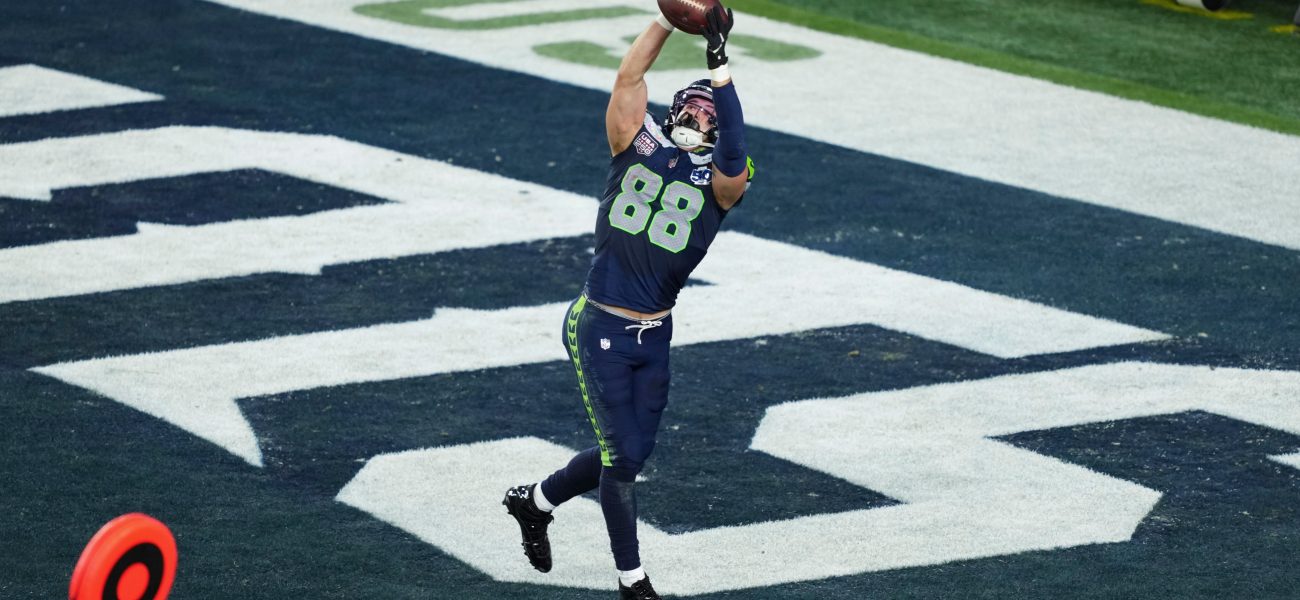
Down in Santa Clara, California—where, incidentally, a certain NFL Super Bowl LX played out just last year—fans of the Seattle Seahawks have been putting their money, or at least their opinions, on future performance. This wasn’t about who leads the team in catches; that, everyone seems to agree, is the guy they’re calling `reigning Offensive Player of the Year`, Jaxon Smith-Njigba. No, the real intrigue lay in identifying his understudy, the player who will snatch up the second-most receptions in the 2026 campaign.
It’s an opaque question, steeped in guesswork, yet the fan responses offer an almost brutal assessment of expectations. Coming out ahead in a poll from `SB Nation Reacts`, tight end A.J. Barner garnered a hefty 38% of the vote. And that’s not small potatoes; that percentage represents a tangible belief system, one that impacts endorsement deals, player contracts, and the lucrative world of sports betting.
Barner, a name mostly associated with `blocking coming out of college`, appears to have reinvented himself, turning into what the enthusiasts are now calling a `big target for Sam Darnold`. The numbers from 2025 back it up, too: he wrapped up that season with `52 receptions (good for second-most on the team last season)`. Pretty impressive, you’d have to admit, for someone whose initial calling wasn’t precisely pass-catching glory.
But the race wasn’t without its contenders. Close on Barner’s heels was Rashid Shaheed, netting 29% of the poll. Shaheed’s narrative, frankly, is a tad more circuitous. After arriving with the Seahawks midway through 2025, he only logged `15 receptions`. Still, the picture shifts when you fold in his previous output: an additional `44 receptions that Shaheed had in the first half of the season with the New Orleans Saints`. Stitching those halves together, he notched `59 receptions, which is a career high`. You can see why a fan might pause, can’t you?
Both athletes offer compelling arguments for their projected ascensions. Barner’s just heading into `year three with sky high expectations`. But there’s also the fundamental nature of his position. He’s a tight end—which is a position that `naturally receives more short to intermediate targets`. Shaheed, however, carries the weight of burgeoning chemistry. Reports `coming out of Spring are that Darnold and Shaheed are “hitting it off”`, hinting at a concerted effort by the Seahawks to `direct more short-to-intermediate stuff to Shaheed` rather than consigning him to just a `field stretching role`.
📄 POLICY WIRE WHITEPAPER PUBLISHED: PAKISTAN'S NATIONAL SECURITY POLICY PRIORITIES
👉 READ BY CLICKING HEREThis micro-level analysis of athlete performance by a devoted fanbase, often filtered through the lens of fantasy leagues and sports wagering, carries surprisingly macro implications. Consider the massive capital flows within the global sports industry—a behemoth valued at hundreds of billions annually. Even these specific predictions about Barner or Shaheed feed into complex algorithmic models used by legitimate financial institutions and underground betting networks across continents. Think about the betting houses in London, the individual bettors in Karachi or Dhaka, or the data analysts in Kuala Lumpur who all pore over these fractional bits of fan intelligence.
The rise of digital platforms and fantasy sports has internationalized this speculative ecosystem, allowing a poll of U.S. football fanatics to become a data point in markets as far-flung as Pakistan, where burgeoning middle classes are increasingly exposed to and participating in global digital economies—including online gambling, regardless of varying local regulations. Financial forecasts, whether for agricultural commodities or for a tight end’s receptions, follow similar patterns of crowd-sourced wisdom and information arbitrage. It’s never just about the game, is it?
What This Means
The intricate ballet of fan speculation around individual player performance, while seemingly trivial, is a direct, if informal, market indicator. These predictions affect far more than watercooler banter; they inform betting lines that move hundreds of millions, influence media narratives, and can even subtly shift the negotiation leverage of athletes. It’s a testament to the hyper-capitalization of modern sports, where every pass, every catch, every fan’s `guess` has a quantifiable value. Policy makers globally, particularly in economies with evolving digital landscapes, would do well to observe these micro-trends. The ease with which `plugged-in Seahawks fans` can transmit their collective foresight has policy ramifications for regulating international finance, data security, and consumer protection within the globalized sports betting and entertainment industry. Ignoring these signals—these shifts in public betting sentiment—is to misunderstand an emerging vector of global economic flow. Because even for something as niche as a team’s second-leading receiver, there’s a world of financial ripple effects, felt from Seattle to the bustling tech hubs of Islamabad. You don’t get much more market-driven than that, do you?