


Berlin’s Grand Design Crumbles: German Football’s Early Exit Signals Deeper Disquiet
POLICY WIRE — Berlin, Germany — The autumn air still holds a lingering scent of Oktoberfest, but inside Germany, a different, far chillier current has settled. It’s not just a football match; it’s a...

POLICY WIRE — Berlin, Germany — The autumn air still holds a lingering scent of Oktoberfest, but inside Germany, a different, far chillier current has settled. It’s not just a football match; it’s a national pride barometer, — and right now, the needle points decidedly south. Julian Nagelsmann’s squad, heralded just weeks ago as contenders, found itself stunningly unpicked in the World Cup’s Round of 32, tossed out by a Paraguayan outfit many pundits had scarcely bothered to mention. Talk about an unexpected turn, eh?
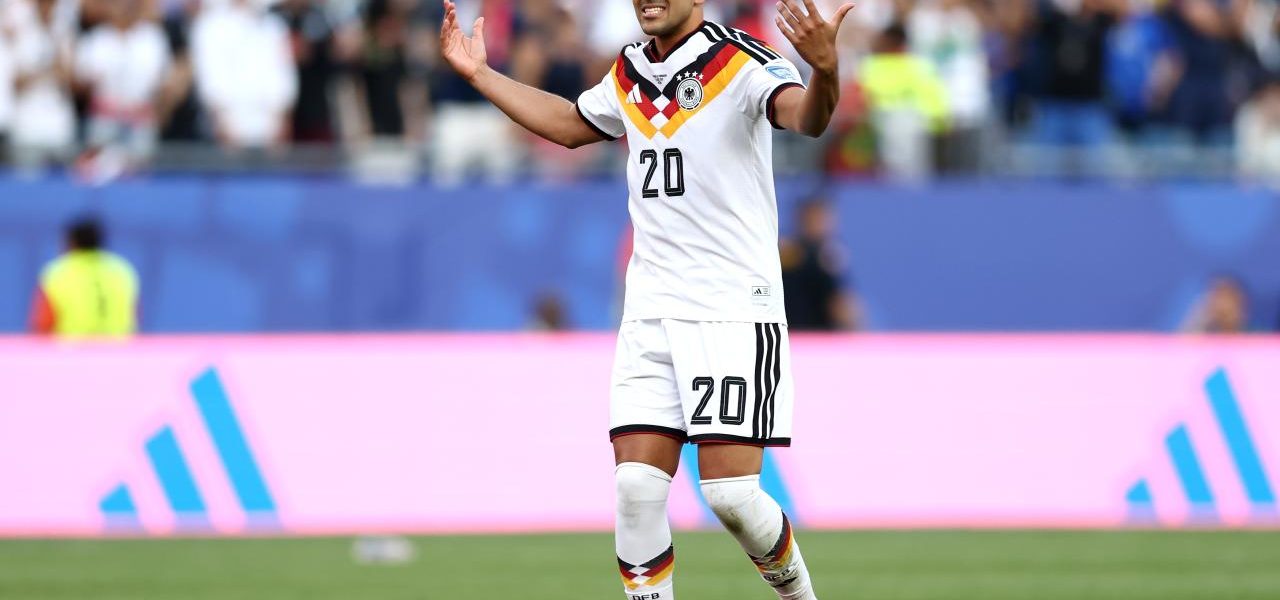
No, this isn’t merely about a ball hitting a net or not. This is about expectation, the grinding weight of German efficiency that usually, almost maddeningly, gets the job done. But this time? Not a chance. The penalty shootout against Paraguay was less a gladiatorial contest and more an agonizing, slow-motion deflating of a nation’s collective balloon. Nadiem Amiri, who coolly slotted his penalty, could only watch as his teammates faltered around him. His post-match candor? Unvarnished. “We’re very disappointed and shocked because we didn’t expect to be eliminated so early,” Amiri told reporters, the fatigue etched into his face. “It was an unfortunate game. Of course, our aim was very clearly to go through. But that’s football — anyone can beat anyone.” Casual, sure. But it barely scratches the surface of the disquiet bubbling up here.
It’s a sentiment that rings hollow against the backdrop of Germany’s storied football history. They’re not just a team; they’re a brand, a symbol of consistent, disciplined performance on the global stage. Losing isn’t just losing for them; it’s a narrative disruption, a wrinkle in a perfectly pressed uniform. For many, it felt less like a sport and more like an unwanted — if predictable to cynics — episode in a long-running national drama. And Nagelsmann, the young maestro meant to breathe new life into the squad? He cut a solemn figure.
“Naturally, there’s immense frustration when such an aspiration ends so abruptly,” Nagelsmann reportedly conveyed, his words careful, chosen. “We came here with clear objectives, — and we’ve fallen short. This isn’t what we prepared for. We’ll be looking at every aspect, because this performance simply wasn’t good enough. You can’t build a monument to an early exit.” Strong words. Because he knows the machine that’s German football expects better, always. He’s not just coaching; he’s upholding an institution, after all.
This kind of setback has global echoes, too. While German supporters grapple with what went wrong, you’ve got fans from Dhaka to Karachi — places where European football is religiously followed — shaking their heads. In countries like Pakistan, where cricket reigns supreme but Bundesliga merchandise sells briskly, Germany’s exit is more than just a fleeting sports item. It’s a talking point in chai stalls, a common lament among expats. And it underscores how intertwined these global cultural touchstones have become. Germany’s reputation as an unshakeable force is often seen as a metaphor for robust economic policy and geopolitical stability, certainly in contrast to regions that might see a similar ‘shock’ more frequently. That makes upsets like Paraguay’s goalkeeper scrambling Germany’s grand designs all the more jarring.
And let’s not forget the money, because it’s always about the money. Data from the German Football Association (DFB) showed that commercial revenue tied to national team performance dropped by an estimated 15% following their previous early World Cup group stage exit. An early exit again? That’s more than just bad vibes; it’s real cash out of pockets, from sponsorship deals to broadcasting rights. So no, this isn’t just about a game. It’s about perception, commerce, — and national narratives all rolled into one.
What This Means
The ramifications of Germany’s abrupt departure from the world stage extend far beyond the pitch. On a national level, it stirs a potent brew of self-reflection — and disappointment. There’s a certain stoicism in the German character, but repeated football failures chip away at a widely held, almost unshakeable, sense of competence. Psychologically, it can ripple into other areas of public discourse — if even the nation’s celebrated football machine can falter, what does that say about other challenges, economic or social, they might face?
Economically, the immediate impact, as mentioned, touches directly on the DFB’s bottom line, affecting future investments in youth development and national infrastructure. But it also hits related industries: sports merchandising, tourism surrounding potential knockout matches, and even casual hospitality. Less buzz, fewer sales. Broadcasters who paid big bucks for exclusivity might start doing their own sums, too, assessing whether the diminished viewer engagement warrants current contracts. This isn’t catastrophic for Europe’s economic engine, no, but it’s certainly not helpful for an economy already navigating its own tricky global headwinds.
From a soft power perspective, the consistent visibility of a successful German team on a global platform cultivates goodwill and a positive national image. An early exit, while not erasing decades of sporting triumph, certainly dulls that shine a bit. It removes a unifying force for Germans — and an appealing narrative for outsiders. It’s a small policy lever, this football team, but an effective one nonetheless. When it misfires, it’s noticeable. Policy makers might not convene emergency meetings over a football loss, but the collective mood — especially in a sports-obsessed nation — certainly isn’t insulated from it. Because what’s more German than winning, after all?