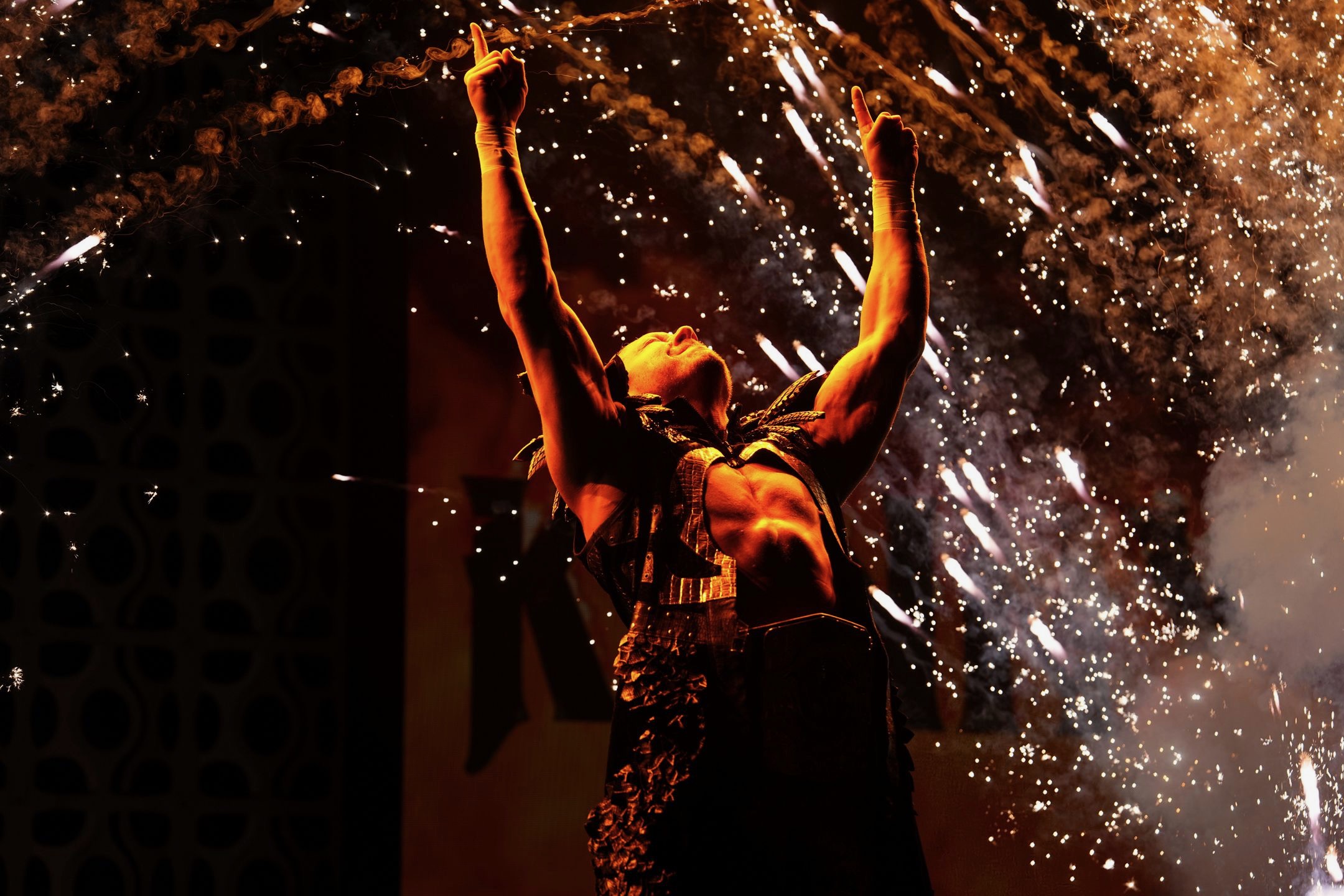
Forbidden Door 2026: Wrestling’s Geopolitical Chess Match Reshapes Global Arenas
POLICY WIRE — San Jose, California — Forget the grapple holds and the flashy theatrics for a moment. What unfolded at AEW’s Forbidden Door 2026 this past Sunday in San Jose wasn’t merely...

POLICY WIRE — San Jose, California — Forget the grapple holds and the flashy theatrics for a moment. What unfolded at AEW’s Forbidden Door 2026 this past Sunday in San Jose wasn’t merely a spectacle of athleticism; it was a high-stakes diplomatic summit, albeit one conducted with piledrivers and superkicks. The clandestine murmurs—that All Elite Wrestling was eyeing more than just North American airwaves—seemed to coalesce into an undeniable roar. This wasn’t about championships, not really. This was about power projection, forged alliances, — and a bold gambit for global market dominance.
Will Ospreay, the ascendant British phenom, clinched the main event against Swerve Strickland, not just securing a title shot at Wembley Stadium, but seemingly—and perhaps reluctantly—absorbing the dark energy of the Death Riders alliance. It’s an interesting play, seeing a national hero momentarily conscripted into an unsavory bloc, reflecting complex international relationships where expediency often trumps ideology. He certainly fought like a man possessed, a frenetic pace that pushed even veteran observers to the edge of their seats. And yet, one can’t shake the feeling this wasn’t merely Ospreay’s coronation, but a calculated chess move by unseen hands, pulling his past to the present with callbacks to Jon Moxley and ‘Hangman’ Adam Page. The man bleeding profusely was Strickland, sure, but Ospreay wore the crimson mask of future obligations.
But the true policy implications weren’t solely on the mat. Mercedes Moné, a formidable figure in her own right, etched her name into the history books with a back-to-back Owen Hart Cup victory. She didn’t just win a trophy; she solidified her claim as a non-negotiable force, effectively clearing her path for a showdown with current Women’s World Champion, Thekla. This dual ascendancy—Ospreay’s controversial anointment and Moné’s unassailable reign—suggests a meticulously crafted narrative architecture designed to catapult the promotion’s biggest stars onto an even larger, frankly, global stage. It’s an aggressive posture, you’ve got to admit.
“You’ve got to see this event for what it’s: a declaration of intent,” mused Dr. Arjan Singh, a geopolitical analyst specializing in emergent soft power dynamics, in an exclusive chat with Policy Wire. “They’re not just selling tickets; they’re selling an experience that transcends borders, cultivating loyalty in markets historically underserved. They’ve managed to grow their global viewership by nearly 18% in the last fiscal year alone, according to a recent analysis by Global Media Insights. That’s not incidental, that’s strategic.”
The alliance politics ran thick — and fast elsewhere too. The chaotic ‘Death’s Door’ 12-man bout highlighted the volatile nature of these coalitions, particularly with Andrade El Idolo’s sudden defection from the MJF/Doyle camp. One minute he’s fighting alongside them, the next he’s opening the door for Mark Briscoe’s win. It’s a harsh reminder that loyalty in this business—like in international relations—is a notoriously fluid commodity, susceptible to the winds of ambition. Briscoe’s victory grants him an immediate title shot against MJF, a reigning champion whose grip on power often feels unshakable, though the prospect of a surprise changing of the guard right before the massive London event does introduce an element of delightful chaos. One simply wouldn’t rule out any permutation here; it’s a constantly evolving geopolitical map, wrestling style.
What This Means
The cumulative effect of Forbidden Door isn’t just about individual victories; it’s a robust strategic play for a larger slice of the global entertainment pie. AEW, often seen as the disruptive challenger to older, entrenched entities, is clearly aiming beyond conventional territories. Their Wembley spectacle isn’t just a destination, but a launchpad for broader international expansion. Think emerging markets, particularly in Asia. The fervent following in countries like Pakistan, for instance, where Western cultural products often find surprisingly receptive audiences—even against localized content—represents an immense, largely untapped resource. They’re laying groundwork there, trust me. You can see it in how they market specific talent, how they leverage global platforms.
Because, make no mistake, this isn’t amateur hour. “We’re building something that isn’t confined to a single continent or language. It’s an ecosystem that champions diverse talent and storytelling,” stated an AEW executive, who preferred to remain anonymous due to the sensitive nature of global expansion talks. “Our vision includes robust partnerships and grassroots development everywhere, from South America to the Indian subcontinent.” The executive’s mention of ‘the Indian subcontinent’ is telling, it really is. It speaks volumes to the ambitions. You don’t make those kinds of plays unless you’ve done your homework. And they’re not just looking for a quick hit; they’re playing the long game, cultivating new generations of fans. Such strategic outreach always carries its own diplomatic weight, after all.
The consolidation of rising stars like Shota Umino, seemingly destined for a major confrontation with Jon Moxley, and Kenny Omega’s slow, deliberate return to championship contention, reinforces a clear succession plan. They’re nurturing their assets, ensuring that as old guards eventually fade—or get forcibly retired by time, whichever comes first—a new, compelling leadership group is ready to step into the void. This strategic development of future ‘world leaders’ in their unique domain ensures not just continuity, but aggressive market innovation.
This past Sunday proved one thing: the Forbidden Door isn’t just a clever event title. It’s a statement. A statement that these once-closed borders of professional wrestling are now aggressively, strategically, and irreversibly, open for business.