


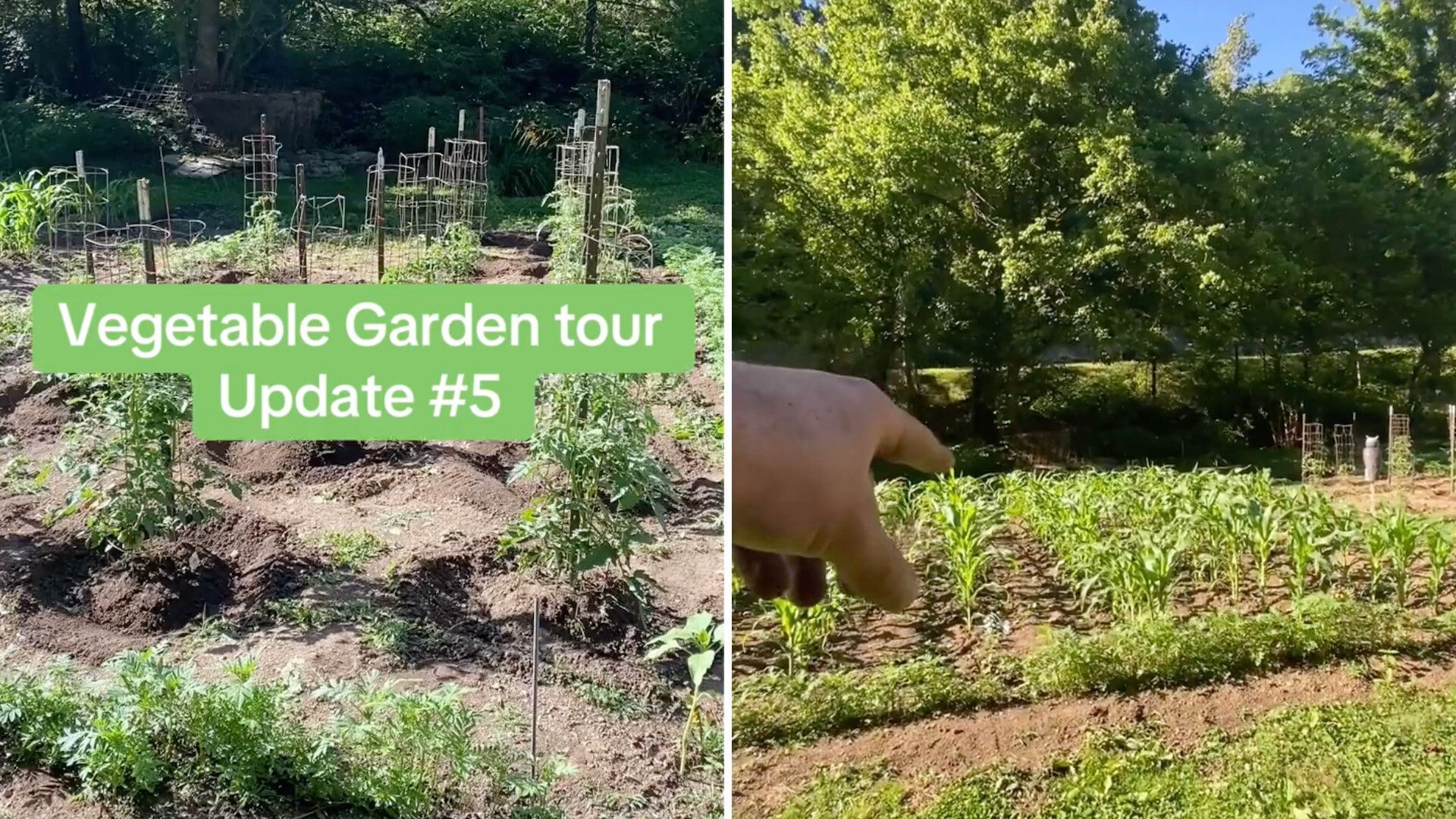
The Backyard Moat: A Microcosm of Global Resilience, or Just Quirk?
POLICY WIRE — WASHINGTON D.C., USA — You wouldn’t expect a viral sensation to emerge from a suburban backyard, least of all one featuring meticulously sculpted earthworks around struggling...

POLICY WIRE — WASHINGTON D.C., USA — You wouldn’t expect a viral sensation to emerge from a suburban backyard, least of all one featuring meticulously sculpted earthworks around struggling zucchini plants. But here we’re. This wasn’t some grand agricultural innovation from an agronomy lab, nor was it a multi-million-dollar government initiative. Instead, it was just a beginner gardener, presumably armed with a trowel and a mild case of urban gardening panic, opting for what’s best described as individual, localized infrastructure. A ‘makeshift moat,’ they called it, around each tiny seedling. And it spoke volumes.
It sounds absurd, sure, a literal ring-fencing of one’s dinner prospects. Yet, this quaint, almost comical approach to pest control and water retention feels less like a gardening hack and more like a visceral reaction to an increasingly unpredictable world. We’re seeing droughts, erratic weather patterns, supply chain snarls—you know the drill. So, a person digging a mini-ditch to keep slugs at bay or capture every precious drop of rain—it’s got a raw, human ingenuity to it, hasn’t it? It’s a localized act of sovereignty, an edible micro-fortress against the slings — and arrows of agricultural fortune.
But can we take individual enterprise too seriously? “While personal ingenuity on the home front is undeniably admirable,” observed Dr. Evelyn Reed, Deputy Undersecretary for Global Food Systems at the USDA, during a recent closed-door briefing, “our long-term food security still relies heavily on sophisticated hydrological engineering and large-scale agricultural infrastructure projects. We can’t moat our way out of global climate challenges, plain — and simple.” She sounded tired. Perhaps, she’s seen too many grand plans hit the wall.
Her point’s fair, of course. Yet, in regions far removed from air-conditioned government offices, where basic necessities are often on a knife’s edge, these small-scale, adaptive methods might just be the best game in town. Consider Pakistan, for instance. A country that, according to the United Nations Environment Programme, faces a ‘stark and growing’ water crisis, with a significant portion of its arable land under threat. Farming communities in Balochistan and Sindh don’t have the luxury of abstract debates about large-scale solutions when their crops are wilting today.
And because these immediate threats necessitate immediate, grassroots responses, local adaptations, no matter how unconventional, gain currency. It’s not about ideal policy, it’s about making it through the week. Ahmed Khan, Deputy Director for Climate Resilience Programs at Pakistan’s Ministry of National Food Security & Research, offered a strikingly different perspective. “We’ve documented farmers in flood-prone districts adopting ancient and newly devised techniques—small berms, raised beds, even indigenous bio-pesticides. This ‘moat’ idea? It resonates. These micro-level innovations, when adapted and shared, could provide tangible resilience against climate shock where mega-projects fall short or fail entirely.” His voice, via video conference, carried a weight of practical urgency.
Khan isn’t alone in seeing potential. Food prices globally, exacerbated by conflict and climate, soared by 14.3% in 2022, according to the Food and Agriculture Organization of the United Nations (FAO). That’s a gut punch for households everywhere, from Pittsburgh to Peshawar. Small wonder folks are digging trenches in their gardens. They’re trying to reclaim a sliver of control.
What This Means
This whimsical backyard moat, for all its amateur charm, shines a stark light on two uncomfortable truths for policymakers. First, centralized agricultural — and resource management strategies, while necessary, aren’t universally robust. Their bureaucratic inertia or sheer scale often leave individual communities vulnerable to immediate, localized environmental or economic shocks. And when the big systems wobble, people turn to their own ingenuity, no matter how humble or homespun the solution.
Secondly, it suggests a quiet but potent trend towards micro-autonomy. Whether it’s the suburbanite building a water barrier or the village elder in rural Pakistan experimenting with flood-resistant crops, there’s a growing inclination to secure food and resources directly. This decentralization—a return to immediate, personal responsibility—could reshape supply chains and consumption patterns over time, subtly eroding confidence in external systems.
It also forces a re-evaluation of what constitutes a ‘valid’ solution. Are we too quick to dismiss grassroots adaptation as merely anecdotal? Perhaps the challenge for governments and aid organizations isn’t to dismiss these ‘moats,’ but to understand their genesis and facilitate their more efficient, environmentally sound implementation. Otherwise, as global issues continue to metastasize, we might see more, not fewer, people retreating behind their metaphorical—or literal—moats. We’ve seen entire regions unravel under the quiet collateral damage of chronic decay when larger systems fail. It’s not just about what grows in the dirt, it’s about what grows in the mind when faced with insecurity. Maybe even regulators could learn something from an un-trained hand in the dirt, much like the delicate balancing act required for new technologies.