


Faith and Faction: Israel’s Unyielding Identity Chasm Dwarfs All Else
POLICY WIRE — Tel Aviv, Israel — It’s not about the Benjamins, not anymore anyway. And it certainly isn’t just about left versus right, that tired old script. Turns out, Israel’s...

POLICY WIRE — Tel Aviv, Israel — It’s not about the Benjamins, not anymore anyway. And it certainly isn’t just about left versus right, that tired old script. Turns out, Israel’s deepest political fissures, the ones that genuinely matter and keep the state’s complex machinery from running smoothly, boil down to something far more ancient, far more visceral: who you pray to, or whether you pray at all.
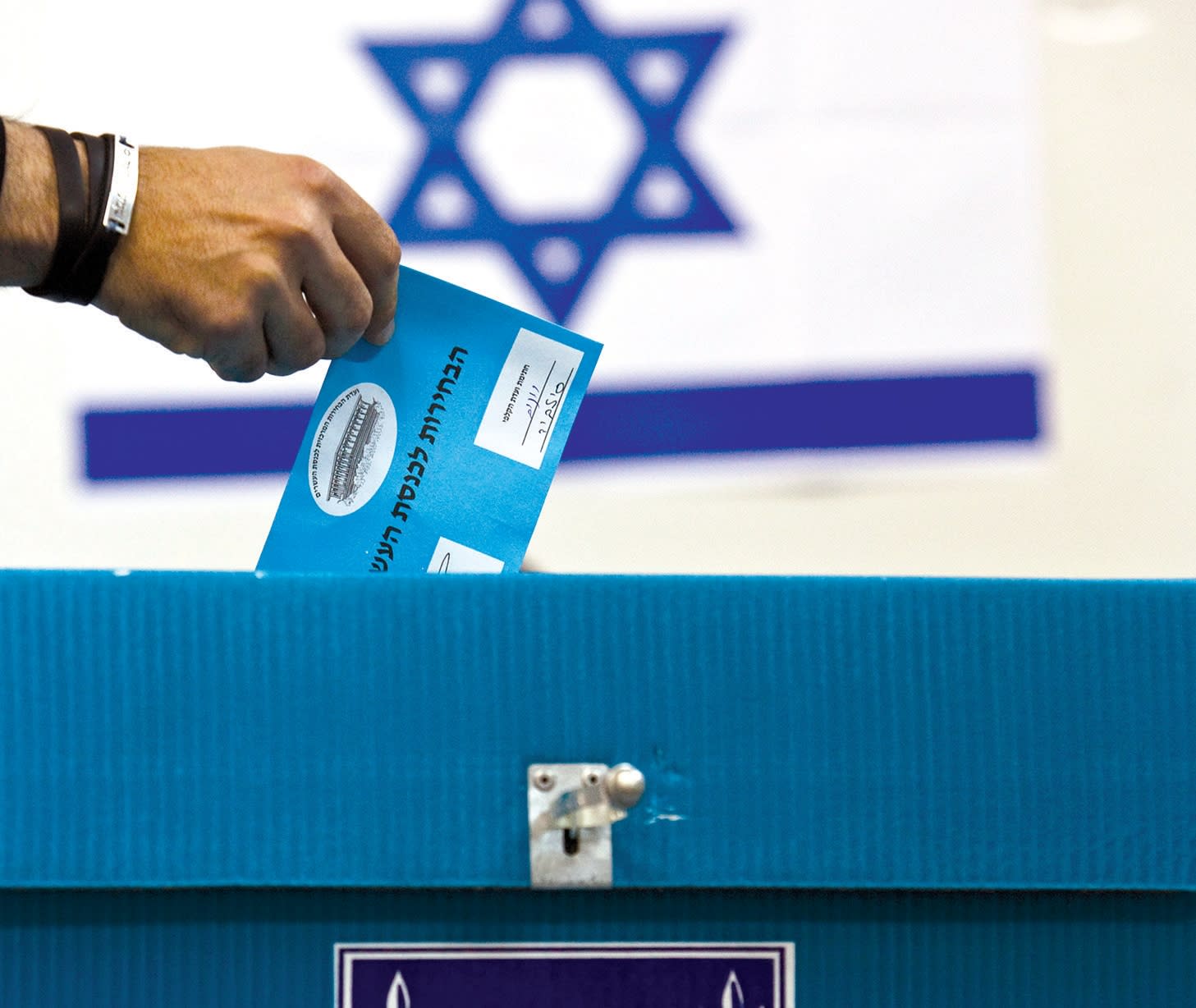
A fresh study from the Israel Democracy Institute (IDI) just yanked the curtain back on this rather uncomfortable truth, showing with stark clarity that religious identity has elbowed its way to the top of the pile as the strongest determinant of political beefs and alliances across the country. It’s a bit like discovering the foundation of your house has always been wobbly, but you’ve been so busy painting the walls you hadn’t noticed how precariously it all sits. [QUOTE_PLACEHOLDER]
For decades, political wonks and armchair strategists have spun narratives about economic disparity or ideological skirmishes shaping the Holy Land’s tumultuous governance. But the IDI, that venerable Israeli think-tank, just served up a hefty dose of reality. The study, involving several thousand Israeli adults, revealed that a striking 67% of respondents consider the religious-secular divide to be the single most significant internal cleavage, according to the Israel Democracy Institute’s ‘Israeli Democracy Index’ 2023 report. That’s not a small number—it’s a yawning chasm.
Think about that for a second. The fight isn’t just about budgets or defense spending. It’s about a foundational disagreement on the character of the state itself, a constant push and pull between the sacred and the profane, the communal and the individual. We’re talking disputes over who serves in the military, what gets taught in schools, and, more recently, the very architecture of the judicial system. It’s an endless tug-of-war, — and there ain’t no referee in sight.
But this isn’t just an Israeli phenomenon, is it? Far from it. Across the globe, from the subcontinent to the shores of the Mediterranean, faith continues to shape public life with an almost iron grip. You look at Pakistan, for instance, a nation forged on religious identity, and you see how internal religious fractures—Sunni, Shia, and the various offshoots—play out in its convoluted politics and even in its daily street skirmishes. It’s not exactly a mirror image, no, but the echoes of religiously inflected identity politics are pretty loud. In Pakistan, too, debates over blasphemy laws or the role of clerics often overshadow what economists might tell you are the truly pressing issues.
And when those sorts of arguments reach such a fever pitch, stable governance? Fuggedaboutit. It’s tough enough to build a coherent, long-lasting government when people agree on basic facts. Try doing it when half the population believes their civic duties are ordained by something altogether different from the other half’s interpretation of parliamentary law.
This persistent division makes forming durable governing coalitions incredibly hard, practically a Herculean task in a multi-party system like Israel’s. We’ve seen it play out over and over, elections becoming referendums on something beyond policy platforms, more like identity affirmation rallies. The stakes? They feel existential, don’t they? One side fears the erosion of traditional values, the other, a slide towards what they see as a theocracy. There’s a certain grim irony in this, watching a nation whose very existence is framed by centuries of religious heritage now struggling to contain the political consequences of that same deeply felt religiosity within its modern, democratic framework.
The IDI’s findings complicate efforts to form stable governments — and enact broad consensus policies. The implications extend to the perception of democratic values and shared civic space, as religious adherence often correlates with differing views on democratic principles. Critiques now often warn that this intensifying religious-political polarization threatens the nation’s cohesion and long-term stability, arguing that a lack of shared vision across religious lines creates deep structural challenges. And that, dear reader, is one heck of a pickle.
What This Means
This IDI study isn’t just another academic paper; it’s a geopolitical tremor, an earthquake beneath the fragile foundations of Israeli politics. Politically, it confirms what many observers suspected: any future government, regardless of its professed ideology, will be forced to contend with this identity chasm as its primary antagonist. It’s not about making a left turn or a right turn; it’s about navigating an abyss that runs straight through the middle of the road. Coalition building becomes an endless, delicate balancing act, forever susceptible to the smallest spark igniting deeply held religious grievances.
Economically, this sort of persistent social fragmentation is bad news, period. It drains investor confidence—who wants to put capital into a nation whose internal cohesion is perpetually up for debate? Policy consistency goes out the window when every budget, every regulatory change, becomes a battleground for competing visions of state identity. Innovation can suffer, as talented individuals might look elsewhere if they feel their values are under assault, or if the national conversation is dominated by intractable, culturally loaded arguments rather than forward-looking development.
For the wider region, and even Muslim-majority nations like those in South Asia, Israel’s experience offers a stark cautionary tale. When religious identity becomes the supreme arbiter of political life, it doesn’t just fracture societies internally; it creates deep-seated anxieties that can reverberate externally. Stability—that often-overlooked economic boon—is replaced by an unpredictable internal dynamic, impacting everything from diplomacy to regional trade relationships. It means constant churn, making long-term strategic planning feel like trying to build a castle on shifting sand. This isn’t just about internal squabbles; it’s about a persistent national anxiety that could color every future interaction, for better or, most likely, for worse.