


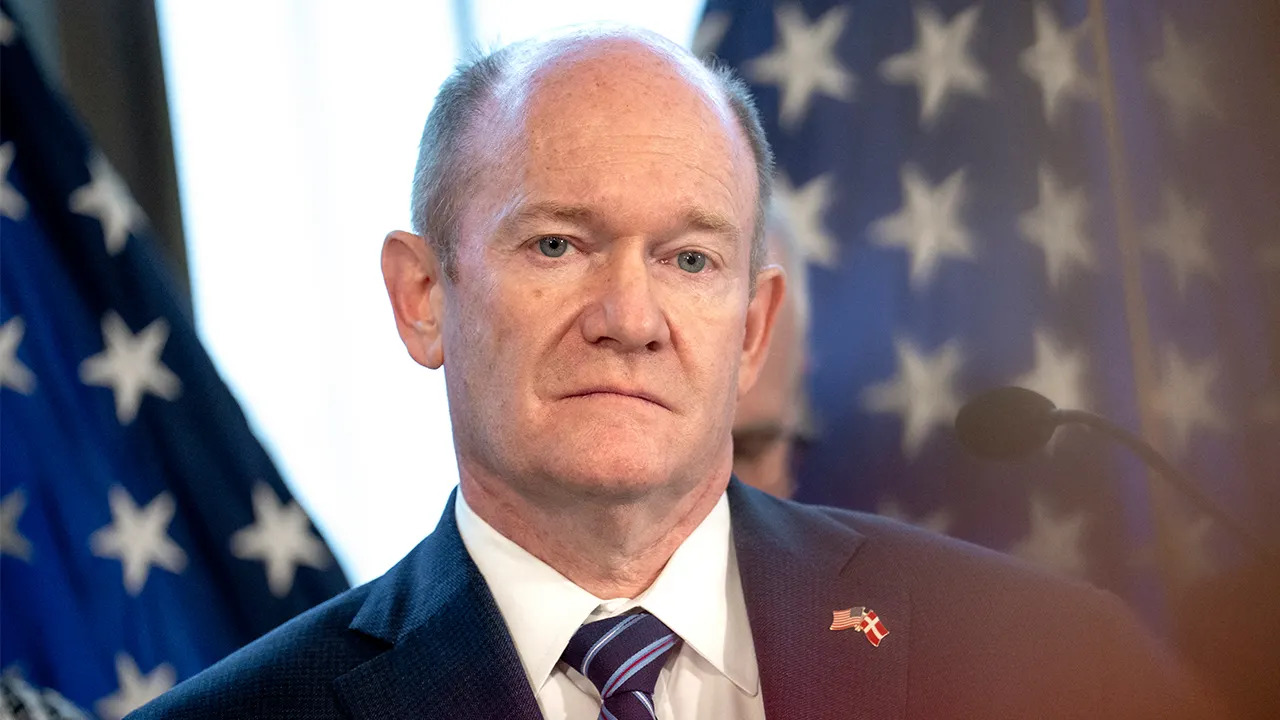
Delaware’s Quiet Jolt: Top Democrat Survives Roadside Scrape, Questions Linger Beyond the Fender
POLICY WIRE — Washington, D.C. — Even the most insulated corridors of power aren’t immune to the mundane hazards of everyday life. One moment, a leading Democratic lawmaker is navigating legislative...

POLICY WIRE — Washington, D.C. — Even the most insulated corridors of power aren’t immune to the mundane hazards of everyday life. One moment, a leading Democratic lawmaker is navigating legislative mazes, charting policy. The next, they’re simply a motorist, experiencing a rather unsettling, though thankfully minor, roadside incident. This week, a top Democrat lawmaker found their motorcade, or perhaps a solo trip, interrupted by a car crash in Delaware, sustaining what officials have termed minor injuries. And just like that, the meticulous dance of policy — and projection hit an unexpected speed bump.
It wasn’t a bombshell revelation of clandestine dealings or a geopolitical crisis unfurling on a grand scale. No, it was just an ordinary accident, the sort millions endure annually. But when a figure of significant national stature is involved, even a bumped fender becomes grist for the capital’s relentless rumor mill—and a quiet prompt for a reevaluation of security protocols. The lawmaker, whose identity has been withheld by authorities for privacy reasons, was [QUOTE_PLACEHOLDER] and [QUOTE_PLACEHOLDER]. They’ve since been released from the hospital, already looking to return to work, which is certainly a testament to modern medicine, or perhaps, simply, to the American political machine’s indomitable grind.
No formal statement detailing the crash’s mechanics has been widely disseminated, nor have any suspects been named, or circumstances elucidated beyond the brief official confirmations. Yet, the subtle ripple effects are already perceivable. The legislative calendar, always a delicate jigsaw puzzle, sees yet another potential delay for key committee work. Discussions around pressing bills, some already facing razor-thin margins, might just pause, or at least lose a measure of their previously established momentum. This isn’t just about one politician; it’s about the gears of government.
And let’s be honest, there’s an almost perverse fascination when those at the helm of national affairs are briefly returned to a state of human vulnerability. It’s a leveling moment, a stark reminder that beneath the titles — and the motorcades, they’re flesh and blood. You see them debate, you hear them grandstand, but sometimes it takes a traffic incident—a commonplace occurrence that costs lives and livelihoods globally—to humanize them. This isn’t a uniquely American phenomenon; indeed, in nations across South Asia, from Karachi to Kathmandu, public figures face a spectrum of daily dangers far exceeding a fender-bender. There, even minor incidents involving politicians are frequently scrutinized through a prism of factional intrigue, conspiracy theories, or even direct security threats.
The incident also subtly nudges at the broader discussion of public safety. In Delaware, for instance, a state often traversed by D.C. elite, traffic fatalities remain a serious concern. According to data from the Delaware Office of Highway Safety, the state recorded 139 traffic fatalities in 2022, a figure that, while down slightly from previous years, still represents a tragic toll. Each statistic is a family’s loss, a community’s pain. But the collision involving a lawmaker? It gains an instant, albeit brief, national spotlight. It just goes to show you, doesn’t it?
This episode, though localized, sends a tiny tremor across the usually steadfast image of power. There are always security analyses after such an event, even a low-impact one. Because it’s not just about immediate physical harm. It’s about optics, about potential security weaknesses, about how global adversaries or domestic disruptors might perceive even the slightest crack in the armor of America’s leadership. You know, these little moments. They accumulate, they do.
It reminds me a bit of some of the complexities explored in how nation’s project soft power through less conventional means. It’s like when the Diamonds & Diplomacy: America’s Soft Power pieces talk about how seemingly minor engagements can have outsized influence. Even something as ostensibly simple as a minor car crash can, however briefly, pull the curtain back on the vulnerability inherent in leadership.
What This Means
Beyond the momentary drama of flashing lights and concerned aides, this Delaware car crash for a prominent Democrat is an exercise in political micro-dynamics. First, it introduces an unpredictable variable into an already finely tuned legislative calendar. Every absent vote counts. Especially in a closely divided Congress, even a day or two of recuperation can, and often does, impact vote counts on contentious issues. It forces temporary alliances, or creates unexpected stalemates.
Second, it prompts a quiet, internal review of security. While the circumstances weren’t necessarily nefarious, any incident involving high-ranking officials triggers a re-assessment. Are routes secure? Are protective details adequate, especially during supposedly off-duty hours? These aren’t just U.S. concerns; they’re globally resonant. Think of how deeply rooted these worries are in countries like Pakistan, where public safety for leaders and citizens alike often feels perpetually precarious. A minor accident in Delaware might feel a million miles from Islamabad, but the questions it sparks about protecting a nation’s vital organs? Those echo far and wide. Political implications are never solely about the individual; they’re about the perception of resilience. And for a politician who’s always under scrutiny, even the smallest tremors in their personal sphere are subject to the cold, hard calculus of political punditry.
Finally, there’s the human element. The subtle ripple of empathy, or perhaps, the quick return to partisan bickering once the immediate shock wears off. How the public reacts to this display of human frailty can, in its own small way, shape the political narrative. Will it garner sympathy, or will opponents quietly — or not so quietly — suggest the lawmaker was distracted? That’s the game, isn’t it? Even a car crash isn’t just a car crash. Not for them, it isn’t.