


Silent Sentinels: How AI Bots Are Erasing Soldiers from the Frontline’s Deadly Dance
POLICY WIRE — WASHINGTON — You didn’t hear a shot fired. Nobody dove for cover. No one bled. And yet, the deadliest part of a combat operation—a high-stakes breach of a fortified position—was...

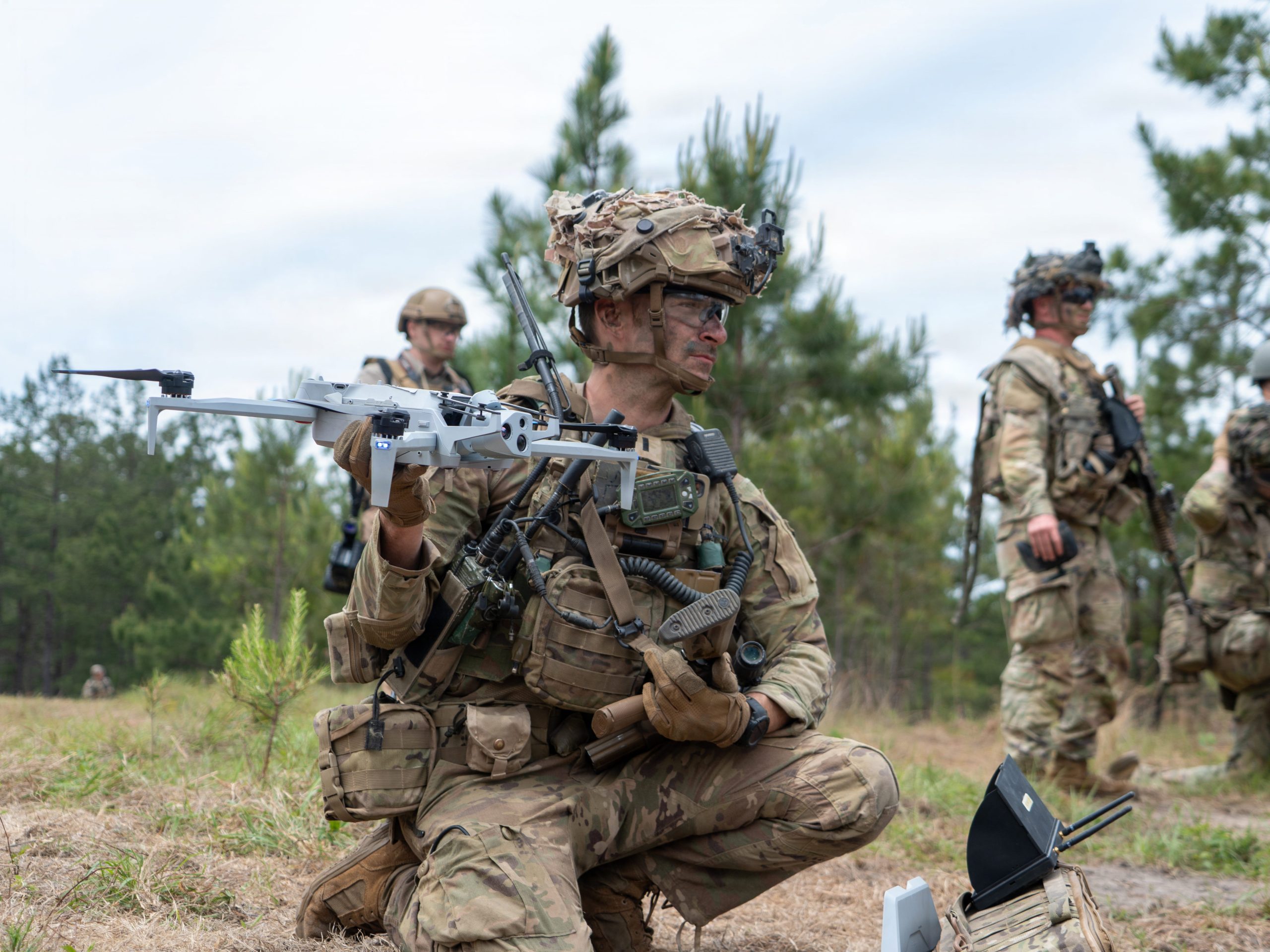
POLICY WIRE — WASHINGTON — You didn’t hear a shot fired. Nobody dove for cover. No one bled. And yet, the deadliest part of a combat operation—a high-stakes breach of a fortified position—was already done. The smoke hadn’t even cleared before the boots on the ground, the very flesh and blood our nations typically sacrifice in such encounters, even got close enough to see the action. This isn’t science fiction anymore, not even a far-off projection. It’s a snapshot from a recent U.S. Army exercise, where machines, not men, led the charge, blowing their way in and softening up targets before a single human combatant even broke a sweat.
It was a chillingly effective display of what happens when advanced robotics meet gunpowder. A commanding officer—an actual human, mind you—directed a swarm of sophisticated attack drones, which swept ahead, scouting and engaging. Then came the robots. Little wheeled behemoths, some no larger than a toolbox, some beefier, rolling straight into the belly of the beast. They weren’t just observing; they were loaded with C4 charges, strategically placed and detonated, ripping open access points, neutralizing threats. Because, let’s be honest, putting a soldier with a crowbar and a prayer against a reinforced door feels antiquated when you’ve got a robot that can simply explode its way in.
The implications are stark. It’s not about making warfare safer for soldiers—though that’s certainly a pleasant byproduct. It’s about fundamentally reshaping what it means to be a soldier. “We’re moving beyond simple automation to genuine battlefield autonomy,” stated General Evelyn Hayes, a seasoned strategist with NATO’s emerging threats division. “It means our warfighters are becoming less about the brute force of engagement and more about the delicate art of orchestrating overwhelming technological superiority. We’re asking different questions now. The objective is always clear, but the ‘how’ is changing in profound ways. We’re saving lives, but we’re also entering uncharted waters of strategic dependency.”
But there’s an unsettling quiet to this triumph of technology. What happens when the decisions, even tactical ones like where to place the explosive, are made at such a remove? Is the emotional cost simply outsourced? Professor Ali Zaidi, a prominent voice on international law and drone ethics at LUMS (Lahore University of Management Sciences), has raised these questions often. “The West has used drone technology in our skies for years, fostering an abstraction from combat,” Zaidi mused in a recent virtual seminar. “Now, we’re seeing it on the ground, literally kicking in doors. The distance between the finger on the trigger, or perhaps the joystick, and the shattered lives on the other end, only grows. It makes conflict too clean for the aggressor, too anonymous. That can’t be good for long-term peace or accountability, can it?” He’s got a point. It’s an uncomfortable truth.
This evolving doctrine, this machine-first approach, isn’t confined to a sterile U.S. training ground. Consider the volatile borderlands between Pakistan and Afghanistan, where geopolitical rivalries simmer and non-state actors flourish. The proliferation of affordable, effective drone technology, even the commercial kind weaponized by insurgents, is already a harsh reality there. What happens when state-of-the-art combat robots—the kind that clear breaches and hunt down targets—become accessible, not just to established militaries, but to various factions in an already deeply unstable region? The strategic balance, fragile as it already is, could shatter. And we’ve seen this kind of ripple effect before.
Defense spending on this shift is staggering. Analysts at the Stockholm International Peace Research Institute (SIPRI) reported that global military expenditure rose to an all-time high of $2.2 trillion in 2022, with a significant chunk allocated to advanced AI and autonomous systems research. It’s a good indicator of where priorities lie. Human resources might eventually give way to technological superiority, an alarming but practical calculus in an increasingly complex world.
What This Means
This isn’t just about cool new gadgets in the military’s arsenal; it’s a sea change in strategy — and economic reality. Politically, nations that lag in autonomous warfare development are suddenly at a severe disadvantage. Forget traditional alliances based solely on troop numbers or even air superiority—who owns the robotic fleet could define future power dynamics. Because if your adversary can clear a building, disable an outpost, or secure an area without risking a single life, while you’re still debating casualty projections, you’ve already lost the argument, and maybe the fight. It’s a new arms race, only this one doesn’t feature ICBMs; it features clever little bots packing lethal punch.
Economically, expect massive shifts. The defense industrial complex, always hungry, is pivoting hard towards AI, machine learning, — and advanced robotics. There’ll be fewer contracts for conventional arms, more for micro-drones, sensor networks, and autonomous ground vehicles. Small nations might find niche markets producing specialized components, or conversely, be utterly shut out by the technological demands. Jobs shift too; less infantry, more drone pilots, AI engineers, — and cyber security experts. The long-term implication is a stark reduction in the human cost of war for the deploying nation, which could, paradoxically, make the decision to engage in conflict seem less consequential. It’s a dangerous game of minimizing the visible costs while perhaps inadvertently inflating the intangible ones, a game whose rules are still being written, often with blood.