


Red Sox’s Cold Calculus: One Veteran Out, Another In, Reshaping Bench Dynamics
POLICY WIRE — Boston, USA — Professional sports, much like geopolitical strategy, operates on a chillingly rational calculus. One moment you’re a performing asset, the next, a casualty of...

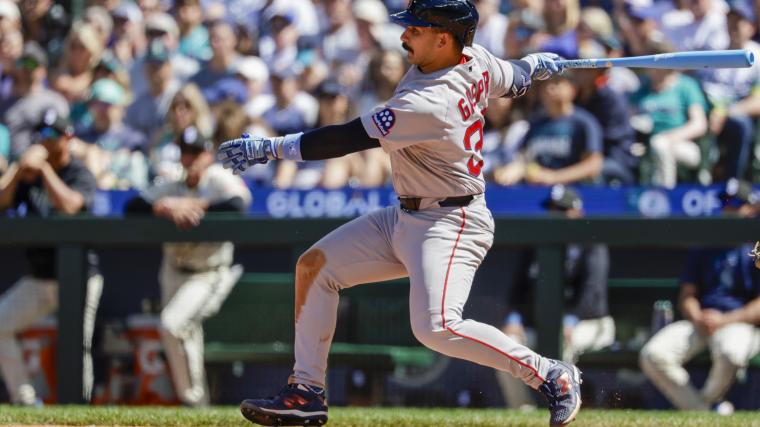
POLICY WIRE — Boston, USA — Professional sports, much like geopolitical strategy, operates on a chillingly rational calculus. One moment you’re a performing asset, the next, a casualty of evolving tactical demands. Mickey Gasper, a seasoned three-year veteran, just learned this hard truth firsthand. His numbers, certainly respectable for a utility man — a slash line of .243/.305/.308 across 34 games, punctuated by five doubles and a triple — were apparently not enough to secure his roster spot against the shifting winds of Boston’s immediate needs.
It’s a brutal, transactional game, really. And in baseball, it often boils down to positional flexibility. Gasper, a catcher by trade, found himself in a numbers crunch. Boston simply needed a different sort of commodity. The return of Romy González from an early-season shoulder surgery has forced the Red Sox’s hand. González, absent since March, offers a multifaceted skillset, primarily as an infielder. He made his grand return against the Yankees on Sunday. His value? The sheer breadth of positions he can cover. Suddenly, Gasper’s specialized, albeit decent, production was a luxury the team evidently couldn’t afford.
Chad Tracy, the interim manager for the Red Sox, articulated the strategic imperative with a candor befitting a military briefing. He didn’t pull punches. And his explanation laid bare the organizational thinking, the cold mechanics of a roster slot. Tracy noted Gasper [QUOTE_PLACEHOLDER] has cooled off a little bit with the bat. Still, he conceded, [QUOTE_PLACEHOLDER] The quality is still really good. But good often isn’t enough when ‘better’ or, more precisely, ‘more versatile’ comes calling. The bottom line was about balance, a strategic distribution of limited resources.
Because, you see, a squad simply cannot sustain an imbalance like that, not when every roster spot represents a chance at a critical edge.
The math, according to Tracy, became straightforward: avoid having three catchers on its roster. This isn’t personal; it’s positional. González’s flexibility means less rigid DH scheduling. Tracy highlighted, [QUOTE_PLACEHOLDER] It’s more about with Romy active — and you know Romy’s not going to be able to run out there and play five or six games in a row at second base — so you’re gonna have to take him down some DH at-bats. That extends to others too. [QUOTE_PLACEHOLDER] You’re going to have Masa (Yoshida) take down some DH at-bats. That fluidity, that adaptable utility, became the ultimate prize.
So, Gasper, the performer, makes way for González, the adaptable multi-tool. This move epitomizes a contemporary trend in sports, one where the premium isn’t always on raw, specialized output, but on a player’s capacity to plug multiple holes, to be a human Swiss Army knife on the field. Last season showcased González’s comprehensive prowess, where he slashed a more robust .305/.343/.483, knocked in nine home runs, and collected 53 runs batted in across 96 games. That kind of broad, consistent production, paired with the ability to roam multiple infield positions, makes him a highly sought-after archetype.
And let’s be frank, Boston, like any major contender (or wannabe contender), is striving to improve down the stretch. They’re not doing this for Gasper’s comfort. This isn’t about loyalty; it’s about winning, plain — and simple. The idea of carrying three catchers — essentially tying up resources in a single, specialized, if indispensable, role — just doesn’t compute in the high-stakes chess match of a grueling baseball season. Tracy was emphatic, [QUOTE_PLACEHOLDER] The need to get away from three catchers and have more versatility on the bench was just imperative at this point.
But it isn’t just imperative; it’s a cold, hard strategic pivot, leaving a productive veteran on the outside looking in.
What This Means
The Red Sox’s strategic reallocation of roster space, opting for a generalist infielder over a specialized catcher, isn’t just a baseball story; it’s a microcosm of broader global economic and political realities. Think about it: a market that once valued deep, specialized skill sets in individual roles now increasingly favors agile, multi-functional players. This phenomenon resonates across sectors, from tech firms favoring developers proficient in several coding languages to international organizations prioritizing diplomats with multidisciplinary expertise and fluency in multiple regional contexts.
In regions like South Asia, particularly countries like Pakistan, the narrative often revolves around developing specific national strengths — textiles, agriculture, or an emerging IT services sector. The Gasper situation suggests that even where a specialized talent pool performs adequately, the global marketplace (or indeed, a baseball roster) will ruthlessly pivot towards adaptability and generalized utility when under pressure. What if, for instance, a nation excels at producing top-tier agricultural experts but needs versatile engineers to drive a burgeoning green economy? The choice mirrors Boston’s: the immediate benefit of a multifaceted contributor can outweigh steady, single-purpose excellence. The statistic is clear: Gasper’s .243 batting average, according to the official Red Sox report, simply wasn’t adaptable enough for the manager’s evolving tactical schema. This shift forces a reckoning for any entity, whether a baseball franchise or a developing economy, to not just cultivate talent but to ensure that talent remains fluid and strategically responsive. It’s less about having ‘good’ players or policies, and more about having the ‘right’ players or policies for a dynamic, ever-changing competitive landscape, a landscape where sometimes, an entirely different skill set — like the sudden appearance of drone technology changing the Kremlin’s fiery reality — demands an immediate, brutal re-evaluation of personnel and resources.