

Family First: How Gridiron Dynasties Defy Alma Mater Loyalties in High-Stakes College Football
POLICY WIRE — Washington, D.C. — It’s a familiar story, one you see playing out in boardrooms and backrooms, on campaign trails, and occasionally, on dusty cricket pitches in Lahore. The weight of a...

POLICY WIRE — Washington, D.C. — It’s a familiar story, one you see playing out in boardrooms and backrooms, on campaign trails, and occasionally, on dusty cricket pitches in Lahore. The weight of a name. The expectation of performance, often outstripping the immediate reality. This particular tale unwinds not in the halls of power, but under Friday night lights (and Saturday afternoons), where the Manning family legacy now extends its long, sometimes overwhelming, shadow over college football’s fiercest rivalries.
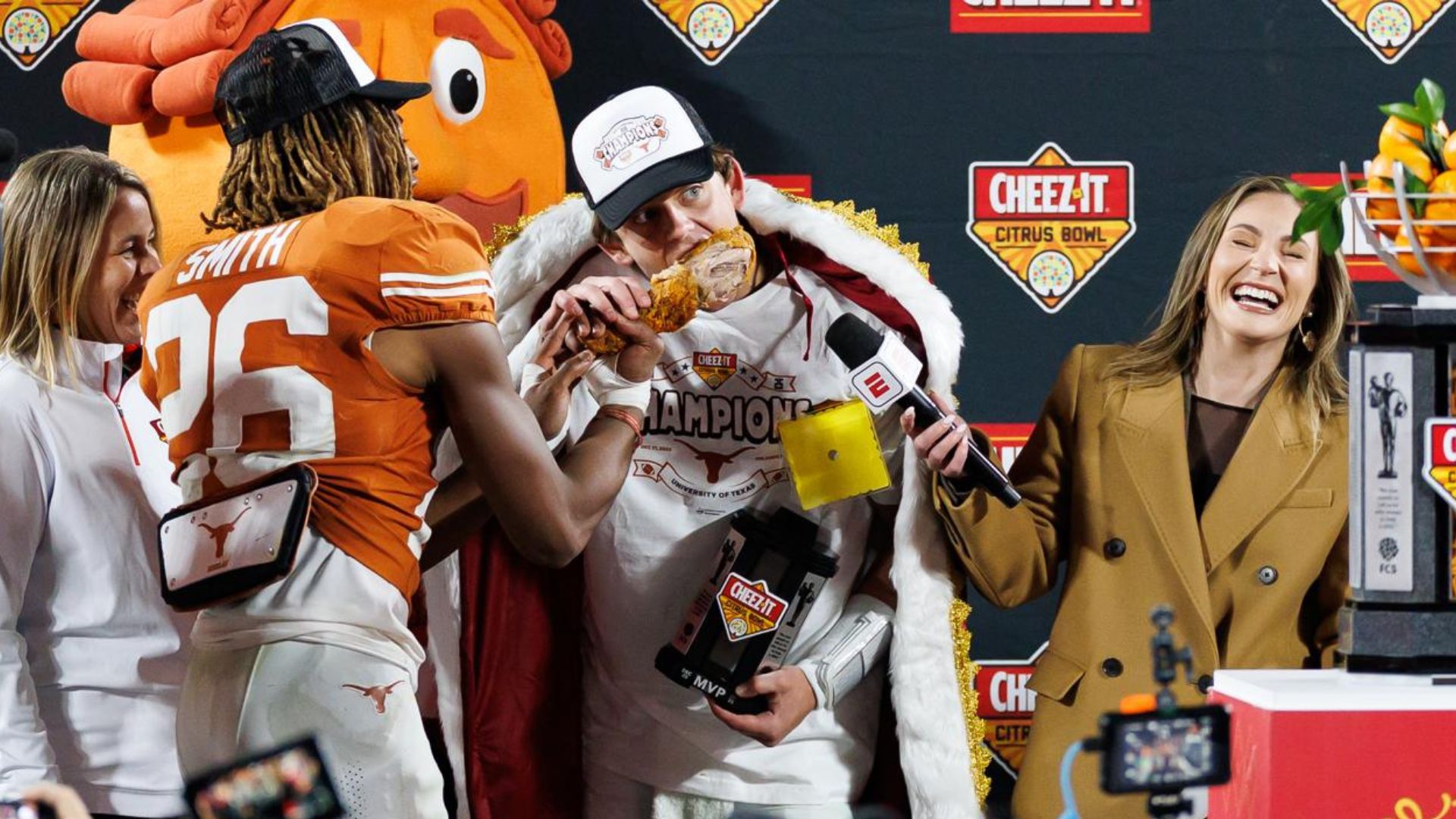
Never mind the Tennessee Volunteers or the Texas Longhorns. Ignore, for a moment, the roaring crowds — and multi-million-dollar sponsorships. What really matters, it seems, is the tight-knit family unit, a sentiment quietly echoed by Peyton Manning—a name synonymous with NFL superstardom—when discussing his allegiance as nephew Arch Manning charts his own course. This isn’t just about a star quarterback picking his team; it’s about the relentless machinery of American celebrity sports culture colliding head-on with personal ties, creating a fascinating spectacle of performative loyalty.
Arch Manning arrived on the collegiate scene among the most hyped-up players for the 2025 college football season, analysts projecting him for everything from a No. 1 overall pick in the 2026 NFL Draft to a Heisman Trophy winner and even leading the Longhorns to a national championship. The kind of pressure that could buckle an I-beam, let alone a nineteen-year-old kid. But that’s the expectation game for you, particularly when your lineage includes two legendary NFL quarterbacks, Archie and Peyton Manning.
Peyton, a Tennessee Volunteers legend himself, usually offers measured words. But when pressed at the Manning Passing Academy on June 26th, 2026, about who he’d back in a clash between his alma mater and Arch’s Texas, the veil of neutrality slipped. You know, just a bit. “Obviously, it’s going to be a huge SEC game. My dad dealt with it when I was in college when Tennessee played Ole Miss, We don’t really touch those topics in our family group chat… I love my university and alma mater – love them both unconditionally… but nothing’s more important to me than my family,” he said, the clarity cutting through any lingering doubt. And then, he laid it out plain, “When you have a nephew playing, I pull very hard for him every single Saturday so that’s pretty much a no-brainer that you’re pulling for your nephew to play well.” A straightforward declaration, leaving little room for misinterpretation.
The younger Manning’s rookie season didn’t kick off like the prophetic visions suggested. His grandfather, Archie Manning, spoke with KXAN, candidly addressing the premature coronation of Arch, an athlete under an unprecedented media microscope. “I was kind of disappointed in a lot of, just a lot of people,” Manning admitted to KXAN. He felt the system had gambled a bit too early on raw talent. “The whole thing. They kind of crowned Arch before he ever played. And I just didn’t think that was fair. Yeah, it was a little tough start, played a great team, and anyway. But I’ve never been more proud of anybody in my life with the way Arch battled through what he had to go through last year, and the way he played, you know, the last eight or nine games of the season.”
It’s a struggle often faced by children of famous parents, particularly in hyper-competitive fields. From political scions in Pakistan—where names like Bhutto or Sharif carry a similar, almost hereditary weight of expectation and scrutiny, regardless of individual achievement—to business empires across the Gulf states, the surname alone becomes an initial measure. Like Arch, these figures must carve their own path, often under immense public pressure and unforgiving critique, before they’ve even truly begun. They’ve gotta prove it. It’s the cost of legacy, isn’t it?
Arch Manning eventually found his stride, shrugging off the early-season jitters that had analysts wondering if the hype was all just hot air. He ended his first season by throwing for a notable 3,163 yards, scoring 26 touchdowns, — and suffering 7 interceptions. According to College Sports Network data, that yardage placed him firmly among the top 15 true freshman quarterbacks in the nation that year, a statistic often lost amid the clamor of initial, unfulfilled prophecies. It demonstrates that talent can overcome even the most intense, if unfair, preliminary assessments.
But his trajectory—and Peyton’s forthright endorsement—really underscores something deeper about American public life, sports as its ultimate microcosm. We fetishize dynasties. We build them up, then delight in watching them struggle (or succeed). But at the core, it still boils down to familial bonds over corporate logos, something even a billion-dollar industry can’t quite eclipse.
What This Means
Peyton Manning’s seemingly innocuous comment offers a stark glimpse into the intersection of personal allegiance and economic policy within the hyper-commercialized world of college sports. For Policy Wire readers, this isn’t merely sports commentary; it’s an examination of how Name, Image, and Likeness (NIL) deals, broadcast rights, and brand equity clash with deeply ingrained personal ethics. Peyton’s statement essentially affirms that, despite multi-million-dollar sponsorships tied to alma maters and the broader college sports ecosystem, family remains the irreducible unit of loyalty. This has implications for universities reliant on celebrity endorsements and alumni donations; if even a legend like Peyton places family squarely above institutional loyalty in a high-profile moment, it suggests the fragility of traditional allegiance structures when pitted against personal ties. And this particular dynamic reflects larger patterns we see in globalized industries, where the individual, or small, trusted network, increasingly trumps large corporate or institutional identity. the early, excessive hype around Arch, and his grandfather’s subsequent dismay, reveals a significant systemic flaw: the commodification of potential. This unchecked hype creates an environment where athletes are evaluated on future earnings potential rather than current performance, creating psychological burdens. The financial stakes involved, bolstered by vast media consumption, encourage an almost speculative market around young talent. It’s a business model that, sometimes, gets jarred.