

Moscow’s Steady Hand: Kremlin Leader Foresees Protracted Victory in Ukrainian Gambit
POLICY WIRE — Moscow, Russia — Forget the theatrics. When Vladimir Putin speaks, it’s not for instant soundbites; it’s a lesson in long-game poker, delivered with an almost clinical detachment that...

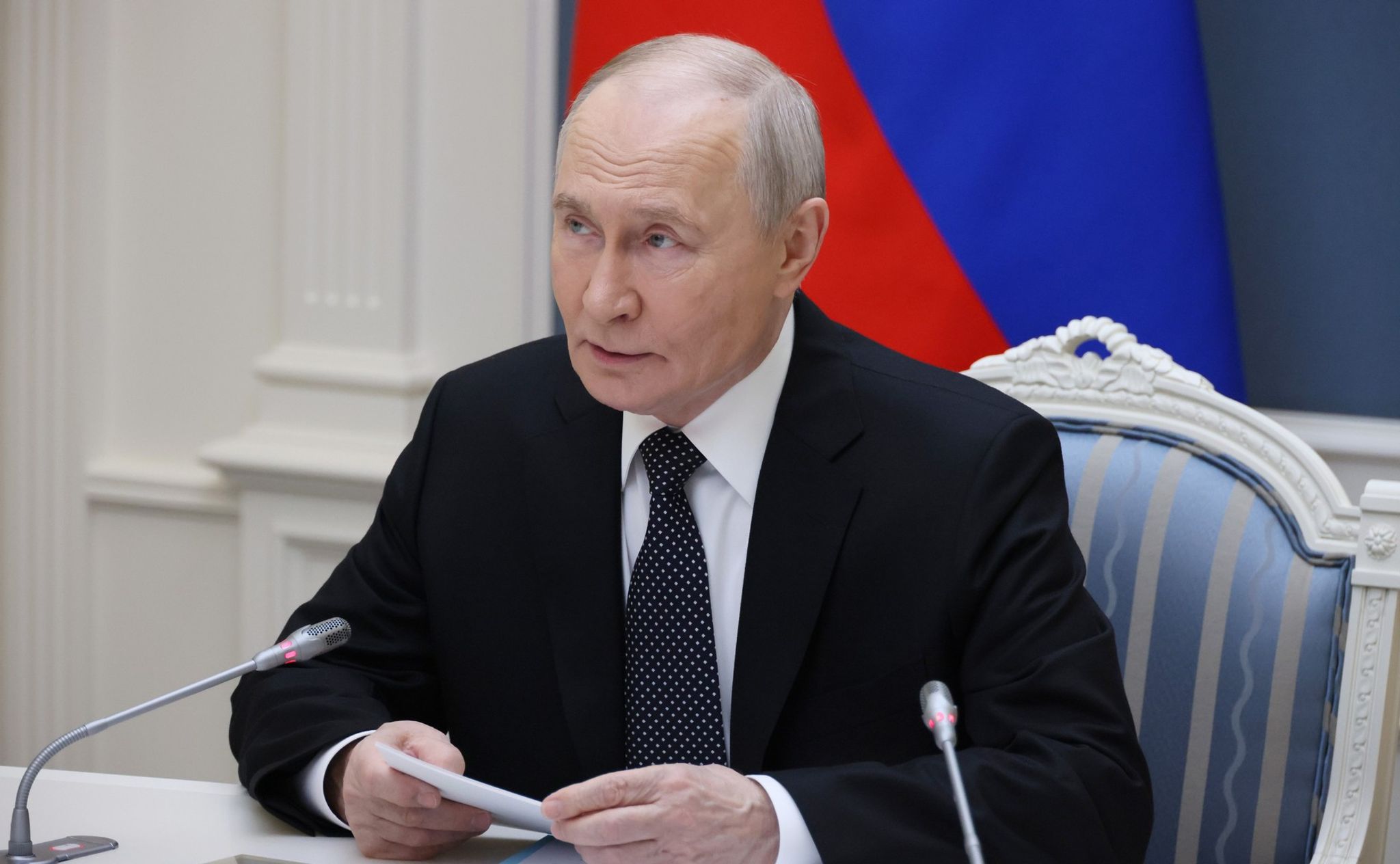
POLICY WIRE — Moscow, Russia — Forget the theatrics. When Vladimir Putin speaks, it’s not for instant soundbites; it’s a lesson in long-game poker, delivered with an almost clinical detachment that often discomfits the West. His recent public engagement wasn’t merely an interview; it was a carefully staged reaffirmation of strategic patience, a cold splash for anyone holding out hope for a swift reversal of fortunes in the Ukrainian quagmire. The obvious take — that he thinks Russia will win — well, that’s just the cover charge. The real story lies in the serene confidence, the almost meditative certainty, that victory, however prolonged, is already baked into the geopolitical cake.
It’s a peculiar spectacle, seeing a man whose nation is bogged down in Europe’s bloodiest conflict since World War II speak with such an air of settled destiny. He wasn’t posturing. He wasn’t even particularly angry. What he exuded, instead, was the quiet conviction of someone who genuinely believes that time and attrition are on his side. He seems to have completely absorbed the idea that Russia can—and eventually will—outlast and outmaneuver any concerted opposition, a view perhaps rooted in Russia’s historical resilience rather than current battlefield successes. But it isn’t just about troop movements or territorial gains.
No, it’s far more fundamental than that. He believes [QUOTE_PLACEHOLDER] in Russia’s capacity to achieve its goals, come what may. And he certainly isn’t shy about articulating a worldview where Western influence, particularly American, is in inevitable decline. He’s looking past Kyiv, past Brussels, straight at the changing global order—or, as he’d have it, the natural order reasserting itself. The conflict, in this frame, becomes less a war and more a surgical extraction of historical grievances and geopolitical vulnerabilities, specifically those tied to NATO expansion. It’s a harsh, unforgiving worldview, one that leaves little room for compromise as the West understands it. Because for Moscow, compromise on this front feels like defeat.
This steadfast stance reverberates far beyond Europe’s eastern flank. Think of the shifting dynamics in regions like South Asia. Nations, particularly Pakistan, often find themselves navigating complex geopolitical currents, trying to balance alliances while securing their own economic and strategic interests. A confident, unyielding Russia in Eastern Europe projects an image of strong-state resilience that resonates with some, and unsettles others. It implicitly—or perhaps explicitly—questions the longevity of a unipolar world, offering an alternative model of engagement, one that often sidesteps democratic norms but promises stability (on its own terms). Just look at how many nations have maintained, or even deepened, ties with Moscow, quietly accepting that great powers often operate by their own rulebook. Some Pakistani strategists, for instance, aren’t blind to the tactical lessons gleaned from a protracted, high-intensity conflict, and they’re watching Moscow’s willingness to absorb immense costs. It’s a sobering reality.
His recent rhetoric—that Russia’s long-term objective remains [QUOTE_PLACEHOLDER]—reinforces this view. It suggests that immediate battlefield victories, while useful, aren’t the sole metric. It’s about exhausting an adversary, dismantling a regional architecture, and asserting a sphere of influence through sheer force of will and a profound capacity for suffering. A lot of analysts initially underestimated Russia’s staying power, particularly after the initial setbacks. But Kremlin calculations, as always, run on a different clock. They don’t just plan for next quarter; they plan for the next century, often with a deeply ingrained fatalism that masks a tactical shrewdness. The West, often fixated on quarterly earnings — and electoral cycles, frequently struggles to comprehend this patience. And this fundamental disconnect, in his eyes, is Moscow’s true advantage.
This enduring conflict has staggering human costs, of course. For instance, the war in Ukraine has reportedly displaced over 14 million people from their homes, according to UN data compiled through 2023. This isn’t just a number; it’s a colossal tragedy, shaping demographics — and economies for generations. But when one side believes it’s merely playing a historical inevitability, those numbers can become tragically abstract. He’s operating from a position of long-term economic resilience, believing Russia can reorient its economy and secure alternative supply chains, mitigating the bite of Western sanctions. But that’s a gamble, always, — and a particularly risky one for its population. It’s a calculation built on the unwavering belief that the Western coalition will fragment or simply grow weary.
And therein lies the core of his message: not just that Russia can win, but that the West, eventually, will tire. This isn’t hubris. It’s a cold assessment of the political will, democratic short-termism, and resource commitment inherent in Western systems. They’re betting on strategic patience as a weapon, arguably more potent than any new missile system.
What This Means
Putin’s unshakeable resolve isn’t just a domestic talking point; it’s a profound declaration to the international community. For European leaders, it means a protracted, uncomfortable reality where a revisionist Russia is a permanent fixture on their eastern border. Economic strategies need recalibration; energy independence can’t just be a slogan—it’s an urgent imperative. We’re seeing nations like Germany re-arm in ways unimaginable just a few years ago. But for countries in the Global South, it presents a different kind of challenge and, for some, opportunity. Russia’s demonstrated willingness to withstand sanctions and global opprobrium signals a multi-polar future, albeit one fraught with tension. Expect nations from Pakistan to Brazil to continue hedging their bets, playing great powers off each other, not out of malice, but out of a stark recognition of their own strategic interests in a less predictable world.
This enduring Russian stance will further destabilize regional alliances — and accelerate the arms race in certain areas. It could embolden other revisionist states to challenge existing norms, sensing a decline in Western unity or punitive action. Moscow’s pivot to partners in Asia, particularly China, underscores a tectonic shift away from its historical European focus. It’s a strategic embrace of a future where its economic — and diplomatic weight increasingly aligns eastward. For policymakers, understanding this shift isn’t academic; it’s an operational necessity. The West must realize that this isn’t just a tactical skirmish; it’s a profound challenge to the post-Cold War order, with long-lasting implications for global governance, trade routes, and even how international law is perceived. Check out The Kremlin’s Unwavering Gaze for more analysis.