

Faded Grandeur: Trump’s ‘Great’ American State Fair Confronts Harsh Reality
POLICY WIRE — Washington, D.C. — The American political spectacle, a beast of endless appetite and varying plumage, often finds its truest reflection not in polished debates, but in the gritty,...

POLICY WIRE — Washington, D.C. — The American political spectacle, a beast of endless appetite and varying plumage, often finds its truest reflection not in polished debates, but in the gritty, temporary arenas of public gathering. It’s here, amid the churn of concession stands and the echo of populist promises, that raw sentiment either ignites or—quite spectacularly—flickers out.
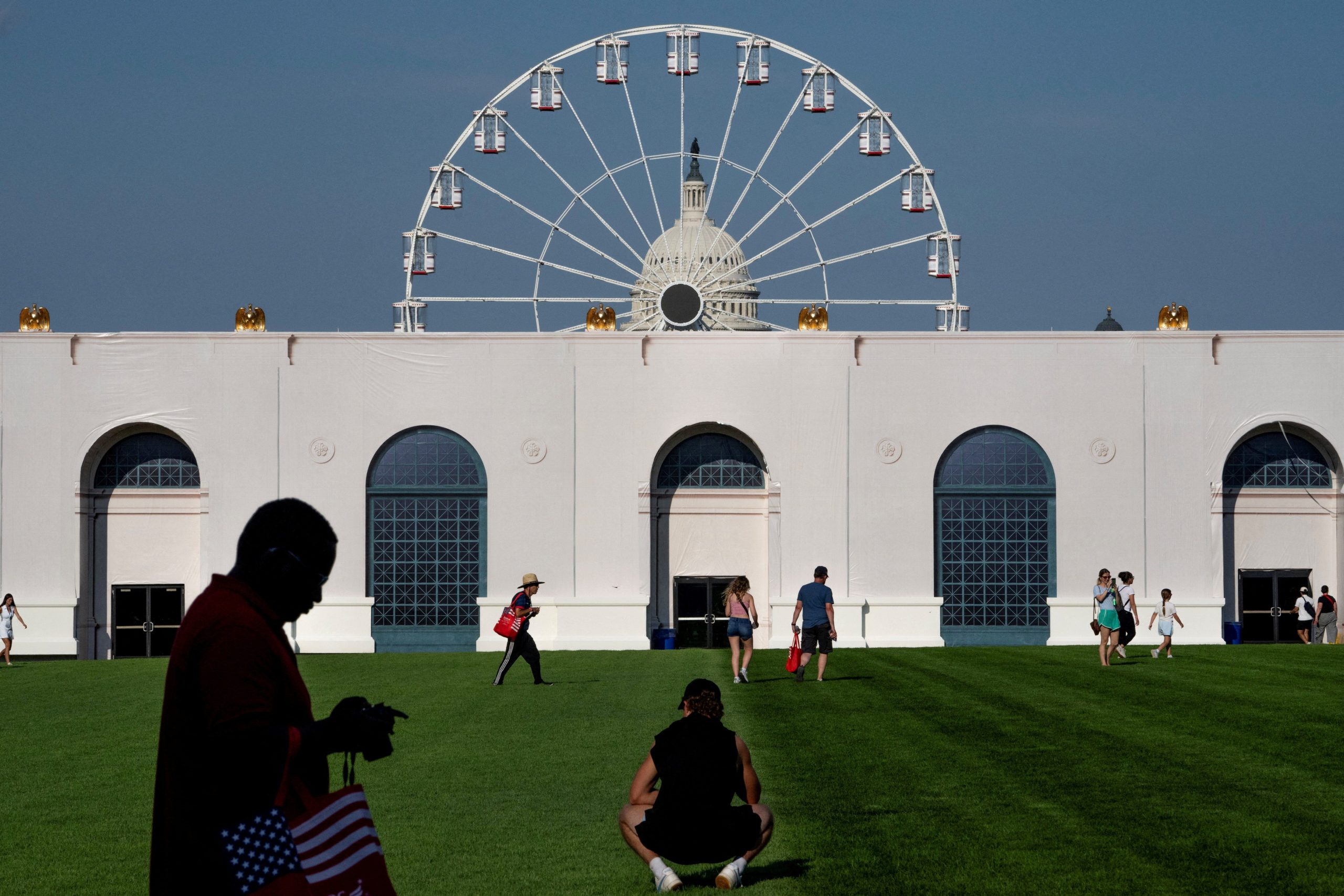
And so it was for the much-ballyhooed ‘Great American State Fair,’ a venture touted as a new frontier for direct engagement with a disaffected public. What unfolded at its initial opening, observers reported, looked less like a grand political jamboree and more like an unfinished thought. Food vendors struggled with logistics, a fairground staple like ice cream met a premature, syrupy demise under an unforgiving sun—a small but telling metaphor, don’t you think? Many booths stood empty, their promises unfulfilled, their potential patrons notably absent.
It was supposed to be a triumph. A traveling embodiment of a movement, accessible, authentic. But pictures tell a story, don’t they? Social media feeds — the unforgiving arbiter of modern reality — quickly filled with images of sparse attendance, wilting banners, and the peculiar silence of what should have been bustling activity. It was a stark contrast to the boisterous rallies that once defined its architect’s political identity, an optical misstep of considerable magnitude.
Because politics, at its heart, is perception. And the optics here suggested a disconnect, a vision struggling to manifest in a tangible, appealing way. Senator Lindsey Graham, a seasoned Republican strategist often allied with the former President, offered a characteristically diplomatic, if slightly evasive, assessment. “Look, organizing an event of this scale, it’s a colossal undertaking,” Graham told Policy Wire. “There are always kinks to work out. You can’t expect perfection from day one; it’s a process.” A process, perhaps, but one that left many questioning the initial execution.
But critics weren’t quite so understanding. Representative Alexandria Ocasio-Cortez, known for her trenchant critiques, didn’t mince words. “Honestly, it seems like another expensive exercise in brand maintenance, rather than an effort to connect with ordinary folks facing real economic struggles,” she remarked. “Our constituents aren’t asking for more state fairs; they’re asking for healthcare — and living wages. This looks like an admission of a failing strategy, a waste of resources, quite frankly.” She’s got a point. Resources aren’t unlimited, are they?
And the numbers? They just don’t add up for a resounding success. According to an independent analysis by the Institute for Public Events, first-day attendance figures at the ‘Great American State Fair’ were an astounding 72% below projected targets. Seven in ten people who could have shown up, didn’t. This wasn’t a minor hiccup; it was a blaring klaxon, an undeniable indicator of a project that fundamentally misread its audience or overshot its capabilities.
From Islamabad to Jakarta, political observers watch America’s internal theater, searching for signals. And events like this one—even seemingly minor blips—aren’t just isolated incidents. They color the international perception of American efficacy, its capacity for orderly governance. In a nation like Pakistan, where political fortunes can pivot on a whisper and public spectacles are often tightly managed displays of power, the apparent disarray of a major American political initiative might be viewed with a mix of bemusement and a touch of concern. It begs the question: if America struggles to pull off a fair, what does that say about its deeper, more complex challenges? The stakes feel higher abroad, for sure.
This isn’t about one fair, it’s never about just one thing. It’s about a shifting political landscape, a weary electorate, — and the ever-present demand for authenticity. Voters, they’re savvy now. They see through thin veneers.
What This Means
The underwhelming debut of the ‘Great American State Fair’ is more than just a logistical failure; it’s a bellwether. Politically, it signals a potential weakening of a once unshakeable political brand’s mass appeal, especially when translated into a tangible, open-to-all format. It implies that the well of uncritical enthusiasm might be shallower than perceived, particularly when juxtaposed against more substantive policy discussions or genuine grievances. Economically, such high-profile, poorly executed ventures raise questions about resource allocation within political campaigns. It suggests a misjudgment of investment versus return in an era where every campaign dollar counts, possibly diverting funds from more effective, ground-level organizing or digital outreach. for a figure whose appeal rests heavily on perceptions of strength and success, an event demonstrating disorganization and a lack of popular traction becomes an unfortunate vulnerability. The visual narrative alone could chip away at the meticulously crafted image of an unstoppable force, echoing further out into complex geopolitical arenas where American influence is always under scrutiny. You just can’t gloss over that sort of thing. But hey, it also forces political strategists to reassess the effectiveness of grand, theatrical gestures in an increasingly cynical, information-saturated age. Perhaps even a familiar name isn’t enough to draw crowds these days.