


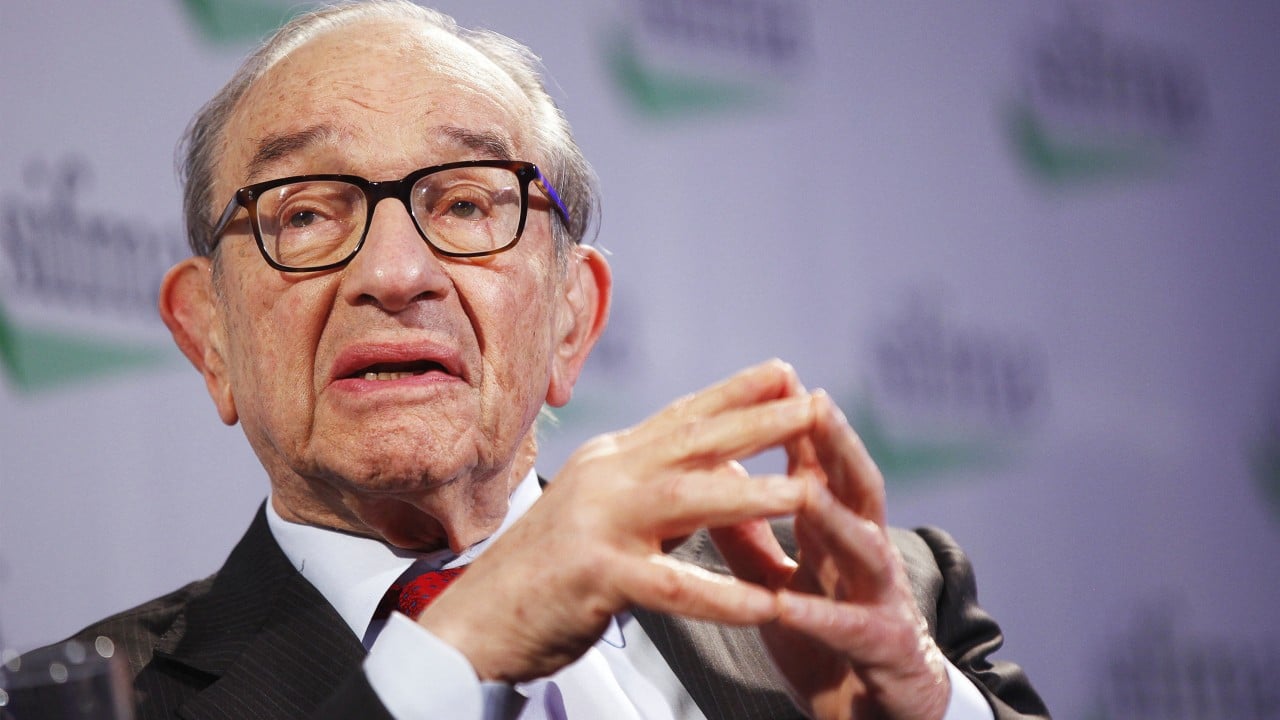
Alan Greenspan, Architect of Eras, Dies at 100 Amidst Dual Legacy
POLICY WIRE — Washington, D.C. — A figure synonymous with American economic policy for nearly two decades, Alan Greenspan, the former chairman of the U.S. Feder...

POLICY WIRE — Washington, D.C. — A figure synonymous with American economic policy for nearly two decades, Alan Greenspan, the former chairman of the U.S. Federal Reserve, has died at the age of 100. His passing marks the close of a career that saw him both lauded as a financial savant and later, sharply criticized for policies preceding the 2008 global economic meltdown.
Greenspan passed away on Monday at his home, according to NBC News. His death resulted from complications associated with Parkinson’s disease. The network further reported this information based on confirmation from his wife, Andrea Mitchell, who serves as NBC’s chief Washington correspondent.
From August 1987 to January 2006, Greenspan presided over the nation’s central bank, a tenure during which he exerted profound influence on the U.S. economy. He navigated periods of robust growth, famously dubbed the Maestro by many, only to see his policy decisions intensely scrutinized after his departure.
(Reporting based on NBC News)
His retirement in 2006 was met with widespread accolades, where he was hailed as the greatest Federal Reserve chairman. However, this perception underwent a dramatic shift barely two years later, when the world found itself grappling with a severe financial crisis. The abrupt downturn prompted many to question the economic framework and regulatory approach that characterized Greenspan’s leadership, deriding him for conditions that fostered such instability.
During his long service, Greenspan became an almost mythical figure, his pronouncements often moving global markets. His philosophy, often seen as a blend of free-market principles and a pragmatic approach to monetary management, was instrumental in shaping both the prosperity and, controversially, the vulnerabilities of the financial system that emerged under his watch.
What This Means
Greenspan’s death invariably rekindles the debate surrounding his complex — and often contradictory economic legacy. While he’s credited by some for guiding the American economy through sustained periods of growth, managing inflation, and responding to various financial shocks like the 1987 stock market crash, others point to his perceived lax oversight of the burgeoning subprime mortgage market and deregulation as significant factors contributing to the 2008 financial crisis.
The duality of his historical standing highlights the enormous pressure and ultimate accountability inherent in central bank leadership. The economic philosophies championed during the Greenspan era continue to inform—and occasionally divide—discussions on fiscal prudence, regulatory frameworks, and the delicate balance between fostering innovation and preventing systemic collapse, long after the Maestro’s final policy move.