


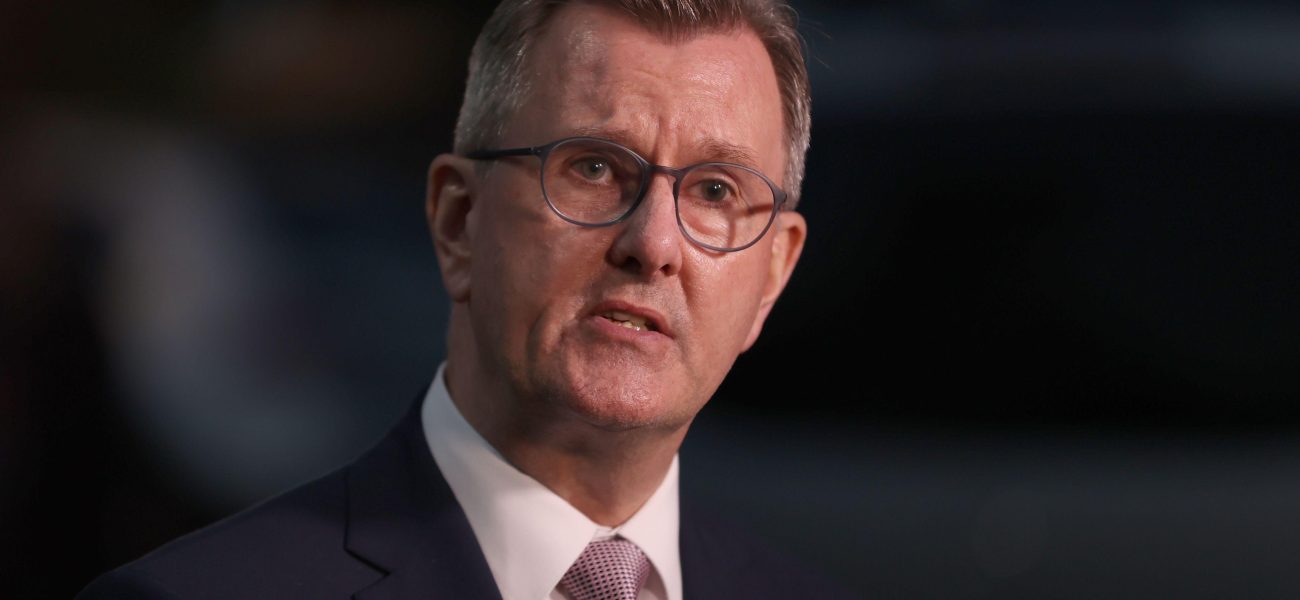
Political Tempest: Donaldson’s Fall Unearths Public Morality Divide
POLICY WIRE — Belfast, Northern Ireland — Turns out, the private lives of public figures aren’t always so private anymore. We just sometimes get to watch the whole thing unravel, bit by...

POLICY WIRE — Belfast, Northern Ireland — Turns out, the private lives of public figures aren’t always so private anymore. We just sometimes get to watch the whole thing unravel, bit by excruciating bit. Sir Jeffrey Donaldson, once a towering figure in Unionist politics, isn’t just navigating a murky legal thicket; he’s now, essentially, a cautionary tale. A few weeks back, whispers became shouts. The grand statesman, it seemed, had a parallel existence, one that stretched far beyond parliamentary debates and handshake photo-ops.
It began with charges, unexpected — and jarring. What was initially understood as accusations of historical sexual offenses spiraled, almost instantly, into a national soap opera. But the really jaw-dropping revelations? They didn’t stem from court filings (not directly, anyway). They arrived via media leaks, paint-splattering the narrative with details of a purported gay sauna visit. This wasn’t just about the law, or even just morality; it was about hypocrisy, laid bare for all to see, raw and uncomfortable. He’d built a career, a whole brand, on a conservative, family-values platform. But this— this was something else.
And then came the young woman. An unnamed 45-year-old also charged, allegedly a recipient of Donaldson’s influence and affections— an alleged exploitation that compounds the narrative of a leader who lived not one, but two lives. You can’t make this stuff up. The DUP leader, a man who, until very recently, seemed as permanent a fixture as the Giant’s Causeway itself, suddenly gone. His party, reeling. Northern Ireland, a political entity always teetering on a precarious balance, now feeling the tremors from a very personal scandal.
It’s not just a localized storm, either. The reverberations hit differently when the subject is someone who once occupied such a high moral perch. Folks expect, even demand, a certain decorum from their elected representatives. They don’t just vote for policies; they vote for character. And when that character crumbles, so too does a segment of public confidence. It isn’t just about Northern Ireland; it’s about a wider global phenomenon, where the chasm between public persona and private reality increasingly engulfs careers and shatters legacies. A 2023 study by Transparency International indicated that public trust in political institutions has dropped to an all-time low of 38% in Western democracies, a statistic only exacerbated by such high-profile integrity failures.
The former leader has now resigned, obviously. His long political career—spanning decades, mind you—now looks like it’s ended not with a dignified retirement speech but with a cloud of scandalous accusation. But what really grabs you about this particular train wreck is the absolute chasm between the projected image and the alleged reality. Here’s a man who helped steer a peace process, shaped political discourse, — and was considered an institution. He was known for saying things like, [QUOTE_PLACEHOLDER]. Now, he faces a different kind of judgment. This whole mess has got the electorate scratching their heads, wondering exactly who they’re entrusting their votes to.
📄 POLICY WIRE WHITEPAPER PUBLISHED: PAKISTAN'S NATIONAL SECURITY POLICY PRIORITIES
👉 READ BY CLICKING HEREBecause frankly, it forces an uncomfortable reckoning. We’ve seen these narratives before, right? The powerful man, the younger, often more vulnerable woman. The hidden life that explodes into public view. It’s a story as old as power itself. And yet, each time it plays out, it somehow still manages to shock. People thought they knew this guy. But apparently, they only knew the carefully constructed edifice, not the foundation it sat upon. The Democratic Unionist Party has suspended him, which is the bare minimum, really, but the damage is already done to their brand, their credibility. They’re trying to distance themselves, fast.
You’d think after so many cycles of scandal, politicians would learn. But perhaps the lure of perceived invincibility, or the sheer entitlement that power can breed, blinds even the most seasoned operators. What’s left in the wake isn’t just a disgraced figure; it’s a renewed cynicism amongst the voting public. A general sense that the entire system is, perhaps, a bit of a rigged game, where those at the top play by different rules until they get caught. It’s exhausting, frankly, watching the parade of high-minded ideals inevitably crash into the concrete wall of human frailty—or worse, depravity.
What This Means
The immediate political fallout in Northern Ireland is significant, obviously. The DUP, already under pressure, now finds itself in a leadership vacuum, grappling with internal dissent and a severely tarnished public image. This crisis could easily destabilize the delicate power-sharing arrangement in Stormont, making it harder to govern effectively. Economically, while the direct impact might seem localized, investor confidence—particularly from more socially conservative quarters—could wane if the perception of political instability and moral disarray persists. Integrity scandals, especially those touching on perceived abuse of power or personal failings, chip away at the broader reputation of a region, making it a less attractive place for long-term commitment. And the ripple effect stretches far. In places like Pakistan or other Muslim-majority nations, such allegations, particularly those involving sexuality outside societal norms or the exploitation of vulnerable individuals, don’t just elicit public outcry; they can trigger deep social introspection about leadership and religious observance. A politician there facing a similar public revelation would almost certainly face not just career termination but a severe, potentially irreparable, social and familial ostracization, underscoring a stark divergence in cultural and political responses to personal conduct transgressions.