


The Santiago Playbook: Why Loyalty Outweighs Logic for Madrid’s Grand Design
POLICY WIRE — Madrid, Spain — It’s a scene replayed endlessly, not just in dimly lit locker rooms, but in the corridors of power worldwide: a seasoned leader stakes his entire political capital—his...

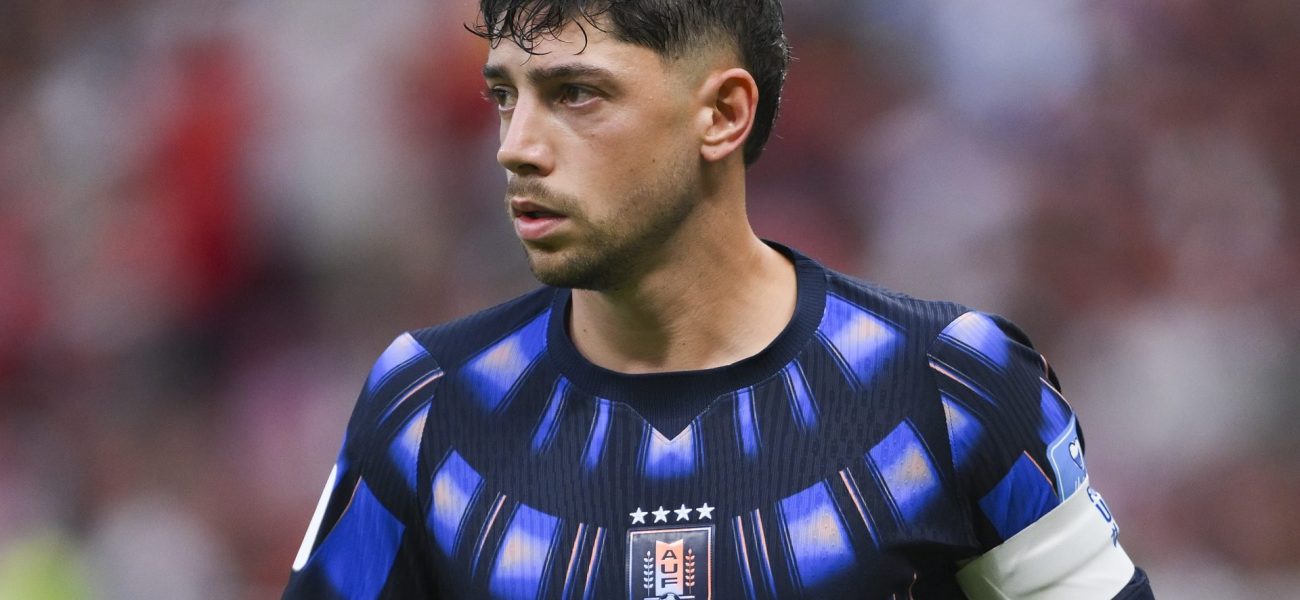
POLICY WIRE — Madrid, Spain — It’s a scene replayed endlessly, not just in dimly lit locker rooms, but in the corridors of power worldwide: a seasoned leader stakes his entire political capital—his very credibility—on a contentious lieutenant, defying the popular murmur and a flurry of bad press. Forget goal tallies or transfer fees for a moment; the ongoing drama involving Real Madrid manager Jose Mourinho and midfielder Federico Valverde isn’t just sports. No, it’s a brutal masterclass in managing public perception, asserting authority, and betting big on an embattled, yet seemingly indispensable, asset.
For weeks now, the Madrid tabloids have been dissecting Federico Valverde’s annus horribilis. A sputtering World Cup exit with Uruguay, a palpable dip in club form, an open tiff with the national coach, Marcelo Bielsa, and even a headline-grabbing dust-up with a teammate—Aurélien Tchouaméni, no less—that reportedly left him nursing a head injury. Most observers had Valverde pegged for the exit ramp, a high-profile casualty of a new era. His market value, whispers suggested, was on a worrying downward trajectory. Analysts at sports investment firms began penciling in scenarios for his summer departure, citing a cooling fan sentiment.
But then, there’s Mourinho. The Portuguese tactician, fresh off his own return to the Bernabéu, isn’t just ignoring the noise. He’s actively rebuffing it. He’s doubled down on Valverde, publicly throwing his considerable weight behind the 27-year-old, not as a peripheral player to be offloaded, but as a future cornerstone. This isn’t just about football, it’s about a strongman ethos at play—a demonstration of control and an unwavering, almost audacious, faith.
“Look, when you’re dealing with personalities of this magnitude, their off-field narratives are nearly as potent as their on-field output,” observed Dr. Zara Qureshi, an expert on sports economics — and global soft power at Karachi University. “For millions in the Muslim world, Real Madrid isn’t just a club; it’s a lifestyle, a point of identification. A player’s struggles, or indeed their resurrection, resonates deeply across cultures, influencing everything from jersey sales to broadcast rights values across Asia.” She wasn’t wrong. Because in countries like Pakistan, where football—especially European leagues—commands a colossal following, a player’s public persona contributes directly to the club’s brand equity. Industry data reveals that viewership for El Clásico, featuring stars like Valverde, routinely eclipses one hundred million unique viewers across the Asian subcontinent alone, underscoring the massive economic stakes attached to individual players.
The manager’s approach isn’t new. Mourinho’s career has been dotted with these moments, instances where he cultivates an unshakeable bond with specific players, often those navigating their own crises of confidence or public scorn. He frames it as mentorship, a paternalistic loyalty that can often elicit spectacular, career-defining performances. He’s done it before, a veritable wizard at reviving faltering talent.
But the pressure is intense. Valverde, after all, isn’t some youth academy prospect. He’s a veteran with immense global profile, currently under intense scrutiny from both local pundits and the wider football-mad global audience. He carries the weight of an entire nation’s expectation, let’s not forget, particularly after Uruguay’s dismal World Cup outing. That makes his performance — or lack thereof — a matter of national conversation, reaching far beyond the sports pages.
📄 POLICY WIRE WHITEPAPER PUBLISHED: PAKISTAN'S NATIONAL SECURITY POLICY PRIORITIES
👉 READ BY CLICKING HEREAnd now, we see the political maneuverings. “What Mourinho is doing is asserting complete control over the dressing room’s narrative,” a former government official, who wished to remain anonymous given their ongoing consultancy work with a major European club, shared privately. “He’s telling everyone—the press, the fans, other players—that his word is final. It’s a very Machiavellian play to establish who runs the show.” But you can’t deny its efficacy when it works.
Another voice, Uruguayan Minister of Sports — and Culture, Dr. Santiago Herrera, was more diplomatic, yet equally aware of the larger stakes. “Federico is a national hero; his form impacts more than just results. It inspires a generation. We understand that difficult patches are part of any career, but we trust that top leadership will do what’s necessary to ensure our talents flourish, for club and for country.” It’s clear: even a club manager’s personnel decisions can have ripple effects that reach governmental offices. Because these are figures representing more than just a payroll; they embody aspirations.
What This Means
Mourinho’s steadfast refusal to entertain a Valverde exit is a calculated power play. It’s not simply a coaching decision; it’s a statement on absolute authority within a high-stakes environment, signaling to the rest of the squad, and indeed the club’s board, exactly where the power lies. By publicly investing in a beleaguered player, Mourinho sets himself up for either triumphant vindication or spectacular failure—there’s precious little middle ground here. Should Valverde rediscover his electrifying form, it will solidify Mourinho’s reputation as a visionary leader, one who trusts his instincts over the baying mob. If Valverde continues to flounder, however, it casts a long shadow over the manager’s judgment, potentially costing him goodwill, market influence, and perhaps, even the very backing he currently enjoys. This entire saga serves as a microcosm of high-level politics, where personal allegiances, strategic gambles, and the art of managing narratives become far more defining than any simple balance sheet or policy initiative. It shows you what loyalty truly costs when the spotlight is blinding.