


Hip-Hop’s Shifting Sands: BET Awards Grapple with Legacy and TikTok Triumph
POLICY WIRE — Los Angeles, United States — For an awards show that traditionally crowns the reigning monarchs of melody and rhythm, this Sunday’s BET Awards isn’t just about handing out...

POLICY WIRE — Los Angeles, United States — For an awards show that traditionally crowns the reigning monarchs of melody and rhythm, this Sunday’s BET Awards isn’t just about handing out statues. It’s a candid snapshot of a culture—and an industry—grappling with its own past, present, and wildly unpredictable future. Think less celebration, more a fascinating, slightly chaotic cultural thesis playing out live on cable. It’s an evening where one undeniable living legend’s profound artistry squares off, symbolically, against the dizzying rise of internet-born comedy, forcing us all to wonder: what exactly does influence mean these days?
Because while Lauryn Hill — yes, that Lauryn Hill — readies to accept the Living Legend Icon Award, an honor richly deserved for a career that redefined an entire soundscape, the show’s hosting duties fall to Druski, a digital native whose comedic currency was minted not in smoke-filled studios, but in viral sketches that captivated millions, then billions. He’s 31. This isn’t just a new host; it’s a changing of the guard, an implicit admission that the attention economy waits for no one, not even Kevin Hart, whom Druski now supersedes as the youngest ever.
It’s a peculiar dichotomy. You’ve got Hill, whose seminal “The Miseducation of Lauryn Hill” isn’t just an album; it’s a genre-bending monolith that’s moved over 8 million units in the U.S. alone, according to the RIAA. Its echoes still reverberate across generations. Then there’s Druski, a self-made titan of the absurd, who scaled the entertainment mountain with a smartphone and sharp wit, landing collaborations with Drake and Snoop Dogg, even sparring (comedically, of course) with Timothée Chalamet. That’s burstiness in a career trajectory, folks.
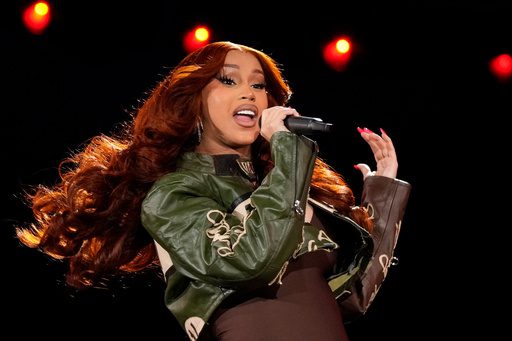
But the evening’s narrative extends beyond just two figures. Cardi B, ever the lightning rod, leads the nomination pack with six nods. Kendrick Lamar — and Mariah the Scientist aren’t far behind with five each. And yes, a parade of established and emerging talent — from Jill Scott to Tems, Doechii to Don Toliver — will hit the stage. It’s a crowded space, full of both titans — and digital dynamos. MC Lyte, a foundational voice in hip-hop, is even back as the announcer, providing a grounded counterpoint to the inevitable internet-driven frenzy.
The awards are also shining a much-deserved spotlight on Teyana Taylor, who’s evolving into a multi-hyphenate powerhouse, earning the Icon of the Year Award. And then there’s Sylvia Rhone, receiving the Ultimate Icon Award for her groundbreaking work behind the scenes. Rhone, the first Black woman to helm a major record company owned by a Fortune 500 entity, isn’t just a pioneer; she’s been a quiet architect of modern music for decades. Her foresight, her grit — that’s the real story, sometimes. “The music industry isn’t a static pond; it’s a roaring river,” Rhone observed recently, a sentiment that feels particularly apt this year. “You have to be fluid, spotting talent that hasn’t even recognized its own potential yet, but also respecting the source. It’s a constant balance, and honestly, that’s where the true asset management challenge lies.” She’s not wrong.
📄 POLICY WIRE WHITEPAPER PUBLISHED: PAKISTAN'S NATIONAL SECURITY POLICY PRIORITIES
👉 READ BY CLICKING HEREThe sheer global resonance of Black artistry also can’t be ignored. Artists celebrated on this stage don’t just influence American culture; they create ripple effects that span continents. From the vibrant music scenes emerging in Lagos to the thriving fan bases in major South Asian cities like Karachi or Mumbai, the rhythms of hip-hop and R&B act as powerful cultural ambassadors. It’s an undeniable soft power play, a connection forged through shared passion that often bypasses official diplomatic channels. Kids in Jakarta are humming Cardi B; young people in Lahore know Druski’s memes. The industry is far from insular.
“We’re in the business of celebrating cultural impact, no matter its origin,” a BET network executive, speaking on background about the channel’s broader strategy, told Policy Wire. “Whether it’s a multi-platinum album or a groundbreaking viral moment, if it moves the culture, it deserves its due. We’re expanding the tent, not just building new walls.” It’s a smart move. Because the audience? They’ve already moved on.
What This Means
This year’s BET Awards isn’t just another spectacle; it’s a bellwether for the music industry and cultural institutions broadly. The careful balancing act between honoring established legends like Lauryn Hill and embracing internet-fueled sensations such as Druski highlights a desperate, yet necessary, bid for relevance in a rapidly fracturing media landscape. Economically, it signifies the shifting power away from traditional label-centric models to individual creator economies, where viral fame can translate into massive — and quick — capital. The awards are actively trying to court Gen Z without alienating their Gen X — and Millennial core audience. It’s a tough tightrope walk. the global recognition of Black music’s influence, particularly across regions like South Asia and the broader Muslim world, underscores its economic viability and soft power potential. These are not just American cultural exports; they’re universal lingua francas of youth, desire, — and aspiration. They’ve proven their resilience, and their reach continues to grow, fundamentally altering how success is measured and celebrated on a global scale. It’s not just about who’s nominated; it’s about what their very presence says about who’s truly running the show.