


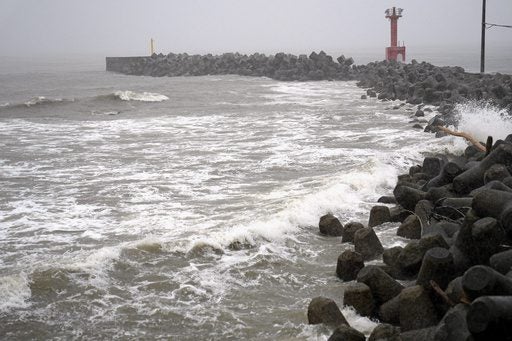
Japan’s Double Whammy: Storms Lay Bare Persistent Climate Vulnerabilities
POLICY WIRE Tokyo, Japan — Even the most meticulously engineered societies can’t quite outrun nature’s increasing tantrums. For Japan, a nation often lauded for its robust disaster...

POLICY WIRE Tokyo, Japan — Even the most meticulously engineered societies can’t quite outrun nature’s increasing tantrums. For Japan, a nation often lauded for its robust disaster preparedness, the weekend offered a blunt reminder of this uncomfortable truth. Two Pacific storm systems, with names sounding almost like distant whispers from a turbulent sea, Mekkhala and Higos, decided to call in succession—and they didn’t come empty-handed. Their synchronized assault wasn’t just another bad weather report; it was a potent, disquieting signal of the global climate shifts challenging even the best-laid plans. This wasn’t some unforeseen meteorological anomaly, no; it’s simply the ‘annual rainy season’ now packing a far more ferocious punch.
It began—or at least the grim tally began—on Friday. Not with a bang, but with the insidious creep of earth under siege. A single life was claimed, a grim, premature statistic, long before the full wrath of the twin tempests truly settled. Japan’s Kyodo News agency reported that a man in his 70s died and three others were injured after a house collapsed in a landslide in Yamaguchi prefecture on Friday. It’s a sobering scene, the quiet violence of solid ground turning liquid beneath one’s home. These weren’t abstract reports from a distant region; these were local tragedies, immediate and heartbreaking, setting a dark tone for what was to come. [QUOTE_PLACEHOLDER]
The sky continued its downpour—an incessant, demoralizing curtain of water—across swathes of the country. Locals in Kyoto awoke to find the familiar Kamo River not merely high, but literally swollen with churning, muddy water. It’s an unsettling sight when a city’s lifeblood morphs into a brown, raging torrent. Consequently, a flooding alert was issued in parts of Kyoto, Osaka — and other areas in western Japan. You don’t take those alerts lightly, not here. We’re talking about regions usually humming with high-tech efficiency, suddenly on edge. More than 30 homes were flooded in Nara and Hiroshima on Friday, as reported by the Fire and Disaster Management Agency. That’s not just water in a basement; it’s lives upturned, possessions ruined, and the stark reality of recovery looming.
And it wasn’t just homes getting hammered. Infrastructure, the very veins of modern society, took a direct hit. Heavy rain also disrupted some train operations — and flights in the area. Imagine, in Japan, a nation famous for its punctuality — and bullet trains, operations grind to a halt. It’s an inconvenience, certainly, but it’s also a powerful economic choke-point. This sort of systemic disruption, replicated across global urban centers, costs economies billions, impacting supply chains and everyday commerce. For a nation so reliant on the smooth flow of goods and people, even a temporary pause reverberates through markets.
But the story doesn’t end—or begin—in Japan. Not really. These scenes are eerily familiar, aren’t they? From the increasingly devastating monsoons that annually batter Pakistan, leading to catastrophic displacement, to the brutal summer floods sweeping through parts of Southeast Asia, nature’s increasing fury is a global chorus. Just last year, India’s monsoon season resulted in 2,051 deaths, according to the government’s National Emergency Response Centre, starkly reminding us that these aren’t isolated incidents. The developing world, often less equipped with Japan’s resilient infrastructure and sophisticated warning systems, typically bears the brunt of these amplified natural events, facing far higher casualty rates and longer recovery periods. It’s a cruel asymmetry of climate change, with vulnerability inversely proportional to carbon footprint, you could argue.
📄 POLICY WIRE WHITEPAPER PUBLISHED: PAKISTAN'S NATIONAL SECURITY POLICY PRIORITIES
👉 READ BY CLICKING HEREWhat This Means
This episode, tragic yet comparatively contained for Japan (with only a single fatality officially reported, it could’ve been much worse), acts as a stark proxy for a far wider political and economic challenge. Firstly, politically, it means that even affluent nations must consistently re-evaluate their disaster readiness. Tokyo will surely pore over response protocols, drainage systems, — and landslide prevention measures. We’re talking budget allocations, strategic investments in ‘climate-proofing’ national assets, and —let’s be honest—potentially inconvenient relocation plans for communities at extreme risk.
Economically, disruptions to transport — and energy grids, even temporary ones, nick at GDP. Over time, as these events become more frequent and intense, the cumulative cost of damage, repairs, and lost productivity really adds up. Insurance markets, already on edge globally from unprecedented climate-related payouts, will adjust premiums, subtly —or not so subtly—raising the cost of living and doing business. For South Asia, the implications are graver still. What’s an ‘inconvenience’ in Osaka can quickly become a full-blown humanitarian catastrophe in places like rural Bangladesh or the Sindh region of Pakistan, exacerbating food insecurity and internal displacement. Consider, for a moment, how these climate stressors intertwine with regional geopolitics; forced migrations, damaged agriculture, and resource scarcity are potent ingredients for instability.
And because the effects aren’t geographically bound, neither should our thinking be. Japan’s experience isn’t just a localized weather event; it’s a piece of a global mosaic, an advanced economy facing climate pushback. Policymakers, from Washington to Islamabad, have got to view these occurrences not as isolated incidents but as recurring symptoms of a profound systemic shift. The rhetoric about climate action? It’s no longer some academic debate. It’s about protecting homes, preventing casualties, and maintaining economic stability, right here, right now, wherever you are on the map.