


England’s Unlikely Star & Croatia’s Ageless Maestro Reshape World Stage Narratives
POLICY WIRE — East Rutherford, USA — For a fleeting hour on Saturday, a strange quiet descended over East Rutherford, New Jersey. It wasn’t the silence of contemplation, mind you, but the...

POLICY WIRE — East Rutherford, USA — For a fleeting hour on Saturday, a strange quiet descended over East Rutherford, New Jersey. It wasn’t the silence of contemplation, mind you, but the agitated hush of 80,000 expectant fans witnessing their footballing giants — England’s national side — struggle to breach Panama’s determined defensive line. Possession stats tell a story; urgency paints a clearer picture. What was meant to be a straightforward conquest quickly threatened to devolve into a drawn-out psychological battle, testing not just England’s attacking verve, but the collective patience of a nation that always, perhaps somewhat unwisely, conflates sporting outcomes with some deeper sense of national destiny.
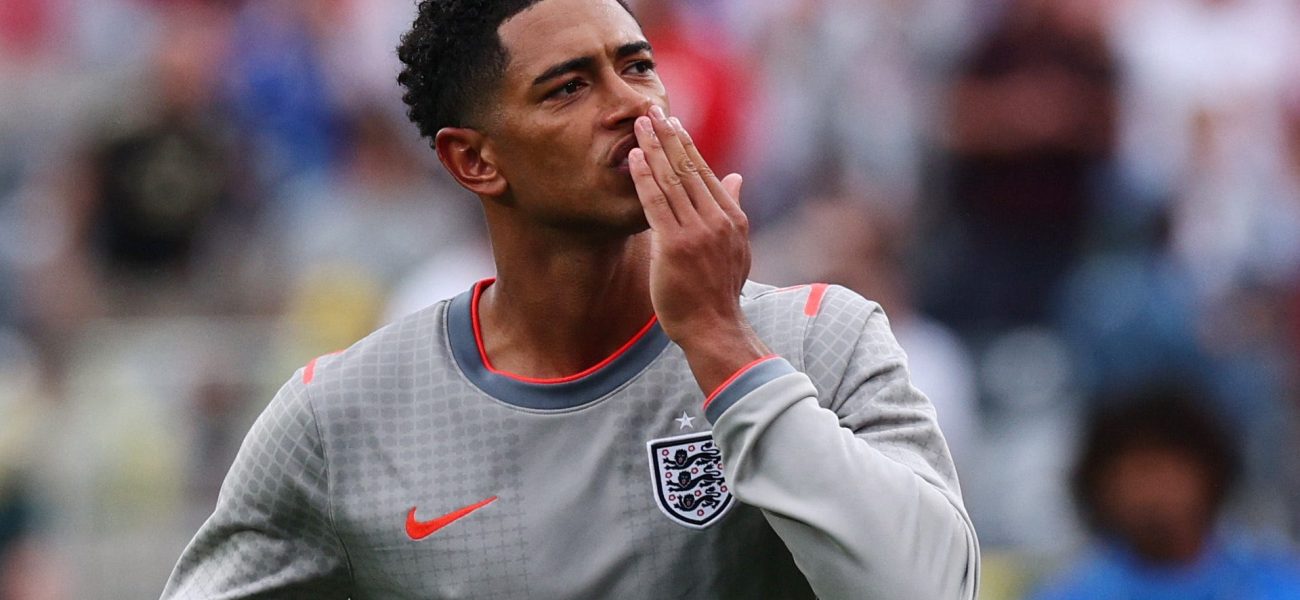
Then, a young man, barely into his twenties, stepped up. Not with a dazzling solo run from midfield or a thunderbolt from twenty yards, but with the scrappy, close-range determination that defines the game’s pivotal moments. Jude Bellingham, with the pressure visibly mounting, found the net. He forced home Bukayo Saka’s corner from close range despite being tightly marked, pulling England from the precipice of what would have been an incredibly awkward post-match press conference. Five minutes later, he clipped in a cross for Harry Kane, allowing England’s captain to rise above his marker and head home. The scoreline 2-0 now felt less like a dominant performance — and more like a necessary exorcism. [QUOTE_PLACEHOLDER]
Bellingham’s moment was especially sharp given his own backstory. Here’s a bloke who, despite his talent, has faced the brutal glare of social media critics— they’ve not held back, and we’ve all seen it. You know, just last year, he dealt with significant injury woes — and nagging inconsistency at Real Madrid. So, when he said, “Personally, it was nice to put some of the noise aside and just show my country and my teammates how committed I am to helping us try to win games,†after an earlier triumph against Croatia, it felt less like a soundbite and more like a raw statement of purpose. It tells you something about the intense scrutiny even twenty-something phenoms endure in this hyper-connected, unforgiving world. His presence—he’s the youngest European player to feature in four consecutive major tournaments—signals a genuine generational shift.
Meanwhile, across the Atlantic, other footballing narratives played out, each with its own brand of dramatic flourish. In Philadelphia, the stage belonged to an altogether different kind of star: Croatia’s Luka Modric. At 40 years old, he played his first full 90 minutes of the tournament, crafting an 83rd-minute assist that defied conventional wisdom about athletic longevity. He isn’t just old; he’s, by an objective metric, the oldest player in World Cup history to contribute an assist, as confirmed by official FIFA statistics. It’s an age when most are well into retirement or punditry, not dictating the tempo of a high-stakes global tournament.
Modric’s enduring performance saw Croatia nab a 2-1 win over Ghana, securing their spot in the knockout stages. “Luka was truly fantastic,†said Croatian manager Zlatko Dalic, adding, “Just as he was throughout his career, he was like that tonight. And I’m very glad that this is how it turned out tonight.†But Ghana didn’t just roll over, mind you. They showed sparks of brilliance, like Derrick Luckassen’s equalizer, although their manager, Carlos Queiroz, admitted later that the first half performance was sluggish. “We were just playing around. … And second half, we pressed forward, we tried to put the balls in, and it was a lot better in the second half.†This dynamic — young talent fighting for validation while veterans cling to glory — isn’t unique to football; it echoes through the global workforce and political landscapes, too, from Washington D.C. to Islamabad.
What This Means
📄 POLICY WIRE WHITEPAPER PUBLISHED: PAKISTAN'S NATIONAL SECURITY POLICY PRIORITIES
👉 READ BY CLICKING HEREBeyond the simple triumphs and heartbreaks of the beautiful game, these matches paint a broader canvas of geopolitical and socioeconomic undercurrents. Bellingham’s journey, marked by early struggles and intense public scrutiny despite prodigious talent, isn’t just about sport. It’s a parable for the Gen Z cohort entering a global economy marked by instability — and unforgiving public discourse. These are individuals who often bear the brunt of expectations while navigating a world fundamentally different from that of their predecessors. They’re digital natives, accustomed to relentless feedback and performance metrics, but also more prone to burnout, affecting their long-term engagement across various sectors.
And Modric? He’s the grizzled veteran, defying expectations, a living embodiment of experience trumping youth, if only for a night. His role, crucial — and understated, symbolizes the value of seasoned leadership in a chaotic world. It’s a narrative that resonates deeply in societies across the world, including those in the Subcontinent. Look at Pakistan, for example, where national aspirations are often fiercely channeled through competitive outlets, whether political or sporting. The fervor for events like the World Cup cuts across socioeconomic lines, uniting millions. The global sporting spectacle acts as a powerful, albeit temporary, unifying force, often eclipsing, or at least diverting attention from, domestic political friction or economic headwinds, such as the kind of climate impacts that affect monsoon seasons. Policy implications here are subtle but profound: the soft power exerted through these tournaments, the tourism and broadcast revenues generated, and even the national psychological boost, can influence everything from trade talks to international diplomatic relations. Nations leverage these events—or fall short—just as surely as teams on the pitch.
the rise of stars like Bellingham, paired with the steadfastness of veterans like Modric, reflects the increasing pressure on young talent to perform immediately, contrasted with the enduring relevance of experience in leadership roles. For every aspiring young leader ready to change the world, there’s an elder statesman whose wisdom, or perhaps sheer stubbornness, can shift momentum. It speaks to a fascinating interplay between the aggressive pace of innovation and the inherent conservatism of institutions that affects every aspect of our global lives, from the shifting currents of UK foreign policy to the intricate balance of supply chains impacting every market. What happens on the pitch is often a microcosm of what happens in the wider world, played out in front of billions.