


Darth Vader’s Anthem Haunts D.C. Troops: Settlement Signals Victory for Peculiar Protest Rights
POLICY WIRE — Washington, D.C. — For roughly a year, Washington, D.C., endured the lingering specter of what many considered an unwelcome militarized presence, remnants of the previous...

POLICY WIRE — Washington, D.C. — For roughly a year, Washington, D.C., endured the lingering specter of what many considered an unwelcome militarized presence, remnants of the previous administration’s directives. It wasn’t the uniform itself, but perhaps the sheer banality of ongoing deployments, that left some residents restless. One man, armed only with a smartphone and a flair for dramatic irony, chose to combat this somber backdrop with an antagonist from a galaxy far, far away. And now, the city’s coffers are a bit lighter for it.
Sam O’Hara, an artist whose day job resides in the hospitality industry (you couldn’t make this up), made headlines not for his canvasses, but for his particularly, well, peculiar brand of protest. His chosen weapon? The ominous, brass-heavy refrain of Darth Vader’s theme song, also known as The Imperial March from the Star Wars movies. O’Hara routinely stalked Ohio National Guard patrols, his phone blasting the soundtrack to cinematic villainy. His lawsuit states that millions of TikTok users have viewed O’Hara’s videos of his interactions with troops. It’s performance art, government resistance, and a TikTok sensation rolled into one — a distinctly 21st-century act of civil disobedience.
The District of Columbia has now reportedly settled O’Hara’s claims, averting a full-blown court battle. The exact financial terms remain shrouded in confidentiality—a classic government move—but an American Civil Liberties Union spokesperson referred to the settlement’s financial terms as a significant amount that O’Hara [QUOTE_PLACEHOLDER] is pleased with. We just don’t get to know how much. That’s because the figure isn’t being disclosed, ostensibly to protect O’Hara’s privacy, not the city’s balance sheet, of course. Still, for a protest involving nothing more than musical accompaniment and a bit of street theatre, a significant amount is a hell of a statement.
O’Hara’s original lawsuit, filed last October, didn’t pull punches. It argued that officers had trampled on his First Amendment rights to free speech and his Fourth Amendment rights against unreasonable seizures and excessive force. What’s truly wild is how his rather minimalist approach—no signs, no shouting, just pure, unadulterated Imperial March—could rattle the state enough to warrant such a response. The incident that sparked it all went down on Sept. 11, 2025. O’Hara didn’t interfere with the Guard troops during their [QUOTE_PLACEHOLDER] encounter on a public street, but one trooper decided the soundtrack was too much. Metro Police officers swooped in, detained O’Hara, and kept him in handcuffs for 15 to 20 minutes before letting him go, sans charges. Not exactly proportionate, is it?
But wait, there’s a wrinkle. This D.C. settlement doesn’t resolve everything. O’Hara’s claims against an Ohio National Guard member, Sergeant Devon Beck, are still floating around in legal limbo. Beck’s lawyers, bless their hearts, argue for dismissal: He was there because that was his assigned duty, they wrote. This was not an accidental encounter or a one-time disagreement on a public sidewalk. Sure, it wasn’t an accident. But does assigned duty exempt one from facing a musical nuisance with grace? One wonders.
An earlier court filing had hinted at a settlement agreement [QUOTE_PLACEHOLDER] in principle, suspending the case as terms were hashed out. The finality came after O’Hara released a statement: The government’s efforts to silence me ultimately backfired and brought more attention to the unjust deployment of the National Guard in Washington, D.C. This settlement serves as a reminder that constitutional freedoms are worth defending, especially when those in power would prefer we stay quiet. It’s hard to argue with that logic, isn’t it? He played Darth Vader; they made him a minor martyr. Maybe it’s not exactly Luke Skywalker, but it’s a win for the little guy with a smart phone.
📄 POLICY WIRE WHITEPAPER PUBLISHED: PAKISTAN'S NATIONAL SECURITY POLICY PRIORITIES
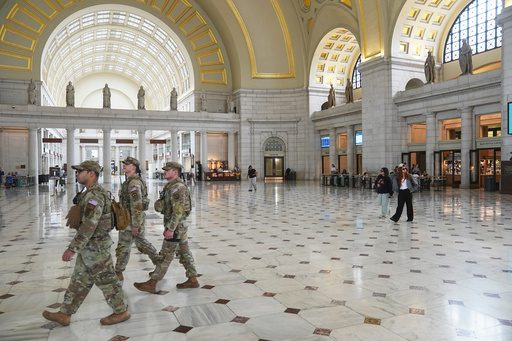
👉 READ BY CLICKING HEREThe whole affair traces back to the Trump administration’s executive order in August [QUOTE_PLACEHOLDER] declaring a crime emergency in Washington, resulting in hundreds of Guard troops and federal agents blanketing the city. This particular deployment wasn’t exactly popular; it inflamed tensions with residents of the heavily Democratic district, a detail often lost in the larger security narrative. Hundreds of Guard members remain deployed in the district nearly a year later, with no clear end in sight.
What This Means
This D.C. settlement isn’t just about some guy playing silly tunes near soldiers; it’s a robust affirmation, even if tacit, of incredibly broad First Amendment protections for expressive conduct. It implies a high bar for what constitutes a legitimate interference with official duties, particularly when a government has opted for a visibly militarized posture in a civilian setting. This certainly has implications beyond Washington, touching upon how jurisdictions grapple with dissent, especially in an era where protest can go viral faster than the evening news.
For one, it puts a price tag on excessive force — and speech suppression, even if we don’t know the exact figure. But also, it’s a nod to the growing potency of citizen journalism — and social media as tools of accountability. That TikTok reach probably added a fair bit of leverage to O’Hara’s case, didn’t it?
Consider the contrast: In many parts of the world, especially across the Muslim world and parts of South Asia—nations like Pakistan, for instance—similar acts of artistic or even humorous dissent against military or state presence could invite far harsher, less accountable, and often brutally efficient repercussions, well beyond a brief detention or a polite settlement. Here, the bizarre act of a man playing a sci-fi villain’s tune to critique his government’s decisions somehow lands him a payout. That’s a testament to the differing cultural — and legal landscapes surrounding civil liberties. It’s not always pretty; it’s often messy, occasionally absurd, but it’s fundamentally about allowing people a space to annoy power, sometimes with digital gambits and even more unexpected expressions. The settlement tells officials: if you don’t want people making you look like the bad guy, maybe don’t deploy the Imperial Guard without clear purpose or end in sight. It really is that simple sometimes. Because accountability, like bad musical taste, often finds its way out. Even through official silence.