


Beijing’s Southeast Asian Embrace: Xi’s Gambit in Cambodia Echoes Louder Than Diplomacy
POLICY WIRE — Washington D.C., United States — Don’t look too closely at the smiling handshakes, the flowery rhetoric of everlasting friendship. Beyond the diplomatic theater, China’s...

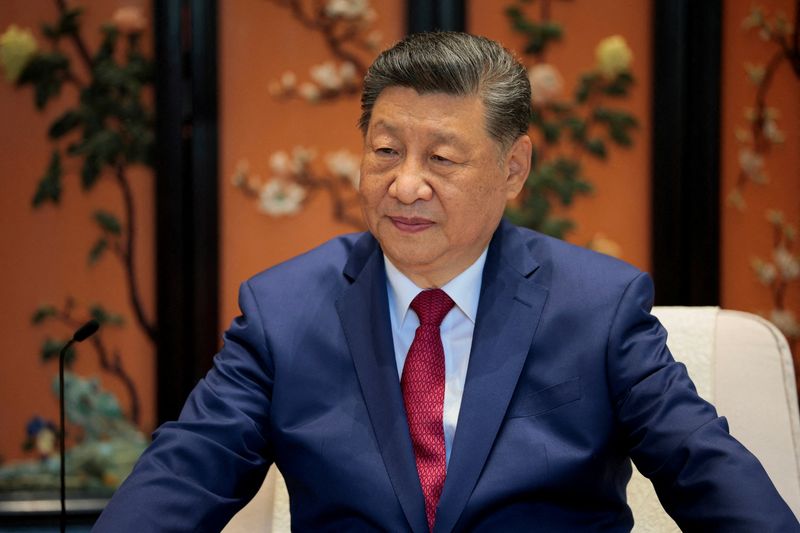
POLICY WIRE — Washington D.C., United States — Don’t look too closely at the smiling handshakes, the flowery rhetoric of everlasting friendship. Beyond the diplomatic theater, China’s quiet maneuvering in Southeast Asia is gathering steam, a strategic chess move often masked by pledges of ‘win-win’ cooperation. The latest such development? President Xi Jinping’s recent announcement to fortify a comprehensive ‘security partnership’ with Cambodia. It wasn’t just a feel-good photo-op—it’s another thread woven into Beijing’s increasingly complex, and some would argue, constrictive, regional design.
It’s easy to dismiss Phnom Penh as a small player on the global stage. But every brick in Beijing’s burgeoning edifice of influence counts, especially when it concerns littoral states in an economically vibrant, strategically sensitive region. The pledge from China to, in effect, double down on security ties with the Southeast Asian nation marks a deepening dependency, not just economic, but now distinctly military-tinged. It’s the kind of subtle expansionism that makes Washington and its allies chew on their fingernails, wondering just how much regional balance can shift before it topples.
The commitment comes wrapped in all the usual diplomatic pleasantries, of course. There’s talk about a community with a shared future, phrases about shared prosperity, — and mutual respect. But scratch the surface, — and you’ll find the cold calculus of power projection. This isn’t just about securing borders. It’s about securing access, securing influence, and — crucially — creating buffers against perceived adversaries. It’s about reshaping the Indo-Pacific in a mold Beijing finds more amenable.
And where have we seen this before? The pattern echoes across the wider Asian continent. Take Pakistan, for example. Beijing has meticulously cultivated its relationship there, leveraging economic initiatives like the China-Pakistan Economic Corridor (CPEC)—part of the grander Belt and Road Initiative—to create deep, almost inextricable, security and economic linkages. That relationship, forged over decades, provides China a critical overland route to the Arabian Sea, significantly enhancing its strategic depth and energy security. It’s a blueprint, almost. A template, even, for how Beijing cultivates a powerful, friendly state on the doorstep of India, creating its own brand of strategic hedging.
Because, make no mistake, China’s long-game isn’t just about trade, it’s also about hard power and soft power congealing into something formidable. The Cambodian alignment—bolstered now by direct security pledges—mirrors an ongoing trend where Beijing systematically extends its tendrils into states often wary of Western influence or simply pragmatic enough to accept China’s robust offers. While specific details on the security partnership remain vague, the very public announcement signifies a shift in rhetoric and likely in substance too. There’s a quiet understanding that these pledges often pave the way for increased military exchanges, equipment sales, and potentially, greater access to critical infrastructure, be it ports or airfields. [QUOTE_PLACEHOLDER], according to Chinese official sources, is part of a broader push to foster regional stability. Stability, of course, on Beijing’s terms.
Such moves naturally cause ripples. Nearby nations, like Vietnam, Indonesia, — and even Thailand, watch with a mixture of apprehension and calculation. And the wider Muslim world, often a subject of Chinese diplomacy—and sometimes, criticism, depending on which Muslim populations you’re talking about—also notes these patterns. Pakistan, a large Muslim-majority nation — and long-time ally, knows this playbook well. They’ve seen Beijing expand its reach, offering attractive terms for infrastructure and defense. And honestly, it often works. Why wouldn’t it?
Let’s not forget the numbers. Chinese foreign direct investment into Southeast Asia has grown considerably, reaching over $150 billion by 2020 alone, according to ASEAN Secretariat data. This economic muscle gives Beijing immense leverage, creating economic dependencies that easily morph into political and, yes, security alignment. It’s tough to say no when Beijing comes knocking with capital and infrastructure projects, particularly for developing nations starved for investment. You’ve got to consider what the alternatives are, too. Often, they aren’t as robust.
📄 POLICY WIRE WHITEPAPER PUBLISHED: PAKISTAN'S NATIONAL SECURITY POLICY PRIORITIES
👉 READ BY CLICKING HEREThe situation isn’t black — and white; countries don’t just ‘choose’ sides. It’s far messier than that, a pragmatic dance where nations hedge their bets, seeking the most advantageous position. But Beijing’s strategy is undeniably effective at slowly but surely reorienting the strategic landscape. It’s a testament to sustained, disciplined geopolitical statecraft. Or perhaps, simply raw power exerted patiently. And they’re certainly not going to let a small thing like international concern stop ’em. The strategic implication for the wider region, from the South China Sea to the Malacca Strait, couldn’t be starker.
What This Means
This isn’t merely about Cambodia—it’s a bellwether. The elevated ‘security partnership’ signifies Beijing’s commitment to expanding its influence through targeted alliances, consolidating control over critical maritime choke points, and projecting an alternative world order. For nations in South Asia and beyond, it signals that China’s footprint is growing, demanding a recalculation of their own foreign policy priorities and defense postures. States like India, already wary of Chinese intentions, will view this with renewed concern, seeing it as part of an encirclement strategy that extends beyond their immediate neighborhood.
Economically, Cambodia’s deepening ties imply further integration into China’s supply chains and investment frameworks, reinforcing a dependency that could constrain future independent policy choices. Politically, it means less regional consensus on issues sensitive to Beijing, like the South China Sea disputes, where Cambodia’s voice will now undoubtedly align more closely with its primary benefactor. From a security perspective, these kinds of deals could facilitate greater Chinese naval or air access to Cambodian facilities, directly impacting strategic balances. Think of what a Chinese-backed port in Ream means for American access — and influence. And it’s not just a Cambodian thing; it’s a regional security headache—a slow burn for policymakers in capitals from Washington to Canberra, New Delhi to Tokyo. It suggests that if you don’t offer an attractive enough alternative, countries will drift towards the power that does. You just have to look at how global football powers handle their own strategic alliances on the field, trying to outmaneuver each other for regional dominance. That’s a different kind of world cup brutal dance, but the principle’s not entirely dissimilar: securing influence means securing resources, talent, and partnerships.
this dynamic sends a chilling message to smaller nations: align with Beijing or risk marginalization from economic opportunities that are hard to refuse. The long-term implications are clear: a more Sinocentric regional order, where Beijing’s interests and perspectives carry increasingly disproportionate weight. But they’ve been saying that for years, haven’t they?