


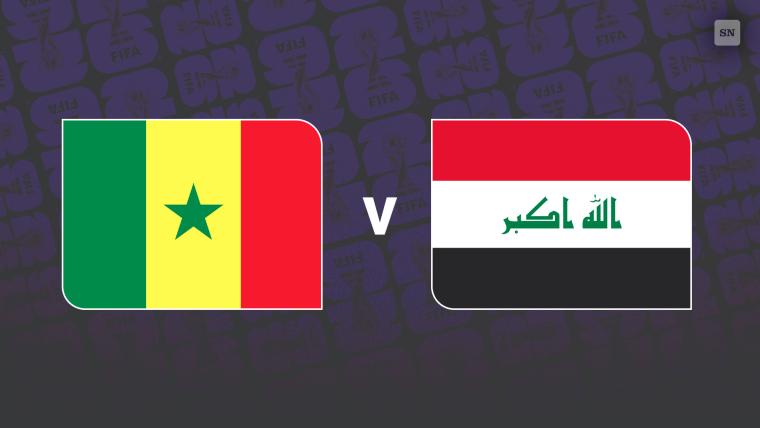
Beyond the Pitch: Senegal-Iraq World Cup Match Unpacks Geopolitical Stakes Amid Expanded Tournament Frenzy
POLICY WIRE — Toronto, Canada — Forget the tactical lineups and projected goal tallies for a moment. This isn’t just a football game; it’s a geopolitical pulse-check masquerading as sport. When...

POLICY WIRE — Toronto, Canada — Forget the tactical lineups and projected goal tallies for a moment. This isn’t just a football game; it’s a geopolitical pulse-check masquerading as sport. When Senegal’s ‘Lions of Teranga’ line up against Iraq’s ‘Lions of Mesopotamia’ today, it’s more than Group I standings at stake. It’s a snapshot of a dramatically expanded global tournament—the 2026 World Cup—a sprawling economic beast that now offers new avenues for nations, both emerging and established, to flex cultural muscle on the world’s biggest stage.
It’s easy to get lost in the immediate action, in the dribbles — and the saves, but look deeper. Here you’ve got one of Africa’s most consistent footballing powerhouses—Senegal, fresh off a Round of 16 run—pitted against Iraq, a team making only its second appearance since the mid-eighties. The mismatch on paper is glaring. But soccer, bless its chaotic heart, rarely adheres to expectations, does it? This encounter, set in Toronto, highlights something far more substantial than simply a win or a loss; it’s about representation, projection, and the quiet yet ferocious battle for soft power in a rapidly fragmenting world.
Senegal rolls in with a squad packed with talent most clubs would envy: Kalidou Koulibaly anchoring the defense, Sadio Mané orchestrating attacks. They’ve got pedigree. They’ve got momentum. “Our nation understands that every match on this global stage is an opportunity to show the world what African excellence truly looks like,” explained Matar Ba, Senegal’s Minister of Sports, in an interview preceding the tournament. “We’re not just playing for points; we’re playing for the aspirations of millions, young — and old. It’s an investment in our collective future, an affirmation of our identity.” You see, they’re not just kicking a ball, are they? They’re kicking open doors.
Because let’s be honest, for Iraq, simply qualifying for the World Cup is a gargantuan feat, a balm for a nation so frequently in the throes of upheaval. This isn’t FIFA 24; this is reality. The game serves as a rare, unified distraction from the grinding realities of daily life, offering a fleeting sense of national cohesion. Their star players, like Zidane Iqbal and Aymen Hussein, carry the hopes of a generation—they don’t just want to win; they want to be seen. And, they want to represent.
The expansion of the FIFA World Cup to a sprawling 48 teams for 2026—a jump from the familiar 32-team format—has reshaped the landscape entirely. More games, more berths, more money. Beyond the Beautiful Game: How the World Cup Became a Geopolitical Spectacle on U.S. Soil, indeed. This expanded vision opens doors to countries that rarely, if ever, saw themselves on this level. It’s an obvious cash grab, sure, but it’s also a pragmatic acknowledgment of football’s unparalleled global reach. FIFA’s own financial reports show the 2022 World Cup generated an eye-watering $7.5 billion in revenue, mostly from broadcast rights and sponsorships. More teams, naturally, means even greater figures.
📄 POLICY WIRE WHITEPAPER PUBLISHED: PAKISTAN'S NATIONAL SECURITY POLICY PRIORITIES
👉 READ BY CLICKING HERE“We know our history,” stated Adnan Dirjal, President of the Iraqi Football Association, his voice steady despite the odds. “We carry the weight of decades of challenge. But our players—they’re not looking backwards. They represent a new Iraq, one that yearns for peace — and wants to stand proud. This World Cup, it’s a stage for healing, for showing resilience. It’s proof we’re back, and we’re here to compete, to learn, and to grow.” It’s a compelling narrative, even if you’re rooting for Senegal.
This match, part of a packed day that also features France against Norway, and Spain facing Uruguay, feels almost like an anomaly in its deep cultural contrast. But it’s these very contrasts that fuel the World Cup’s enduring magic. Fans tuning in can catch it on FS1 in the U.S., with streaming options aplenty on fubo — and Fox Sports’ platforms. Kickoff is scheduled for 3 p.m. ET. Don’t miss it.
What This Means
This Senegal-Iraq showdown isn’t merely about a few points in a group stage. Economically, these tournaments are huge; think of the sponsorship deals, the TV rights, the tourism boosts—a projected $15 billion economic impact for the 2026 hosts, according to independent analyses. But it’s also about national branding, plain — and simple. For Senegal, it’s reinforcing their image as a progressive African state, punching above its economic weight in global sports. For Iraq, it’s an emotional lifeline, a rare moment where a post-conflict nation can project normalcy, pride, and aspiration—something few other global events offer with such immediate impact. The expanded format means more countries get a seat at this very valuable table, intensifying the stakes even for early group matches. It makes the tournament a far more accurate reflection of global passion for the game, if not always global parity in performance.