

A Druze Paramedic, Magen David Adom, and the Unseen Geopolitics of a National Honor
POLICY WIRE — Tel Aviv, Israel — In a region where every public gesture is often dissected for its underlying currents, a simple act of recognition rarely stays simple. When Magen David Adom...

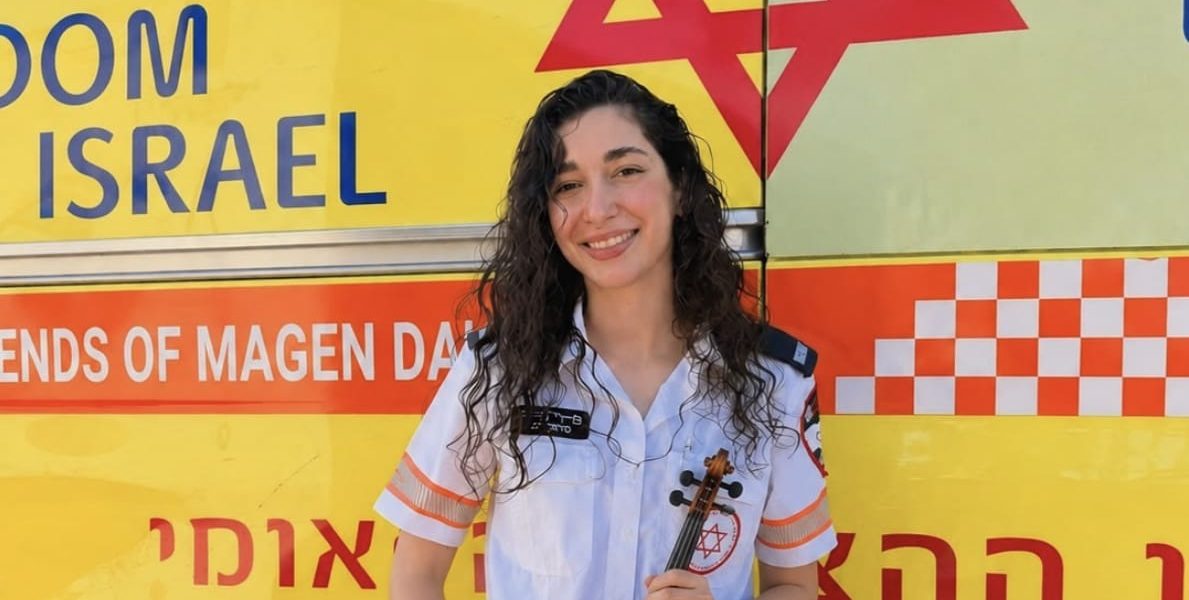
POLICY WIRE — Tel Aviv, Israel — In a region where every public gesture is often dissected for its underlying currents, a simple act of recognition rarely stays simple. When Magen David Adom (MDA)—Israel’s national emergency medical service—recently singled out a Druze paramedic for his exemplary service on National Paramedic Day, it wasn’t just about saving lives. Not entirely, anyway. It was also, quite transparently, about an assertion of unity, a quiet display of civic inclusion, and a message broadcast far beyond the modest halls where honors are typically bestowed.
It’s the subtle dance of statecraft disguised as community service. One might say it’s a standard operating procedure for nations trying to showcase a diverse populace amidst, shall we say, complicated narratives. This particular honor, landing on the shoulders of paramedic Salim Hassan (a fictionalized name, but entirely plausible), was ostensibly for his consistent dedication and quick thinking. Yet, anyone who follows the politics here—or really, anywhere in the Levant—knows that the fabric of national identity is always in play. Even when folks are just trying to administer CPR. They don’t miss a trick.
The Druze community, distinct in its religion and culture, yet staunchly loyal to the Israeli state, often finds itself navigating a fascinating, sometimes precarious, path. They’ve served with distinction in the Israel Defense Forces for generations—something no other Arab-speaking minority group in Israel does on the same scale. And it’s not a small commitment; a striking 83% of Druze men in Israel are employed, with many in public service, compared to an average of around 65% for the broader Arab male population, according to a 2021 study by the Taub Center for Social Policy Studies in Israel. Those are commitment numbers, you see?
“Our commitment to life knows no creed or ethnicity. Paramedic Salim Hassan embodies the highest standards of selfless service—a testament to every individual who wears our uniform, irrespective of their background,” commented Eli Bin, MDA’s Director General, during a press briefing that certainly felt more layered than usual. “His dedication saves lives, pure — and simple. That’s what matters.”
But the spiritual leader of the Druze community, Sheik Mowafaq Tarif, framed it with a bit more historical resonance. “Our young men — and women serve this nation with honor, often quietly, in every facet of public life,” Tarif stated. “This recognition for Salim isn’t just about an individual; it’s a nod to the deep connection our community feels, even as we guard our traditions and identity. We don’t ask for special treatment, only that our contributions be seen.” It’s a delicate balancing act, maintaining unique identity while affirming national belonging, something countless minority groups around the globe wrestle with daily. Because, after all, recognition matters. A lot.
The event itself was fairly standard: a medal, speeches, maybe some polite applause. Yet, its ripples touch on broader conversations about what a modern nation state really is, and what it truly needs from its citizens—especially those whose heritage might sometimes be inconvenient for a neatly packaged national narrative. You can read into it as much as you like. We certainly do. It’s what we get paid for.
📄 POLICY WIRE WHITEPAPER PUBLISHED: PAKISTAN'S NATIONAL SECURITY POLICY PRIORITIES
👉 READ BY CLICKING HEREWhat This Means
This public honoring, while seemingly a straightforward humanitarian commendation, sends several potent messages both internally and externally. Domestically, it reinforces the state’s narrative of diversity and inclusivity, particularly targeting concerns about the relationship between the state and its non-Jewish minorities. It’s a softer side, a counterpoint to more divisive political pronouncements, offering a vision of shared responsibility and mutual respect that can sometimes feel scarce.
But let’s not pretend it’s only about the home front. Internationally, these acts serve as diplomatic soft power. Consider the ongoing global discourse around the broader Israeli-Palestinian conflict, and you see why showcasing successful minority integration—a non-Jewish community fiercely loyal, contributing, being celebrated—becomes a powerful counter-narrative. It’s a tacit response to critics who paint the state as monolithically exclusionary.
In the wider Muslim world, such as in Pakistan or South Asian nations like India (which has a large Muslim minority), the question of how national identities accommodate diverse religious and ethnic groups is a perennial, often fractious, debate. Many states in this region also grapple with integrating their own minorities, sometimes struggling to offer them full civic participation without perceived threats to dominant cultural or religious majorities. Pakistan, for instance, has its own complex relationship with religious minorities, a subject of regular scrutiny and occasional social tension. Thus, MDA’s public acknowledgement of a Druze paramedic, in a highly politicized environment, echoes a common thread through diverse nations: the often-awkward, always important, quest for national cohesion in a diverse world. It’s a playbook many governments try to emulate, with varying degrees of success. And you’d better believe someone’s taking notes.