Kabul’s Silent Attrition: Child Malnutrition Surges as Afghanistan Slips from Global View
POLICY WIRE — Geneva, Switzerland — While global headlines chase distant conflicts and electoral circuses, an older, more relentless enemy has been tightening its grip on Afghanistan’s most...

POLICY WIRE — Geneva, Switzerland — While global headlines chase distant conflicts and electoral circuses, an older, more relentless enemy has been tightening its grip on Afghanistan’s most vulnerable. The world, you see, has moved on. But hunger hasn’t. In a brutal dispatch that barely registered amidst the day’s usual churn, Médecins Sans Frontières (MSF) just quietly informed us of a stark, stomach-turning surge in severe child malnutrition cases across the beleaguered nation. It’s not a dramatic bombing campaign. It’s far slower. And, frankly, much more devastating.
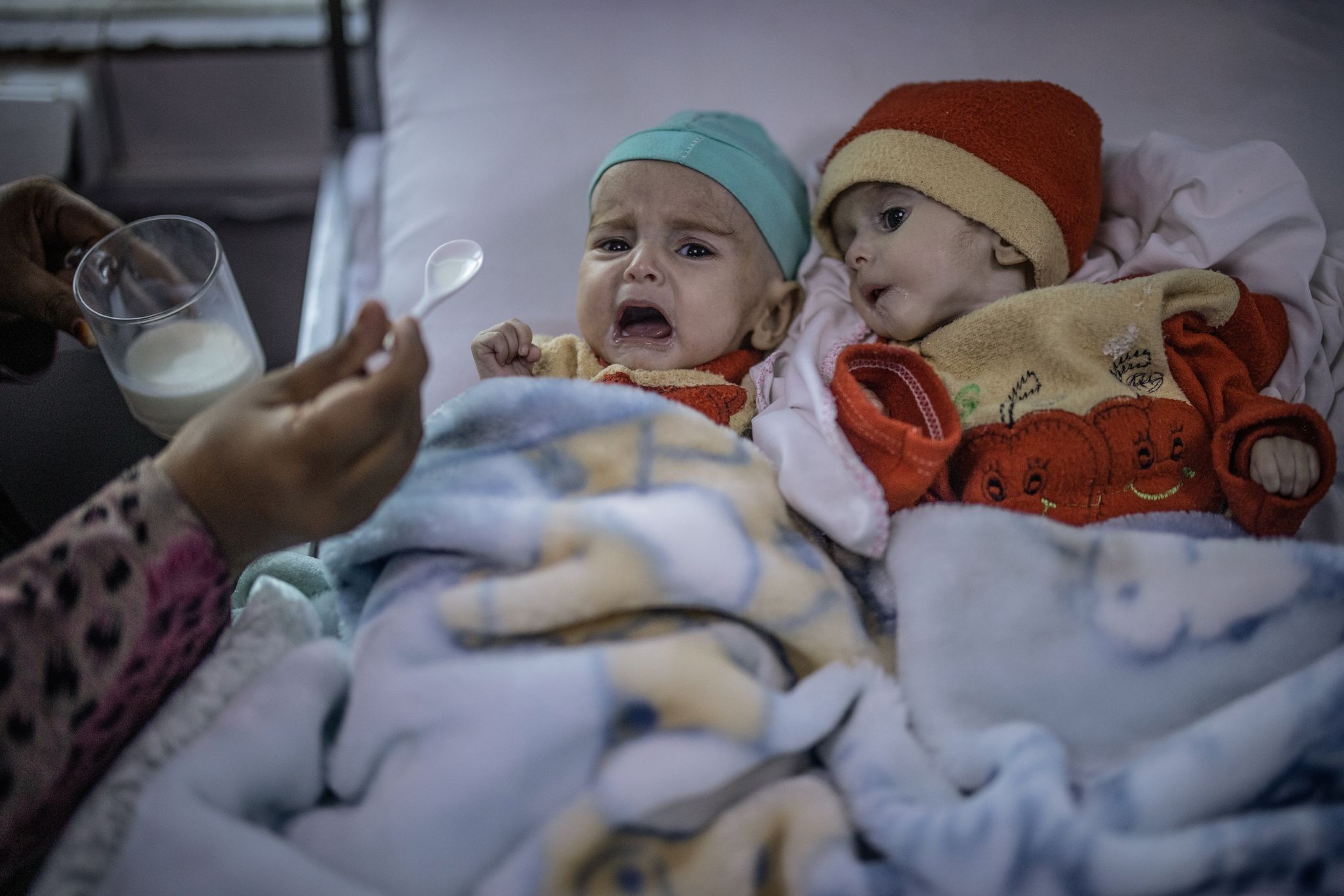
It isn’t a splashy revelation; we’ve heard these alarms before, haven’t we? Yet, the sheer scale of the latest report from MSF’s therapeutic feeding centers across Helmand, Herat, Kandahar, and Kabul points to an unfolding disaster that policymakers seem content to sidestep. They’re calling it a “drastic increase,” a polite, clinical term for children — tiny, innocent beings — literally wasting away. These are numbers, yes, but each number is a gasping breath, a hollowed cheek, a mother’s silent despair.
And it’s a predictable trajectory, isn’t it? Since the Taliban’s return to power in August 2021, the country’s already fragile economy promptly nosedived. International aid, the very lifeblood of a population long accustomed to handouts, shriveled under a new regime seen as toxic by many Western donors. Because, well, sanctions bite. But they bite hardest on those who never signed off on policy directives, on children too young to even articulate their hunger.
“We’re witnessing a systemic collapse of food security, compounded by successive droughts and an unforgiving winter,” observed Mark Lowcock, the former UN Under-Secretary-General for Humanitarian Affairs and Emergency Relief Coordinator, reflecting a sentiment shared by many international aid figures. “The mechanisms for international intervention simply aren’t robust enough anymore. The geopolitical calculus has, tragically, superseded basic human decency in Afghanistan. We know what’s happening, — and yet the funding falls short. It’s truly infuriating.” Lowcock’s perspective, often pragmatic, here carries an unmistakable sting of frustration.
But the practicalities on the ground? They’re even grimmer. Dr. Ayesha Safi, who manages a children’s ward in a provincial hospital outside Kandahar, painted a harrowing picture during a recent phone interview. “Every single day, we admit dozens of new cases. Infants. Toddlers. Their parents, they’ve walked for days. They’ve sold everything they own. Some children, they don’t even cry anymore, they’re too weak,” she whispered, her voice heavy with fatigue. “We treat them, sometimes we save them, but many, too many, come back weeks later, worse off. The food just isn’t there at home. It’s an endless, cruel cycle.”
The International Organization for Migration reported last year that a staggering 24.4 million Afghans—over half the population—require humanitarian assistance. That’s more than twice the number needing help just a few years ago. You see, the infrastructure for a normal life simply evaporated. Banking, commerce, public services – it all withered. And with it, access to food.
What of the regional players, especially Pakistan, its immediate neighbor — and home to millions of Afghan refugees? While Pakistan grapples with its own economic quagmire and political instabilities (a crisis some analysts link to regional spillover effects, similar to the post-conflict scrutiny seen in other regions), its capacity and willingness to absorb or significantly aid its Afghan brethren remain constrained. The flow of refugees has put immense strain on border provinces, complicating an already delicate internal balance. The broader Muslim world, for all its occasional bursts of rhetorical unity, seems largely absent from this specific humanitarian front, a quiet indictment of collective inaction.
What This Means
This escalating child malnutrition crisis isn’t merely a health problem; it’s a slow-motion political and economic time bomb. For the Taliban, it’s a direct challenge to their governance legitimacy. Their promises of stability ring hollow when children starve en masse. If they cannot even feed their own, what kind of regime can they hope to build? For the international community, it signifies a moral quandary. Is strategic disengagement worth the inevitable creation of a ‘lost generation’ – children whose physical and cognitive development is permanently stunted? Such a generation will either become a chronic drain on future aid or a fertile ground for extremist ideologies, or both. Their health problems, once solidified, will cripple the country’s productivity for decades. The ripple effects will spill over borders, exacerbating refugee crises and regional instability, perhaps even tempting future, ill-fated military interventions down the line.
Economically, it’s a death spiral. A population unable to feed itself cannot work, innovate, or contribute to any semblance of national rebuilding. It’s a nation consuming its own future, one skeletal child at a time. And frankly, the apathy, the muted responses from those who once championed Afghanistan’s cause, it’s astounding. Perhaps the world simply doesn’t have the stomach for another prolonged crisis, preferring to compartmentalize human suffering into neat, media-friendly chunks, forgetting about the longer, quieter tragedies like this one, far from the brief glimmers of humanity seen in other global conflicts. It’s a sad, predictable testament to our collective attention span.