

Australia’s Silent Exodus: Extreme Heat Collapses Wild Bee Populations, Threatening More Than Just Honey
POLICY WIRE — Canberra, Australia — Something’s amiss when a summer day feels less like a season and more like a fever dream, when the very air shimmers with a malevolent heat. In Australia, that...

POLICY WIRE — Canberra, Australia — Something’s amiss when a summer day feels less like a season and more like a fever dream, when the very air shimmers with a malevolent heat. In Australia, that heat isn’t just wilting crops and vexing residents—it’s systematically, relentlessly exterminating an unseen army. Not soldiers, mind you, but native bees. They’re succumbing in quiet, tiny apocalypses, victims of a climate crisis that feels both immense and, paradoxically, intensely personal to every flowering plant on the continent.
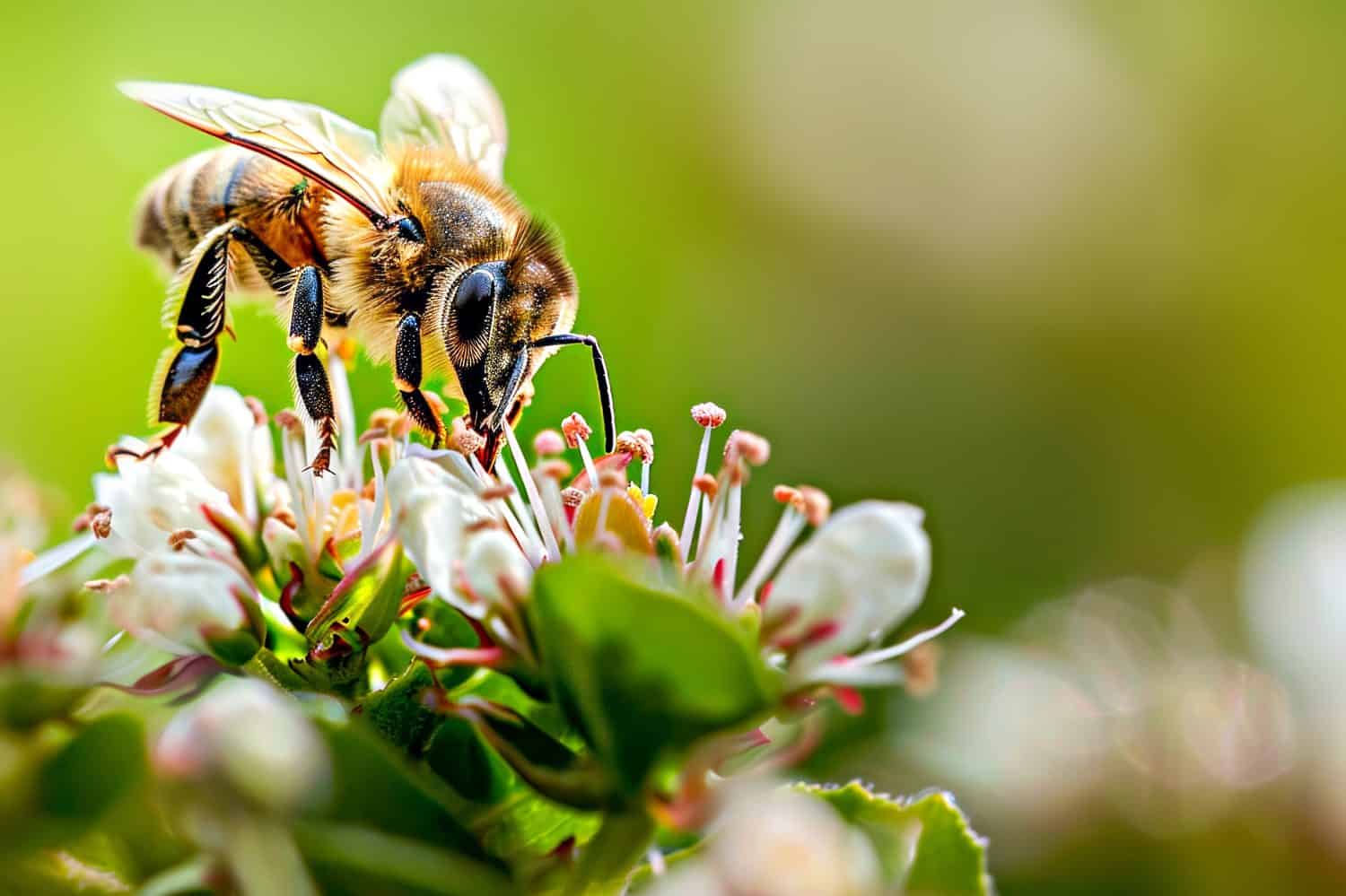
It’s not just the European honeybee we’re talking about; those workhorses are having a rough go too, sure. But it’s the 1,700-odd species of indigenous pollinators—tiny, iridescent, fuzzy, burrowing, ground-nesting, solitary specialists—that are being cooked alive. These aren’t the Instagram-friendly yellow — and black fuzzballs. No. These are the unsung, deeply integrated components of Australia’s unique flora, and they can’t just pack up and fly somewhere cooler when the mercury routinely tops 40 degrees Celsius (104 degrees Fahrenheit).
The problem, you see, isn’t just the sheer heat. It’s the way prolonged, intense heatwaves stress everything. Bodies can’t function. Wings lose efficiency. And for many ground-nesting species—a large chunk of Australia’s native bees—their homes become literal ovens. Think about it: a creature evolved for a temperate climate suddenly finds its entire life cycle—from egg to adult—trapped in an environment resembling a kiln. It’s brutal. One study published in Nature Climate Change in 2021 indicated that regions already experiencing peak temperatures exceeding 35 degrees Celsius saw native bee mortality rates spike by an astonishing 70% during heatwaves, directly linking extreme thermal events to localized extinction cascades.
And this isn’t some distant problem, a scientific curiosity confined to university labs. It’s about the very foundation of Australia’s agriculture, its unique ecosystems, and—by extension—global food security. Because when the local pollinators disappear, so too does the local ability to grow indigenous foods, or even staple crops that rely on that specific, sometimes finicky, pollination dance.
Murray Watt, Australia’s Minister for Agriculture, Fisheries — and Forestry, isn’t denying the scale of the challenge. “We’re absolutely mindful of the pressures on our agricultural sectors, and that includes the vital role pollinators play,” he acknowledged recently, sounding a note of cautious pragmatism. “We’re investing in research, yes, but adaptation strategies for our farmers remain paramount. We can’t allow this to destabilize our food bowl.” It’s a standard governmental line, balancing concern with a healthy dose of ‘we’re working on it.’
But for those closer to the entomological coalface, the mood is decidedly less optimistic. “What we’re seeing isn’t just about honey production,” asserts Dr. Alana Peterson, an entomologist from the University of Sydney, her voice tight with urgency. “It’s about the unravelling of ecosystems. We can’t simply replace thousands of specialist species with European honeybees and expect things to function, nor can we continue to treat every native organism as an afterthought. We’re losing biodiversity we haven’t even fully cataloged.” Her point is blunt: the intricate machinery of nature doesn’t do well with crude substitutions.
It’s a stark reflection of global trends, really. From the citrus groves of California to the almond orchards of Punjab, farmers wrestle with increasingly erratic climate patterns. Farmers in regions like Sindh, Pakistan, face analogous pressures with heatwaves and water scarcity impacting crucial cotton crops, highlighting a shared fragility across hemispheres, despite vastly different ecologies. Policy, or the lack thereof, in addressing these global shifts, casts a long shadow on environmental protections everywhere.
Australia’s peculiar geology and evolution mean its plants often require specific native bees, not just any generalist pollinator. So when a blue-banded bee, for instance, can’t survive a scorching week, the specific flower species it services suffers a blow. Repeat that across hundreds of species, across millions of hectares, year after year, and you’ve got something far more insidious than a bushfire—a silent, creeping collapse.
What This Means
The silent disappearance of Australia’s native bees isn’t just a somber ecological footnote; it’s a political hot potato with significant economic fallout. For a government already grappling with public pressure over its climate policies—or perceived lack thereof—the unraveling of fundamental ecosystems presents a difficult narrative. They’ve got to balance agricultural lobbies, which depend heavily on pollinators, with increasingly vocal environmental groups demanding more aggressive climate action. But, even more, the distinct impact on native, unique Australian biodiversity might spark a deeper, more profound debate on national identity and conservation. Can a nation define itself by its unique flora — and fauna if those very elements are melting away?
Economically, the implications are chilling. While some crops can be hand-pollinated (at immense cost) or serviced by European honeybees, countless others—including many native food plants or those contributing to bush medicine—face serious peril. Australia, a major agricultural exporter, stands to see its competitive edge erode if crop yields become unreliable. It’s a quiet crisis now, but its ripple effects, from supermarket shelves to international trade agreements, promise to be anything but.