


From Global Arenas to Civic Plazas: World Cup’s Unlikely Echoes in New Mexico
POLICY WIRE — ALBUQUERQUE, N.M. — While the global sporting circus, in its most extravagant form, usually hogs the prime-time slots and megapolis skylines, a more subtle, grassroots phenomenon...

POLICY WIRE — ALBUQUERQUE, N.M. — While the global sporting circus, in its most extravagant form, usually hogs the prime-time slots and megapolis skylines, a more subtle, grassroots phenomenon unfolds in corners far removed from the epicenters of athletic glory. In New Mexico’s largest urban sprawl, for instance, the thunderous cheers of World Cup spectators aren’t just confined to faraway stadiums—they’re echoing through local public squares. It’s a curious, but not altogether unexpected, translation of an international obsession into community-level engagement.
No, you didn’t miss a memo about Albuquerque hosting a preliminary round; this isn’t Qatar, nor North America for the next go-round, which itself promises seismic shifts. We’re talking about watch parties, plain and simple, yet loaded with undercurrents of local government attempting to tap into, or perhaps even cultivate, a sense of collective purpose. And honestly, it works. For a sport that captures the imagination of billions, transforming a municipal plaza into a makeshift arena seems a savvy play. Think about it: families, friends, complete strangers—they’re all gathering, bound by nothing more than the arbitrary bounce of a leather sphere and a shared investment in national pride, or merely, a compelling narrative. [QUOTE_PLACEHOLDER]
It’s no small feat for any athlete to truly captivate. But in one World Cup, Lionel Messi managed to set — and beat his own world record. This singular achievement reverberates globally, a narrative so potent it compels audiences far beyond the traditional football strongholds. You see it from Buenos Aires to Berlin, certainly. But it’s also patently obvious, in less publicized fashion, from Bristol to Boston, and right here in the high desert of Albuquerque, where people gather just to share the thrill.
Of course, tens of thousands of fans have been able to attend World Cup games across North America. Those folks get the whole shebang: the roaring crowds, the overpriced stadium fare, the jet lag. But, so many more of us haven’t. And it’s this majority—the everyday watchers, the armchair analysts—who truly drive the game’s cultural behemoth status. They’re the ones who give it legs, from sports bars to living rooms, and yes, to urban civic centers, thanks to municipalities looking for a feel-good public service opportunity.
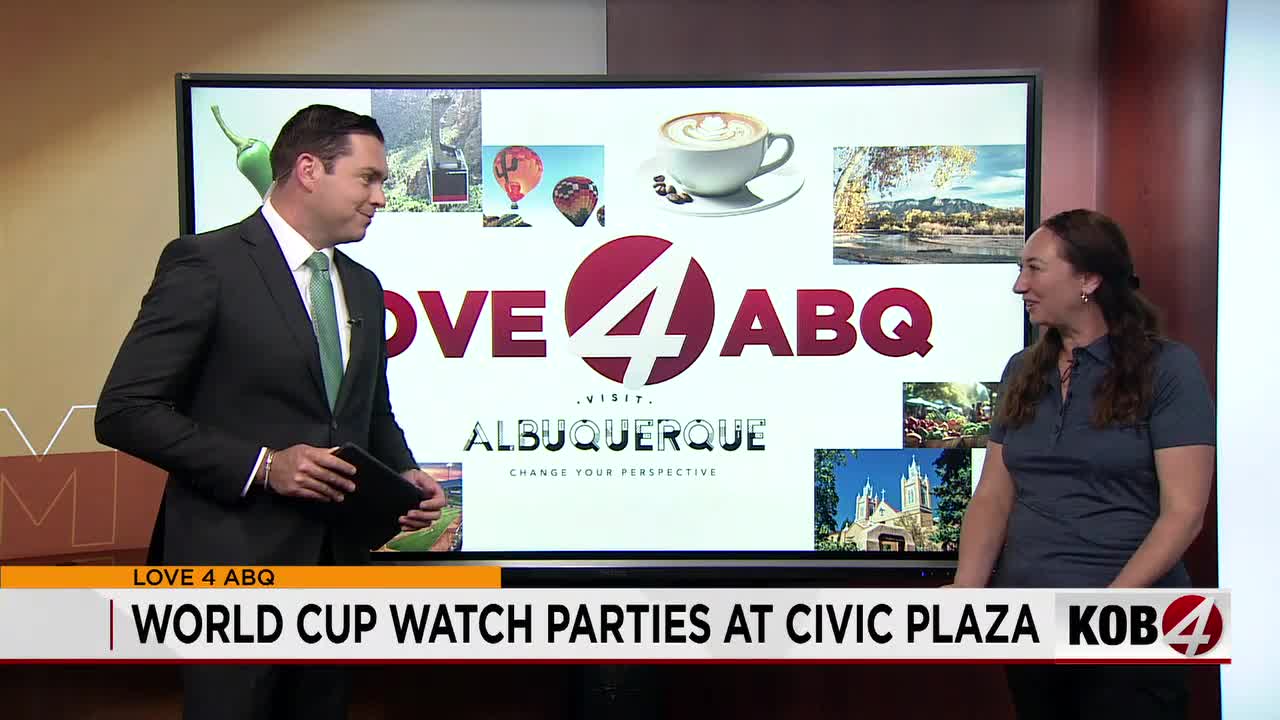
Luckily, the City of Albuquerque is hosting watch parties at Civic Plaza. This isn’t just about showing a game; it’s about curated communal experience, a public gesture towards collective enjoyment in an increasingly fractured digital world. You’ve got to appreciate the simple efficacy of it, really. Bringing people together for shared emotion, even if that emotion is just watching a tiny ball on a giant screen. It makes sense, financially and civically, and it beats sitting at home stewing over a questionable offside call all by your lonesome. Maria Rainsdon, general manager of the Convention Center, joined KOB 4 live in studio to tell you more about it.
The global impact of football, or soccer as it’s often, regrettably, called in North America, extends far beyond European or Latin American spheres. Consider the subcontinent, for instance. Pakistan, a nation often stereotyped for its cricket obsession, still boasts a surprisingly fervent football following. During major tournaments, particularly the World Cup, dedicated fans, young and old, wake at ungodly hours, their communities alight with impromptu gatherings—much like Albuquerque’s but perhaps with a different cultural flavor and, invariably, stronger chai. It’s the shared human desire to be part of something bigger, whether that’s supporting Argentina from a Pakistani village rooftop or cheering Brazil from a New Mexico public square. The fervor transcends geography, socioeconomic strata, — and even entrenched national sporting traditions. A recent study by Sportswatch Global, for instance, indicated that approximately 45% of Pakistan’s urban youth aged 18-30 express a strong interest in international football, often following European leagues and major tournaments with the same intensity as their cricket heroes.
These civic watch parties, therefore, aren’t just isolated events. They’re micro-reflections of a macro trend. They’re the city’s bid to provide a tangible link to a global phenomenon, acknowledging that for many residents, their emotional investment in these distant contests is as real and binding as any local rivalry. And they also remind us, pleasantly enough, that even amidst grand geopolitical machinations or the subtle shifts in sporting power structures—like the American game’s slow rise—the simplest forms of human connection often prevail, over a game, naturally.
What This Means
These seemingly humble watch parties are, in fact, indicative of several intriguing dynamics. Firstly, they highlight the increasing globalization of cultural touchstones, even in cities that might seem initially disengaged from the world’s most popular sport. Local governments, often keen on community building and providing accessible entertainment, recognize the universal appeal of events like the World Cup. It’s smart, low-cost urban planning, leveraging existing public infrastructure (Civic Plaza, for example) to foster a sense of collective identity and shared public space. It’s an effective soft power play at the municipal level, a subtle nudge toward social cohesion, something always valuable.
Economically, while perhaps not generating direct revenue on par with a major concert, these gatherings draw people downtown, creating peripheral opportunities for local businesses—your cafes, your diners, perhaps even the odd memorabilia hawker. But more significantly, they underscore the economic influence of global sports, where local businesses become tertiary beneficiaries of multinational marketing and colossal broadcast deals. Politically, the implications are minor but present: a city that provides such amenities is often perceived as responsive, engaged, and generally on the ball. It cultivates goodwill, — and in the opaque, often uninspiring world of municipal governance, goodwill is currency. It’s about leveraging a cultural moment to serve civic goals, quietly, effectively, and with surprising reach, connecting Albuquerque with the fever pitch of Lahore or Jakarta in ways we don’t always fully appreciate.